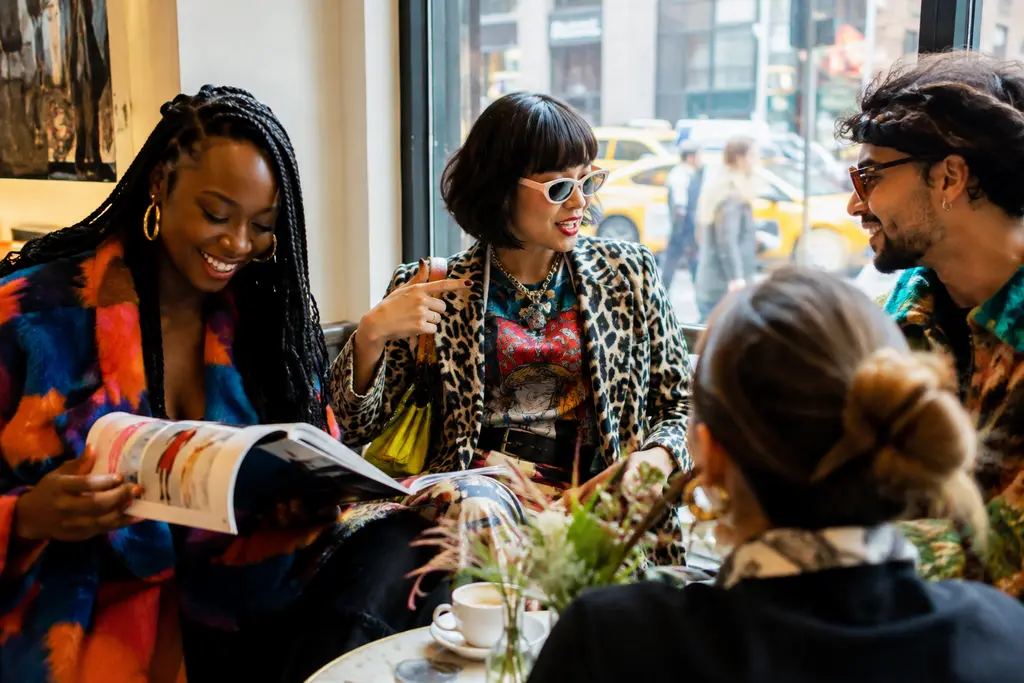
After the Spring/Summer 2027 shows at New York Fashion Week in mid-September 2026, joyful dressing became a useful phrase for describing a visible shift away from strict quiet luxury and pared-back minimalism. The point is not that every wardrobe now needs theatrical color or oversized decoration. The stronger reading is that several designers used color, movement, shine, and proportion to make clothing feel less withdrawn and more emotionally direct.
That distinction matters for anyone translating runway ideas into real buying, making, or styling decisions. A runway show can propose mood at high volume; a person getting dressed on a weekday has to test comfort, budget, care needs, and personal identity. The most practical response is temporary experimentation: try one expressive element, listen to how it functions, then decide whether it deserves a lasting place.
Why Joyful Dressing Returned At NYFW
Joyful Dressing As Runway Energy
At the Spring/Summer 2027 New York Fashion Week shows, designers including Ralph Lauren, Tory Burch, Tommy Hilfiger, and Diane von Furstenberg under Henry Zankov were reported as part of a broader move toward saturated color, contrast, movement, and playful embellishment, according to AP’s NYFW report. Those details are worth reading as a group rather than as isolated styling tricks. Color, texture, and shape worked together to signal a mood change after seasons in which discretion and restraint often dominated fashion commentary.
The value of joyful dressing here is not only decorative. It gives designers a way to stage optimism without making verbal claims about culture or politics. A turquoise coat, a cobalt gown, or a skirt with visible motion can carry emotional force before a viewer knows anything about fabric content or price. Still, fashion analysis should be careful: runway visibility does not prove mass adoption, and expressive clothes can be inspiring without becoming universal.
Celebration As Show Structure
Coach’s 85-year anniversary presentation during NYFW, held across the September 11-16, 2026 fashion week period, used theatrical celebratory elements such as party hats, gowns with large bows, and gift-wrapped accessories, as reported by AWE’s fashion week coverage. That matters because the styling did more than decorate garments. It framed the show itself as a party scene, turning accessories and props into cues for how the audience should feel.
This type of staging can be persuasive, but it also requires restraint in interpretation. A runway anniversary moment is not the same thing as a full consumer shift. It does show that a major brand saw value in spectacle, humor, and celebratory styling at a public fashion event. For stylists, makers, and small sellers, the practical lesson is to separate mood from imitation. A bow, a wrapped shape, or a festive color story can be studied as design language without copying a brand’s specific presentation.
Color, Texture, And Silhouette Signals
Color As The Main Event
The SS27 reports emphasized bright shades including teal, turquoise, cobalt or Klein blue, navy, primary colors, and strong contrasts across tailoring, outerwear, and gowns. These were not presented only as small accent notes. In several runway readings, color carried the outfit’s central message.
For people testing the idea at home, this does not require buying a full look. A temporary practice method works better: choose one strong color and repeat it in two low-risk places, such as a scarf and sock, or a bag and manicure. If the color feels natural after several wears, it may justify a larger piece. If it feels like costume, the experiment has still taught something useful.
Movement, Shine, And Volume
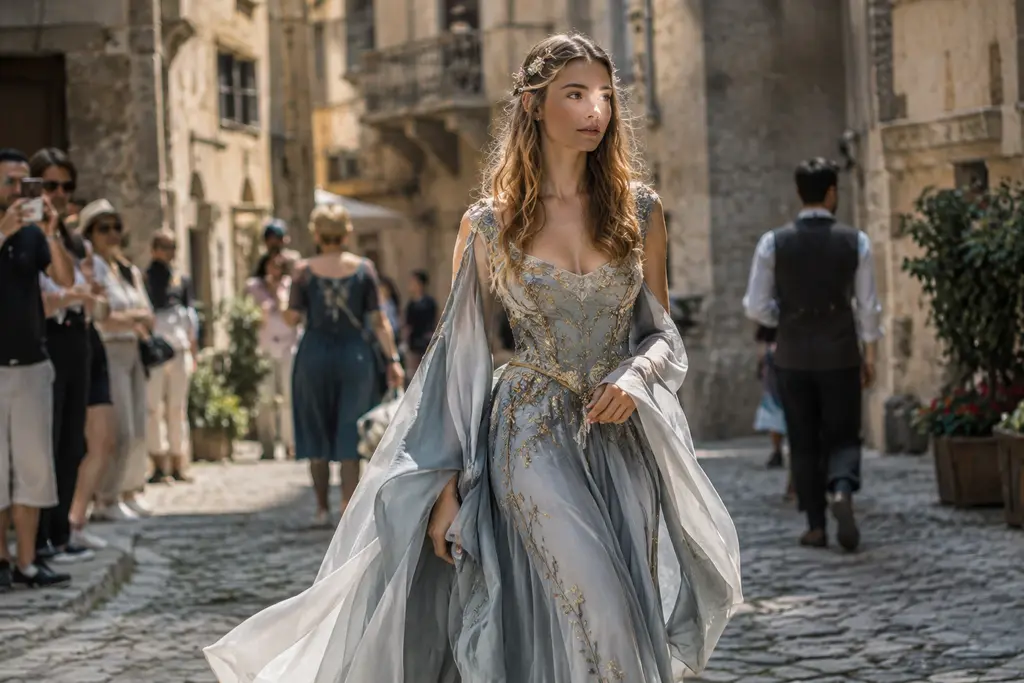
Texture was another major signal. Shine, sequins, fringe, and sheer layers appeared as ways to create visual and tactile movement. These materials can change how a garment behaves in light and in motion, which is why they read differently from flat color. A shiny skirt, fringed trim, or sheer layer can make the body’s movement part of the outfit.
Silhouette also carried expression. Rounded sleeves, full skirts, exaggerated trousers, and voluminous outerwear were balanced in some looks with more structured or fitted pieces. That balance is the useful practice point. Volume becomes easier to wear when paired with something quiet: a full skirt with a plain knit, a rounded sleeve with a narrow trouser, or a wide pant with a cleaner top.
Small Styling Tests Before Bigger Purchases
Joyful Dressing In Accessories
Accessories offer the most controlled entry point into joyful dressing because they can be added, removed, and rotated without rebuilding a wardrobe. Reported examples from the SS27 trend conversation included statement earrings, colorful bags, decorated shoes, sculptural belts, and hosiery or socks in strong color. These pieces let a person adjust volume day by day.
For shoppers, joyful dressing should not cancel practical judgment. An expressive bag still needs usable hardware. Decorated shoes still need a wearable heel, stable sole, and a finish that suits the climate where they will be worn. A sculptural belt should be comfortable while sitting, walking, and bending. The smartest tests are short and specific: wear the item for one full errand, one workday, or one social event before deciding whether the idea fits daily life.
Readers comparing this SS27 direction with broader seasonal buying plans may find the site’s notes on NYFW SS27 trends useful, especially where runway ideas meet cost-per-wear and wardrobe planning.
Creator And Retail Lessons From The Runway

Design Inspiration Without Overclaiming
For independent makers, costume builders, and small retailers, the SS27 conversation points toward color confidence, playful proportion, and touchable surfaces. The safest creative path is not to replicate a designer’s look. It is to study broad design principles: contrast, movement, proportion, and emotional tone. A handmade seller might test a fringe-trimmed pouch, a strong blue accessory group, or a belt shape that frames the waist, but should avoid implying affiliation with runway brands unless there is a legitimate basis to do so.
This is where cautious cultural reading helps. Fashion trends often move through mood before they move through sales. A show may create desire, but production, pricing, sizing, and customer confidence decide whether that desire turns into purchases. For readers who follow style alongside other arts and performance cultures, a related site in the same network coverage can offer another lens on how visual signals travel across creative scenes.
Representation And Wearability
The research notes for SS27 also point to broader casting across race, age, gender identity, and body type, while noting that inclusive sizing and adaptive design remain challenges. That balance should be kept intact. Visibility on the runway can make expressive clothing feel more relevant to wider audiences, but visibility alone does not solve fit, access, or comfort. A trend becomes more meaningful when people with different bodies can actually wear it, purchase it, alter it, or make it for themselves.
For a piano student preparing a performance, I often suggest changing only one variable at a time: tempo, fingering, voicing, or memory. The same temporary discipline works in clothes. Change one garment, one color, one texture, or one accessory. Then observe the result honestly. Too many simultaneous changes make it hard to know what worked.
Joyful Dressing After New York Fashion Week
After the September 2026 NYFW shows, joyful dressing reads less like a single trend and more like a set of practice choices: brighter color, more movement, stronger proportion, celebratory accessories, and a willingness to let clothes carry visible feeling. Its most useful form is not excess for its own sake. It is controlled expression.
The strongest takeaway is temporary testing before permanent commitment. Try a saturated color before buying the coat. Test fringe before investing in a statement dress. Wear sculptural accessories in ordinary conditions before building a look around them. New York Fashion Week offered the high-volume version. Real wardrobes can answer at a human scale.