

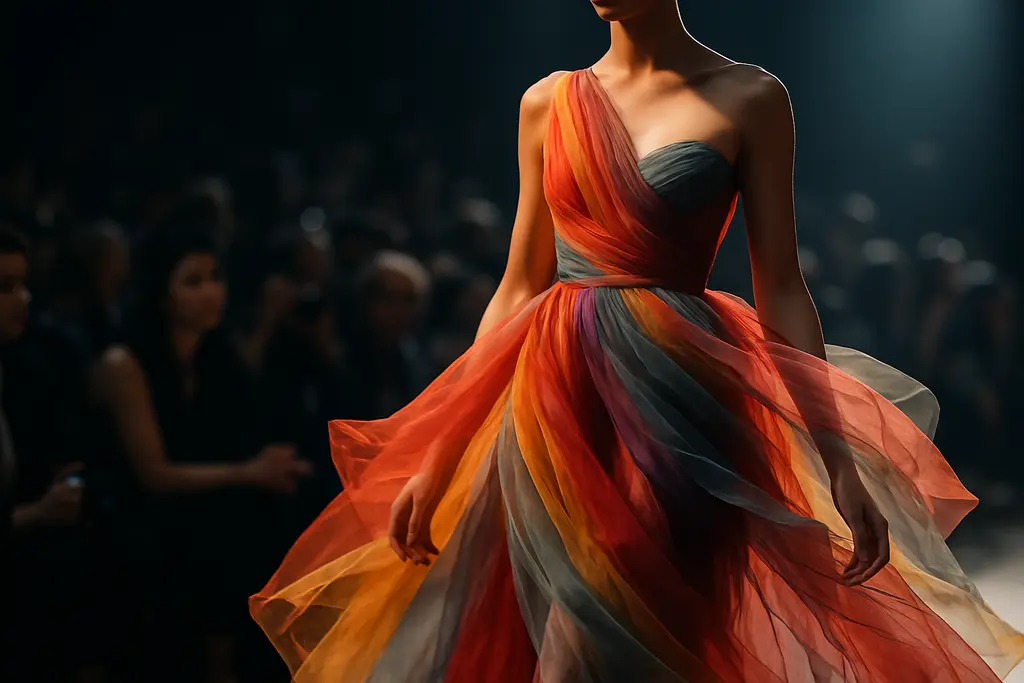
NYFW SS27 Trends now offer a useful buying signal, but not a sales guarantee. New York Fashion Week for Spring/Summer 2027 ran from September 9 to 15, 2026, and had concluded by the date of this analysis, according to Wallpaper’s NYFW schedule coverage. That timing matters: the shows can now be read retrospectively, with attention to what appeared repeatedly rather than what was merely anticipated.
For seasonal buying, the strongest lesson is balance. The week’s visible ideas included lean tailoring, sheer fabrics, saturated color, bias-cut satin, romantic detailing, texture contrast, embellished eveningwear, lived-in construction details, and elevated weekend or utility codes. A buyer does not need to adopt every signal. A better plan is to choose the ideas that fit a store’s customer, climate, price range, and occasion mix.
What NYFW SS27 Trends Actually Showed
NYFW SS27 Trends In Context
The most useful reading starts with restraint. A runway week can make a trend look larger than it may become at retail, especially when styling, show lighting, celebrity attendance, and street style coverage amplify the effect. Still, repetition across categories can point to areas worth testing. For buyers, NYFW SS27 Trends were less about one dominant silhouette and more about contrast: structure beside softness, polish beside ease, and decorative surfaces beside pared-back separates.
Strong tailoring returned as one of the clearer directions. The research notes pointed to sharp, lean silhouettes across suits, outerwear, and separates, with Calvin Klein and Ralph Lauren named among designers where tailoring was prominent. That does not mean every customer will want a full suit. It does suggest that jackets, narrow trousers, crisp shirting, and clean outer layers may carry more weight in Spring/Summer 2027 assortments than a purely relaxed warm-weather edit would assume.
At the same time, the week did not only favor structure. Soft satin and bias-cut dresses appeared as a counterpoint, with drape-forward shapes giving movement and ease. This creates a practical merchandising idea: pair a sharper jacket with a slip-style dress, or place tailored trousers near a softer blouse rather than treating tailoring and fluid dressing as separate stories.
Why One Trend Signal Is Not Enough
A buying plan should treat each trend as evidence, not instruction. Sheer and translucent fabrics gained visibility through chiffon, organza, and lace, with Forbes identifying sheer pieces and elevated casual codes among wearable SS27 ideas in its NYFW SS27 wearability report. For retailers, that is an opening for layered styling rather than a requirement to stock only exposed or high-risk pieces.
Transparency can be bought cautiously through overlay skirts, organza shirts, lace-trim camisoles, or sheer sleeves. These items let customers participate in the idea while still dressing for work, dinner, travel, or daytime occasions. The same caution applies to saturated color. Bright red, chartreuse, marigold yellow, and sunrise tones were visible in the research notes, but a rack of only high-intensity color may overwhelm many wardrobes. The more dependable approach is to let bold color sit beside cream, black, tan, navy, and soft gray.
How To Buy The Seasonal Signals
Color And Tailoring As Anchors
The buying value of NYFW SS27 Trends becomes clearer when each idea is translated into a stock decision. Strong tailoring can anchor the assortment because it works across many levels of dress. A lean blazer can be worn with trousers, denim, a satin skirt, or a bias-cut dress. A tailored vest may serve as a warm-weather alternative to a jacket. A crisp coat or lightweight outer layer can frame more romantic pieces without making the full look feel costume-like.
Color needs similar discipline. The research notes described bold, saturated shades, including bright red, chartreuse, marigold yellow, and sunrise tones. These are useful for window edits, campaign imagery, event dressing, and accessories. Yet many customers buy color in smaller steps. Retailers may want to test intense shades in tops, bags, scarves, jewelry, or one hero dress rather than committing too heavily to full color stories before customer response is known.
| Observed Direction | Buying Translation | Cautious Test |
|---|---|---|
| Sharp tailoring | Blazers, vests, narrow trousers, clean outerwear | One neutral suit and one statement jacket |
| Sheer fabrics | Organza shirts, lace layers, chiffon overlays | Layering pieces that work over basics |
| Saturated color | Red, chartreuse, marigold, sunrise tones | Color in accessories or limited hero items |
| Fluid satin | Bias-cut dresses and draped skirts | Soft dress paired with structured jacket |
| Utility codes | Cargo pants, utility jackets, racer necklines | One casual capsule with elevated finishes |
Assortment Discipline For Real Closets
A useful seasonal rack often needs contrast more than novelty. The research notes pointed to structured-versus-relaxed hybrid looks: strong outerwear with flowing dresses, or crisp jackets with drapey slips. This is commercially sensible because customers rarely dress in only one mood. A person may want ease, but also shape. They may want romance, but not fragility. They may want utility, but not a work-site costume.
Retailers can build around three tiers: core pieces, expressive pieces, and occasion pieces. Core pieces include tailoring, neutral tanks, useful skirts, and trouser shapes. Expressive pieces include saturated colors, raw edges, mixed textures, and romantic trims. Occasion pieces include sequins, gold beading, jewelry-like adornment, chain belts, and standout earrings, all of which appeared in the research notes as part of a renewed interest in special-occasion dressing.
Texture, Sheer Layers, And Occasion Dressing

Material Choices Need A Purpose
Material expression was one of the more interesting directions because it affects how a garment sits, moves, and feels. The research notes referenced heritage textiles, leather, raw hems, knitting, and mixed fabric weights. That range suggests a move away from flat surface styling toward pieces where construction is visible. For buyers, this can be promising, but quality control matters. Raw hems and intentional imperfection should still look intentional. Mixed weights should not twist, sag, or feel poorly resolved.
Sheer layers sit in the same category. They are visual, but they also ask practical questions. What is worn underneath? Does the piece work in daylight? Can it be styled for a customer who wants softness without exposure? A sheer blouse over a tonal camisole, a lace dress over a slip, or an organza layer over a clean tank may answer those questions better than a runway-styled sheer look copied too directly.
Readers interested in the intersection of fantasy, costume, and fashion-history influence might enjoy exploring visual context at Fairy Tale Fashion. Here, the key distinction is that while retail buying should incorporate mood and material cues from these areas, it needs to adapt them for everyday wear rather than copying theatrical styling directly.
Eveningwear Without Overbuying
Statement eveningwear and embellishment were also part of the SS27 picture. The research notes mentioned sequins, gold beading, adornment with a jewelry-like quality, hardware details, chain belts, and standout earrings. These cues can serve customers planning weddings, parties, gallery events, dinners, and performance-adjacent occasions. Still, occasionwear can tie up budget if the sizing, price, or local event calendar is misread.
A cautious plan is to buy embellishment in layers. One sequined dress may serve as the clear statement. A beaded top can support customers who prefer separates. Chain belts and earrings can bring the idea to simpler dresses already in the assortment. This lets a store present the direction without asking every customer to buy a full evening look.
- Use saturated color as punctuation rather than replacing all neutrals.
- Pair tailored pieces with satin, chiffon, lace, or draped jersey to show contrast.
- Test sheer fabrics through overlays and sleeves before committing to more exposed items.
- Buy utility pieces with clean finishing so they read as styled, not purely functional.
- Keep embellished items focused on clear occasions and flexible styling.
NYFW SS27 Trends For Seasonal Buying Decisions
The most useful reading of NYFW SS27 Trends is not that one look will define Spring/Summer 2027. The better lesson is that seasonal style is moving through controlled contrasts: lean tailoring with fluid dresses, sheer fabrics with practical layering, saturated color against wardrobe neutrals, and utility shapes treated with more polish.
For shoppers, that means the smartest buys may be pieces that connect more than one direction. A sharp blazer in a strong color can cover tailoring and saturation. A bias-cut satin dress can work alone for evening or under a jacket for a more grounded look. A lace or organza layer can soften trousers. A cargo pant in a refined fabric can bring weekend codes into a more considered wardrobe.
For retailers, the safest interpretation is edited experimentation. Buy enough of the directional ideas to learn from customer response, but keep a stable base of wearable shapes. Runway influence is most useful when it sharpens decision-making. It should not replace knowledge of the customer, the season, or the way clothing is actually worn.