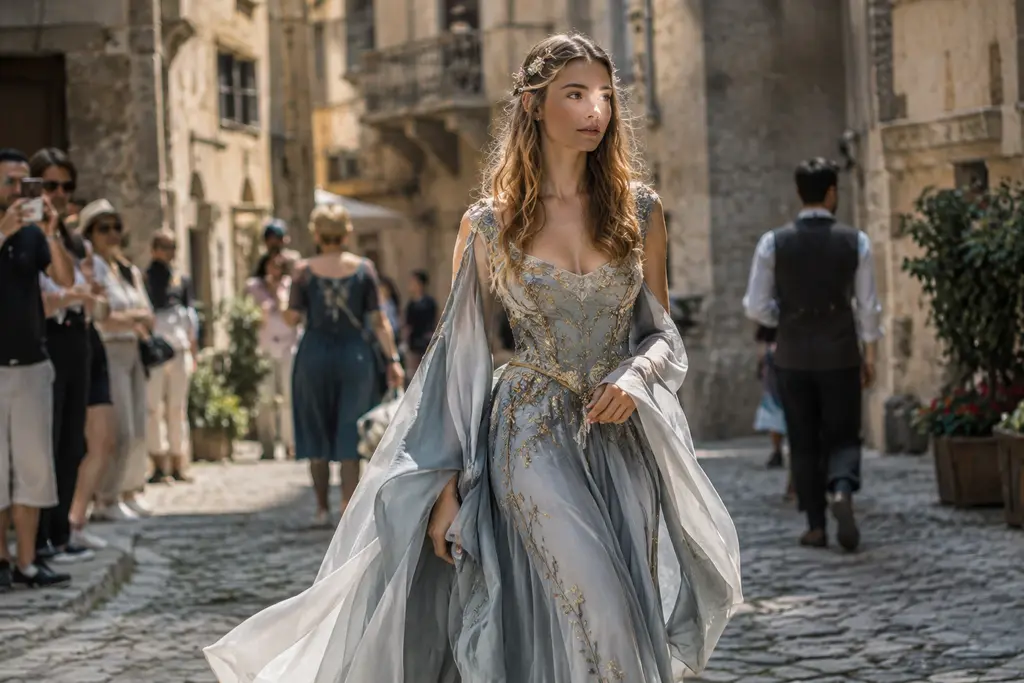

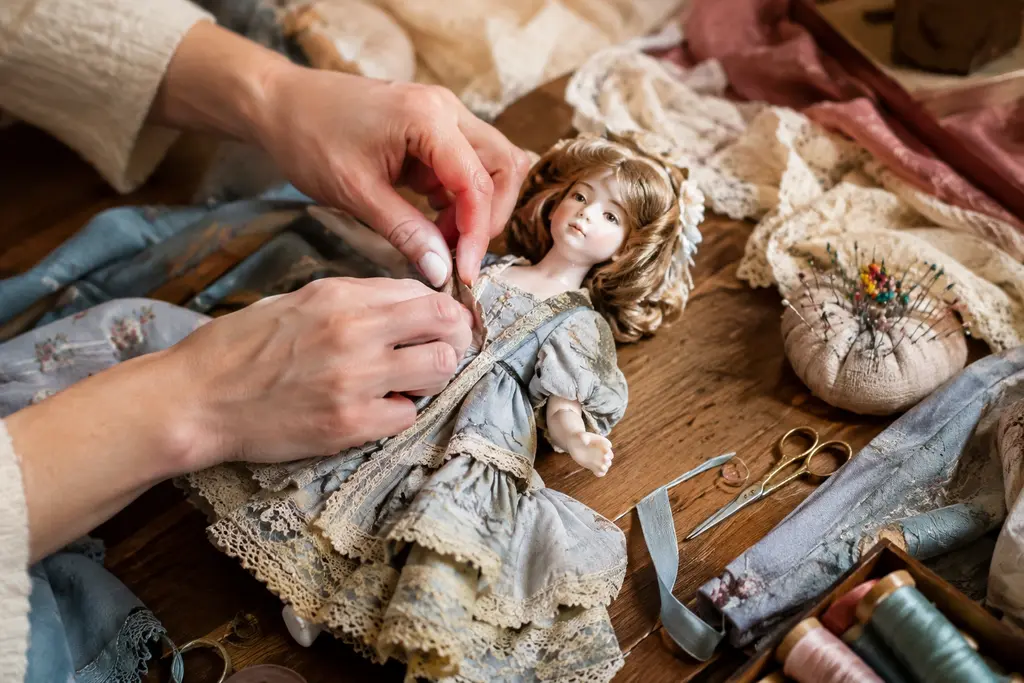
The Doll Dressing Exhibition at The Museum at FIT treats dolls as more than sentimental objects. Running from September 16, 2026 to January 3, 2027, in the Special Exhibitions Gallery, the show uses fashion dolls, garments, accessories, artworks, and video to examine how scale, fantasy, identity, and unease have shaped fashion thinking from the 18th century to the present. The date range is listed by FIT Events.
The most useful way to read the exhibition is not as a tribute to childhood play alone. Its structure suggests a more analytical claim: dolls are small bodies through which designers, makers, consumers, and viewers rehearse ideals about proportion, femininity, dress, collectability, self-presentation, and control. That claim is especially relevant for fashion because clothing always depends on a body, whether that body is living, imagined, miniaturized, exaggerated, commercialized, or broken.
Doll Dressing Exhibition And Scale
Doll Dressing Exhibition As Object Study
The exhibition is curated by Dr. Colleen Hill, senior curator of costume at FIT, and includes work associated with designers and labels such as Balenciaga, Comme des Garçons, Maison Martin Margiela, Marc Jacobs, Patrick Kelly, Loewe, Louis Vuitton, Moschino, Anna Sui, and Undercover, according to The Museum at FIT media alert. That range matters because it places doll aesthetics within serious fashion history rather than treating them as novelty.
The show’s six-part organization gives viewers a clear path through the subject: Fashion Doll Foundations, Modes in Miniature, Playing with Dolls, The Dollhouse, All Dolled Up, and Broken Dolls. Each section appears to ask a different question about how a dressed doll functions: as messenger, replica, plaything, fantasy room, living archetype, or disturbed image.
- Fashion Doll Foundations frames dolls as carriers of style across time.
- Modes in Miniature considers the technical and imaginative appeal of small-scale fashion.
- Playing with Dolls studies nostalgia, proportion, childhood, and scale shifts.
- The Dollhouse links garments to interior space and domestic fantasy.
- All Dolled Up looks at the living doll as a social and fashion image.
- Broken Dolls brings in horror, distortion, grunge, and critique.
For a viewer trained to look at garments, the key issue is proportion. Doll clothing can shrink fashion until construction becomes almost jewel-like, but it can also enlarge fantasy until it becomes uncanny. The exhibition’s strength lies in placing those two movements beside one another: the small made precise, and the small made strange when translated back to human scale.
Miniature Fashion, Memory, And Control
Small Garments As Serious Fashion Thinking
Fashion Doll Foundations introduces the early use of dolls as transmitters of style. The research materials identify examples including an 18th-century loan from Colonial Williamsburg, a 1970s Daisy doll dressed by Mary Quant, and the first Black Barbie released in 1980, designed by Kitty Black Perkins. These examples point to a long history in which dolls have circulated taste, aspiration, and identity through small dressed forms.
Modes in Miniature extends that idea by pairing designers including Emily Adams Bode Aujla, Anna Sui, and Jason Wu with miniature versions of runway looks. Miniature work can be tempting to dismiss as decorative, but in fashion it often reveals how much design depends on proportion and sequencing. A reduced garment must still persuade the eye. The line, surface, closure, textile, and silhouette all have to work under pressure.
That pressure is not unlike focused piano practice. A pianist who slows one measure to half speed hears unevenness that can hide in a full run. A designer who reduces a garment may expose the logic of a sleeve, hem, pocket, or bow. In both cases, scale becomes a diagnostic tool. The small version is not lesser; it can reveal whether the larger idea has structure.
The section also touches a larger cultural habit: people often use dolls to manage memory. A doll can hold a period look, a childhood reference, or a fantasy of order. Yet the exhibition’s organization appears careful not to leave the subject in nostalgia. It moves from fond recognition into questions about who is represented, who controls the image, and what happens when a dressed body becomes an object.
Identity, Fantasy, And The Living Doll
From Play To Self-Styling
Playing with Dolls brings childhood and proportion into direct conversation with designer subversion. The research notes identify Martin Margiela’s Fall 1994 collection, in which doll clothes were enlarged 5.2 times to human size, and Jeremy Scott’s 2017 Moschino work with “paper doll” tabs. These examples make the childlike reference visible, but they do not simply celebrate innocence. They show how fashion can use play to question the rules of adult dress.
Margiela’s enlargement is especially useful as an aesthetic case study because it disrupts the normal relationship between model and garment. A doll dress is supposed to fit a toy. Enlarged to human scale, it carries the memory of its original smallness. The result can feel awkward, humorous, conceptual, or uneasy, depending on the viewer’s reference point. Moschino’s paper doll tabs work differently: they flatten dress into a graphic sign, making the wearer appear briefly like a cutout figure.
The Dollhouse turns from the doll’s body to the doll’s environment. The research notes cite Lirika Matoshi’s 2024 Apartment Coat, with appliquéd rooms, as an example of clothing used as a canvas for interior fantasy. That idea fits the exhibition’s broader argument because dolls are rarely only bodies. They often arrive with houses, rooms, wardrobes, and stories. Dress becomes part of a staged world.
Readers interested in costume fantasy and character-like styling may also find related context at Fairytale Fashion, where fashion and fantasy are treated as connected visual languages. The connection is useful here because doll aesthetics often sit between garment, persona, toy, and story.
All Dolled Up shifts the discussion toward the “living doll” archetype, including the flapper, the dolly bird, emerging Lolita culture, and celebrity mannequins. The research notes mention a replica of Twiggy’s mannequin displaying a dress from her Twiggy London Girl collection. This section appears to raise one of the show’s sharpest questions: when does doll-like styling feel self-authored, and when does it make the dressed body seem passive, fixed, or displayed?
Broken Dolls And Fashion Critique

Beauty Under Pressure
The final thematic section, Broken Dolls, changes the emotional temperature. It includes darker aesthetics such as horror-inspired dolls, Mattel’s Monster High line, the Kinderwhore grunge look of the 1990s, and other unsettling or distorted imagery. Based on the research notes, this section treats brokenness not simply as shock, but as a way to question traditional beauty and femininity.
The broken doll is a loaded image. It can suggest damage, rebellion, exaggeration, satire, or refusal. In fashion, such imagery can critique the demand that femininity remain smooth, decorative, youthful, and available for display. A cracked, monstrous, or deliberately unruly doll aesthetic resists the polished ideal that earlier fashion dolls often helped circulate.
This is where the exhibition’s structure becomes more than chronological. It does not move from “old dolls” to “new dolls” in a simple line. Instead, it tracks a set of visual tensions: miniature and monumental, innocent and knowing, decorative and critical, collectible and embodied. Those tensions are central to fashion history because fashion repeatedly turns fantasy into material form, then asks real bodies to carry it.
The identity theme is also central to the exhibition’s relevance. The research notes identify a component titled We Can All Be Dolls, including references to Conner Ives’s “Protect the Dolls” T-shirt, a “Boy Doll” jacket for Celine Homme, representation from the Black Dolls Matter collective, and expanded makeup shades. These examples suggest that doll aesthetics can be reworked by communities and individuals rather than accepted only as commercial ideals.
For makers, stylists, and fashion students, that distinction matters. Borrowing from doll aesthetics does not require copying a single brand, character, or designer’s signature. A more responsible practice is to study proportion, construction, styling codes, color, and context, then build original work with care. That same caution applies to runway adaptation, a point that connects with kaygranger.com’s discussion of practical trend notes for translating fashion ideas without flattening them into costume shorthand.
Doll Dressing Exhibition In Context
Why The Theme Holds Together
The companion publication, Doll Dressing: Fashion from Barbie to Bratz & Beyond, was released by Rizzoli in September 2026, according to the research notes, and includes essays and designer interviews connected to the exhibition’s themes. A companion symposium is listed in the research materials for Friday, November 13, 2026, from 10:00 am to 5:00 pm in the Katie Murphy Amphitheatre, with speakers including Jason Wu, Lynn Yaeger, and Masafumi Monden. As of November 10, 2026, that date had not yet passed.
The Doll Dressing Exhibition works best when seen as an argument about fashion’s repeated return to the doll as model, mirror, and problem. Dolls can teach style, preserve looks, invite play, commercialize bodies, expand representation, or disturb expectations. None of those roles cancels the others. Their coexistence is the subject.
That is why the exhibition’s aesthetic range feels coherent even when its materials stretch from 18th-century style transmission to Monster High, from miniature runway looks to domestic fantasy, from Twiggy’s mannequin image to identity-based reinterpretations of doll-like dress. The doll is not a narrow motif here. It is a testing ground for how fashion imagines the body before, beside, and beyond ordinary life.
For viewers, the practical lesson is to slow down and read scale carefully. A tiny dress may carry a large cultural claim. A playful tab may point to the artificial nature of fashion presentation. A broken doll may challenge the demand for decorative perfection. The strongest aesthetic reading of the Doll Dressing Exhibition is that it treats fashion dolls as condensed forms of desire, discipline, fantasy, and critique.