LA Fashion Trends in early October 2026 are less about a single silhouette and more about how fashion work is being practiced. The Los Angeles exhibition calendar has already included technology, textiles, streetwear, sneakers, art, and creator commerce, while several fashion and technology events were still scheduled for later in October as of October 5, 2026. Read carefully, these events suggest that technique building now includes digital tools, fit systems, sourcing choices, presentation strategy, and clearer thinking about demand.
That does not mean every label in Los Angeles is working the same way, or that every exhibition signal will become a lasting market direction. Exhibition notes are evidence of what organizers, merchants, designers, and participating brands chose to foreground. They are useful because they show what skills are being named, taught, displayed, and commercialized. For a maker, designer, stylist, or independent seller, the value is practical: exhibitions can become a practice room.
What The September Shows Already Established
Fashion Tech Moved From Experiment To Weekly Practice
The Fashion Tech Show LA 2026 was held on September 15–16, 2026, at the Luxe Sunset Boulevard Hotel in Los Angeles, according to the official event page for The Fashion Tech Show LA 2026. Because that event had already ended by October 5, 2026, it is best read retrospectively: not as a forecast, but as a record of what the show placed in front of attendees.
The strongest technique-building signal came from artificial intelligence moving into ordinary production talk. Style Arcade’s recap reported that AI use had shifted from earlier experimentation to weekly use across design and production teams, noting that a roundtable in the prior year had only about two participants using AI while the 2026 roundtable included universal use among participants; the same recap also discussed demand forecasting, early sell-through reads, and offshore lead times averaging about 19 months in its Fashion Tech Show takeaways. That is a narrow report from one trade context, not proof of universal adoption, but it is still a useful marker.
Textile Technique Reentered The Conversation
The LA Textile Show took place from September 29 to October 1, 2026, and the research supplied for this piece describes it as its 33rd year. Its stated focus as a curated textile, design, and manufacturing resource matters because fabric decisions are not cosmetic afterthoughts. Material choice affects cut, drape, dye behavior, seam tolerance, care instructions, price, and manufacturing risk.
For technique building, textile sourcing and digital workflow should not be treated as separate subjects. A designer who uses AI for concept boards but cannot evaluate hand feel, recovery, shrinkage, or supplier constraints has only built part of the skill. The September exhibitions point toward a wider definition of technical fluency: sketch, specification, sourcing, fit, production timing, and merchandising all have to speak to each other.
LA Fashion Trends And Technique Building
What LA Fashion Trends Ask Designers To Practice
LA Fashion Trends now ask designers to practice across more than garment construction. The most visible skills include AI-assisted ideation, 3D development, tech-pack clarity, fit testing, localized production thinking, small-batch buying, and evidence-based demand reading. None of these skills replaces taste. They change how taste is tested.
That distinction is important for artists and fashion workers who fear that technology will flatten creative identity. The evidence from the research notes does not support a claim that machines are replacing designers. It supports a more cautious reading: digital tools are being used to speed, compare, document, and forecast decisions that still require human judgment. In music education, I would call this the difference between scales and interpretation. A scale does not make a pianist musical, but disciplined scale practice can give the pianist more control. The same idea applies here.
Fit, Forecasting, And The Discipline Of Restraint
The reported emphasis on digital fit tools and demand forecasting also changes the meaning of restraint. In past fashion cycles, a large buy could be read as confidence. In the 2026 trade-show context described by the research, smaller early buys, earlier measurement of sell-through, and AI-supported forecasting were framed as ways to reduce overstock and obsolescence.
That does not make every forecasting model reliable. It does suggest that technical practice now includes asking better questions before production scales. What sizes are being under-served? Which colorways are drawing early attention? Which fabrication creates a high return risk? Which detail looks strong in a sample but creates cost or timing pressure? These are artistic questions with operational consequences.
October Events Still Ahead On October 5, 2026
How Upcoming LA Fashion Trends Should Be Read
As of October 5, 2026, several October events referenced in the research were still scheduled rather than completed. LA Fashion Week Fall 2026 was scheduled for October 12–18, 2026, across multiple venues rather than one consolidated tent. Brand Assembly Show Los Angeles was scheduled for October 12–14, 2026, at Cooper Design Space. During LA Tech Week, Tech Meets Couture was scheduled for October 16, 2026, with a runway titled The Tech-Driven Wardrobe.
Because those events had not yet occurred on October 5, 2026, their claims should be framed as planned programming, not achieved outcomes. Still, the planned subjects are telling. Multiple-venue fashion week programming suggests that place, identity, and production context may be part of presentation technique. Brand Assembly’s emphasis on emerging brands, brand directory tools, and experiential presentation points toward storytelling as a commercial craft. Tech Meets Couture, as described in the research, placed smart fabrics, wearables, AI, and sustainable fabrication inside the language of couture technique.
Streetwear And Creator Presentation After ComplexCon
ComplexCon 2026 had already taken place on October 3–4, 2026, at the Los Angeles Convention Center by today’s date. The supplied research describes it as bringing together more than 300 brands, artists, and creators across streetwear, sneakers, art, and design. In technique terms, that setting matters because it connects product drops, collaboration, experimental materials, and artist-led processes with a mass audience.
Streetwear exhibitions often make process visible in ways that traditional runway formats do not. The limited release, the artist collaboration, the booth buildout, the collectible object, and the social exchange around scarcity all become part of the designed experience. That does not make scarcity automatically meaningful. It does mean that creators have to practice presentation with the same care they bring to material and silhouette.
How Makers Can Turn Exhibition Signals Into Practice
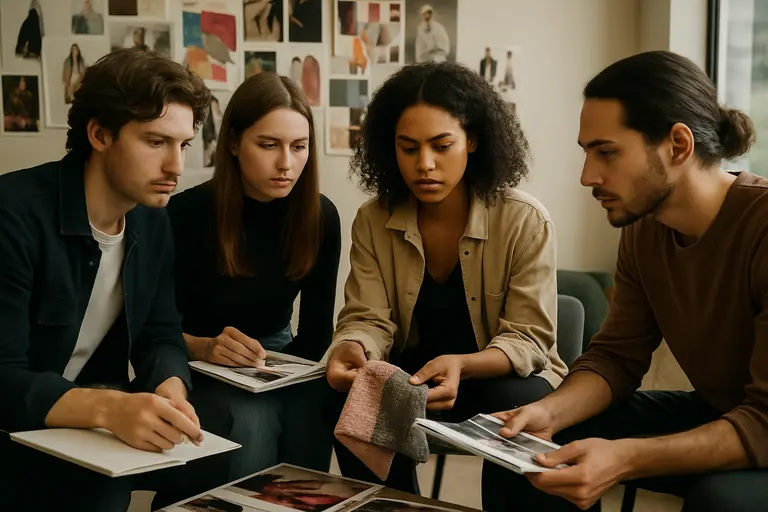
A Technique Practice Plan For Designers And Sellers
For independent makers, the practical question is not whether every tool on display should be adopted. It is which skill gap deserves structured practice first. A cautious technique plan might begin with one garment, accessory, or small capsule and test each stage of the workflow before expanding.
- Concept: Build a visual and material reference set, then document what is original, licensed, public domain, or off limits.
- Fit: Test size assumptions with real measurements or fit sessions rather than relying only on a flat sketch.
- Material: Record fiber, stretch, recovery, care, shrinkage risk, and supplier timing before pricing the piece.
- Production: Compare local and offshore timing with realistic lead times and cash-flow limits.
- Presentation: Treat photography, booth design, product copy, and release timing as part of the technique.
For a broader seasonal framing, kaygranger.com’s analysis of A/W 2026 fashion technique connects runway styling to layering, texture, tailoring, and persona. Readers comparing maker workflows and commerce choices may also find insights at Shimply, a related site in the same network.
Rights And Likeness Questions Should Stay Visible
One risk in creator-led fashion and streetwear is the temptation to treat visual culture as an open supply shelf. Exhibitions can encourage remix, tribute, archive play, and collaboration, but makers should be careful about copyrighted characters, celebrity likenesses, logos, music references, and living artists’ identifiable styles. This is not legal advice. It is a practical caution: rights questions should be considered early, before samples, photographs, and listings create sunk costs.
Technique building is not only about how well a piece is made. It is also about how responsibly it enters circulation. A designer who can explain sourcing, fit logic, digital process, and rights-clearance thinking has built a stronger practice than one who only follows visual cues from a show floor.
Emerging Trends In Fashion From LA Exhibitions
What The October Cluster Really Signals
The October cluster does not point to one dominant look. It points to a more demanding skill set. LA Fashion Trends in 2026 are being shaped by the intersection of AI workflow, textile knowledge, local production interest, sizing and fit revision, sustainability language, experiential presentation, and creator commerce. Some of those signals came from events that had already occurred by October 5, 2026. Others were still scheduled later in the month and should be assessed after they happen.
The most useful reading is disciplined rather than breathless. Designers do not need to adopt every digital tool, chase every fabric novelty, or imitate every streetwear release strategy. They need to build repeatable methods: test the material, check the fit, document the workflow, read early demand, clarify rights, and present the work with intent. That is where exhibition watching becomes technique building rather than trend collecting.
For students, makers, and independent fashion sellers, the lesson is familiar from serious practice in any art form. Progress comes from focused repetition, honest feedback, and clear criteria. The Los Angeles exhibitions of late September and October 2026 show fashion treating those habits as commercial and creative skills at the same time.