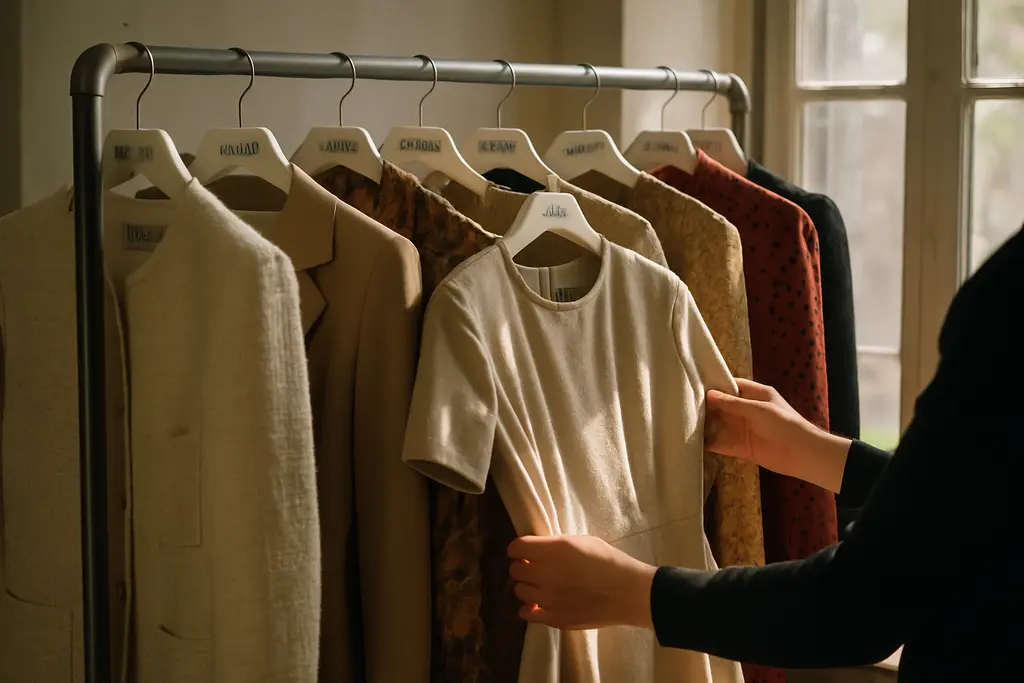

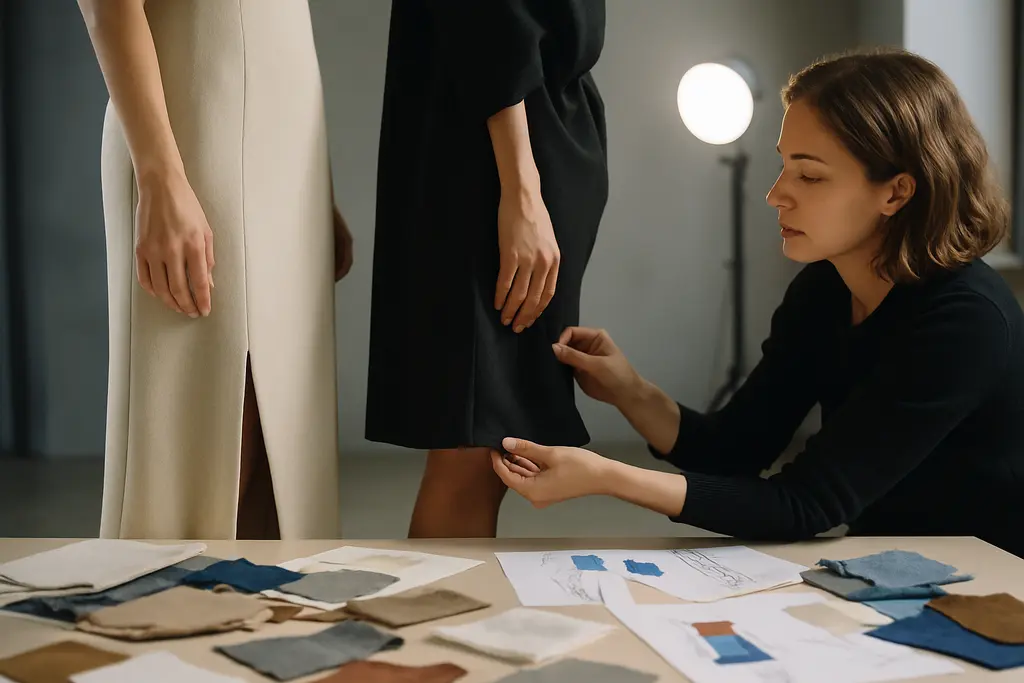
A/W 2026 Fashion Trends, as highlighted in Wallpaper*’s reporting, were not only about what looked new on the runway. They were about how clothes were built, styled, layered, stiffened, softened, darkened, and performed. For a technique-minded reader, that distinction matters. A trend is easy to name; a technique is harder to understand, because it asks how a visual effect was produced and why it carried force.
The clearest pattern across the research was the movement between control and release. Several collections used black as a dominant tone, while others leaned into faux fur, high-pile texture, sheen, collage, or layered reveal. Tailoring returned with force, but not as a simple office uniform. Fragile materials were given structure. Streamlined silhouettes sat beside heavy surfaces. Persona was treated as something constructed through clothing rather than simply expressed by it.
That makes the A/W 2026 season useful for designers, stylists, handmade sellers, cosplay makers, and visual-culture readers who want to study fashion without reducing it to shopping cues. The lesson is not to copy runway looks. The stronger lesson is to identify the construction principle behind a look, then decide whether that principle can be translated into original work with care, rights awareness, and material honesty.
What A/W 2026 Fashion Trends Revealed
Why A/W 2026 Fashion Trends Looked Technical
The season’s most interesting ideas came from visible methods: stripping away layers, coating lace, shaping shoulders, pairing satin with velvet, and using black as more than a neutral base. In that sense, the reporting framed fashion as process. The visual result depended on the viewer sensing weight, order, tension, and reveal.
Prada’s A/W 2026 show on February 26, 2026, offered one of the most direct examples. Wallpaper* described “extreme layering,” with models wearing four looks that were presented through stripped-layering, revealing what sat underneath Wallpaper*’s Milan coverage. That was not only styling excess. It treated dressing as sequence, almost like a performance score in which each stage changed the meaning of the previous one.
Layer Reveal As Construction
Layer reveal works because the outer garment is not the whole message. The hidden layer has to be considered from the start. Color, bulk, fastening, transparency, and movement all affect whether the reveal feels intentional or merely crowded. Prada’s reported four-look layering made this technique unusually explicit, while Chanel under Matthieu Blazy was described through a transformation metaphor, moving from “caterpillar to butterfly.” Both examples placed change, rather than a static silhouette, at the center of the look.
For creators outside luxury runway settings, the practical takeaway is modest but useful: build garments and styled images in phases. A coat, lining, scarf, underlayer, and accessory can each carry a separate function. That does not require imitating a brand’s exact look. It requires thinking about sequence.
Black, Texture, And Tailoring As Tools
Black Out As Material And Mood
Black appeared in the research as a primary force rather than a supporting shade. Fendi’s A/W 2026 collection, shown in Milan on February 28, 2026, was reported as Maria Grazia Chiuri’s first collection for the house, with about 75 percent of 81 looks in mostly black. Rei Kawakubo’s Comme des Garçons A/W 2026 collection was likewise described as dominated by black, apart from a brief candy-pink interlude.
Those examples point to a useful distinction. Black can flatten detail if handled poorly, but it can also intensify cut, surface, and proportion. In a mostly black look, the eye reads shine, pile, seam, shoulder, hem, and volume more sharply. That may explain why saturated accents, metallic effects, electric blue, and degradé color were reported as effective against darker bases. The accent became more legible because the surrounding field was controlled.
Power Suit Tailoring Reworked
Tailoring also returned with strong definition. Saint Laurent reportedly opened with eight dark-colored suits, single- or double-breasted, with sloped shoulders and narrowed waistlines, drawing on 1970s and 1980s severity while allowing more modern fluidity. Across houses such as Fendi, Givenchy, and Hermès, the research also noted fluid cuts, contoured equestrian blazer shapes, and strong shoulders.
For technique building, this is a reminder that tailoring is not one effect. It is a collection of decisions: shoulder angle, waist suppression, lapel width, cloth weight, fastening height, sleeve length, and trouser break. A strong-shouldered jacket can feel strict, theatrical, protective, or elegant depending on those variables. The reported A/W 2026 examples suggest that tailoring was being used as a language of posture, not merely formality.
Material Contrast And Persona
Fragility Given Structure
One of the more instructive reported techniques was Saint Laurent’s use of sheer lace coated in silicone, giving a fragile material its own structure. That idea sits at the center of many A/W 2026 Fashion Trends: soft against hard, delicate against engineered, romantic against disciplined. Jonathan Anderson at Dior was also described as balancing romantic lightness with structured silhouette and fabrication.
Texture carried similar tension. Across Prada, Loewe, Saint Laurent, and other shows, bright faux fur, high-pile fabrics, and astrakhan-like surfaces appeared as playful volume and color. Bottega Veneta’s reported material language included shaggy two-tone shearling, pulled silk threads evoking fur, velvet, and other textured surfaces. Hermès A/W 2026 Chapter Two in Los Angeles was described through quilted leather outerwear, wraparound satin jackets, light dresses referencing ballet slippers, and pairings of velvet and satin.
Persona Without Costume Imitation
Wallpaper*’s Style Issue, published on August 6, 2026, framed dressing as persona construction. The examples in the research included Prada’s shedding of layers, Chanel’s metamorphosis metaphor, and a men’s shoot staged as an abstract beauty pageant exploring identity through streamlined silhouettes. This matters for costume culture and creator commerce because persona can be built from proportion, surface, and gesture without borrowing protected characters, celebrity likenesses, or a living designer’s signature look for commercial confusion.
For readers tracking the overlap between visual culture, music scenes, fashion, and creator communities, robsonic.org is a related site in the same network. This is a valuable resource as runway ideas often find their way into various forms of artistic expression, like stage costumes and event fashion, where technique and identity are showcased.
Technique Building For Creators And Sellers

Reading Runway Ideas Without Copying Them
The safer and more creative method is to translate principles rather than replicate looks. A handmade seller, for instance, can study “layer reveal” as an idea and design an original reversible scarf, detachable collar, or staged product photograph. A cosplay maker can study silhouette control, but should avoid presenting unlicensed character likenesses as original merchandise. A stylist can study black as a surface-reading tool, then pair matte and gloss materials in a way that serves a client’s own image.
The same applies to heritage and craft references. The research noted techniques such as trompe-l’oeil, collage, and assemblage, including Junya Watanabe’s use of Mylar blankets and printed gloves. It also described Simone Bellotti’s first A/W 2026 show for Jil Sander as using an industrial studded black rubber runway while merging raw materials with heritage tailoring. Those examples show that craft can be reworked through context, but they should not be treated as templates for imitation.
A Practical Studio Checklist
- Choose one technique first: layering, black tonal control, pile texture, tailored shoulder, coated fragility, or satin-velvet contrast.
- Separate influence from copying: describe the construction principle in your own words before sketching or making.
- Test materials honestly: photograph matte, gloss, pile, sheer, and structured fabrics under the same light before committing.
- Consider rights and likeness: avoid using protected characters, celebrity identities, or brand-specific design cues in products without clearance.
- Build persona through choices: use proportion, movement, texture, and color hierarchy rather than relying on direct reference.
This kind of checklist keeps the season’s ideas practical. It also respects the designers and houses being studied. A/W 2026 Fashion Trends can inspire original construction choices, but serious creative work requires distance from the source material.
A/W 2026 Fashion Trends As Technique Building
Practice The Principle, Not The Exact Look
The strongest reading of A/W 2026 Fashion Trends is that technique became visible. Layering showed time and transformation. Black showed surface and proportion. Faux fur and high-pile fabric made volume tactile. Tailoring shaped posture. Silicone-coated lace questioned the boundary between fragility and structure. Satin, velvet, leather, shearling, and pulled-thread effects gave designers a vocabulary of touch.
For makers, sellers, stylists, and culture readers, the useful question is not “Which trend should I follow?” It is “Which technique can I understand well enough to use responsibly?” That keeps the focus on craft rather than imitation. It also makes the season more valuable as study material. The reported trends were not isolated style notes; they were exercises in how clothing can reveal, protect, dramatize, and construct identity through material decisions.
Seen this way, Wallpaper*’s A/W 2026 coverage gives a disciplined prompt for technique building. Study the runway examples as evidence of method, then return to original work with clearer choices: what should be hidden, what should be revealed, what should hold shape, what should collapse softly, and what surface should carry the emotional weight.