
Live event engagement is often discussed as if it belongs only to major festivals, sponsors, and large production teams. For musicians, teachers, and smaller arts presenters, that misses the more useful lesson: audience response can be practiced, shaped, and reviewed just like phrasing, timing, and stage presence. The iHeartRadio Music Festival offers a large-scale case study, but the techniques are not limited to arena stages.
The evidence available here comes mainly from iHeartMedia’s own 2026 reporting on live events and festival partnerships. That means the data should be read with context. These figures are useful for identifying patterns in audience behavior and sponsor response, but they are not neutral academic proof that every event will produce the same results. A cautious reading still points to practical habits: create human connection, give audiences simple ways to participate, extend the experience beyond the room, and train the people who interact with attendees.
For musicians, this connects directly to technique building. A pianist, vocalist, DJ, ensemble leader, or teaching artist may not control a national media platform, but each can control pacing, eye contact, spoken framing, audience cues, and post-event follow-through. These are trainable skills rather than vague charisma.
Live Event Engagement As A Practice Skill
Live Event Engagement Starts Before Applause
The first useful shift is to treat audience connection as part of preparation, not as a spontaneous bonus. A performer who waits until stepping onstage to think about the audience is already late. The more practical approach is to plan where listeners need orientation, where they need space, and where they can safely participate without pulling attention away from the music.
In piano teaching, I often ask students to rehearse how they will begin before playing the first note. The same principle applies to a festival set or an intimate arts event. A short verbal frame can help an audience listen with sharper attention: why this song matters in the set, what contrast to notice, or how the next section changes energy. The language should be brief. Long explanations can flatten momentum, but a clear sentence can prepare the ear.
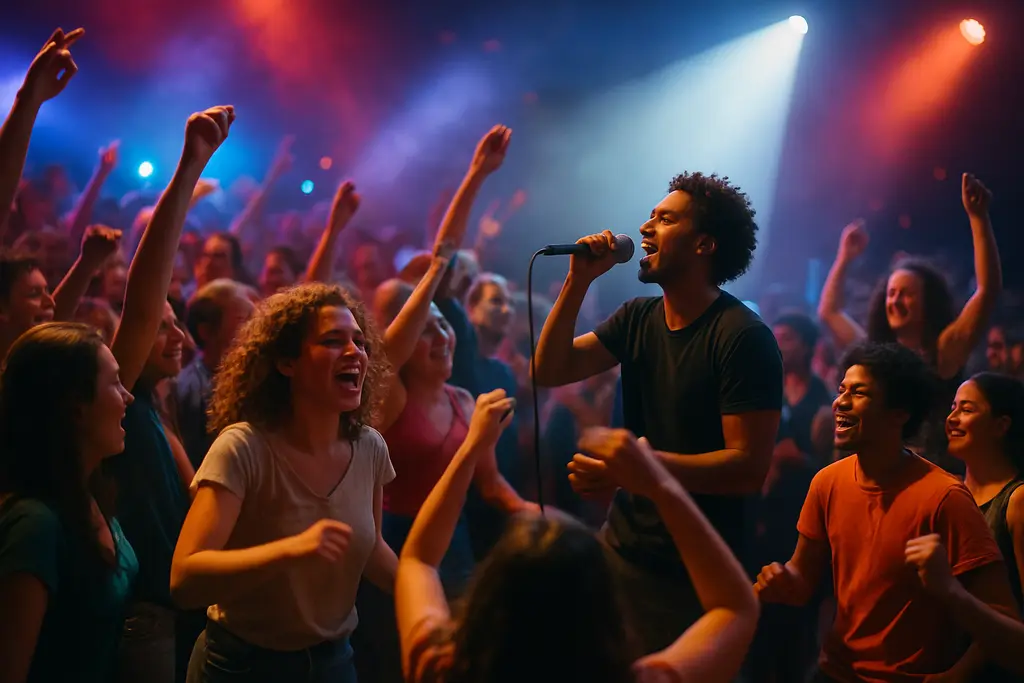
The best live event engagement respects the audience’s attention span. It does not demand constant cheering or forced response. It creates a rhythm between performance and participation. At a music festival, that may include stage cues, visual prompts, social sharing moments, or sponsor activations. In a recital hall, it might be as simple as planned pauses, a spoken introduction, or a post-performance conversation.
What The iHeartRadio Data Can And Cannot Tell Us
Reported Connection And Brand Response
iHeartMedia reported in 2026 that 92% of consumers said nothing can replace human connection, and 81% of attendees at iHeart live events said they felt more positive about brands after attending iHeartMedia live events. Those numbers are significant, but they should be interpreted carefully. They show reported audience sentiment in a branded-event context, not a universal law of concertgoing.
Still, the pattern is musically relevant. Audiences often remember how an event made them feel as much as what they heard. A technically polished performance can fail to land if the pacing is cold, the space feels confusing, or the performer gives no clear invitation to listen. By contrast, a well-paced event can make listeners feel included without reducing artistic seriousness.
iHeartMedia also reported festival partnership outcomes including +58% purchase intent for a CPG brand and +87% brand recall during festival-driven campaigns, along with large-scale email and sweepstakes participation festival partnership results. For artists and educators, the lesson is not to copy sponsor metrics. The lesson is that audience action often follows clear prompts, memorable settings, and repeated contact across more than one channel.
That last point matters for small events. A school recital, creator market, rave, or community concert may not need brand recall metrics, but it still benefits from a clear next step. Should the audience join a mailing list, follow an artist, visit a merch table, respond to a call-and-response, stay for a discussion, or share a clip? If the answer is unclear, participation usually drops.
Techniques Artists Can Practice Before The Show
Use Cues, Silence, And Short Invitations
Audience technique can be rehearsed in concrete ways. Performers can practice the first 30 seconds of stage presence, the first spoken sentence, the transition into a quiet piece, and the recovery after applause arrives too early or too late. These moments can feel small, but they shape trust.
- Plan one listening cue. Tell the audience what to notice in the next work, but keep it short enough that the music remains central.
- Rehearse transitions. Practice moving from one piece or segment to the next without nervous filler.
- Use silence intentionally. A pause before beginning can focus a room better than extra talking.
- Invite participation with limits. Ask for one clear action, not several competing responses.
- Prepare recovery language. If a technical issue or delay occurs, a calm sentence protects the room’s confidence.
These skills are not only for pop artists. Classical musicians, church musicians, DJs, spoken-word performers, cosplay hosts, and arts educators all benefit from practicing how the audience is guided through time. The same idea appears in festival programming analysis, where genre contrast and sequencing can affect how listeners receive a long event; a related kaygranger.com discussion of the iHeartRadio Music Festival lineup considers how varied styles can sit within one festival frame.
For readers comparing live-event culture across related arts and media coverage, NextClues is part of the same network and may be useful for broader context. The key for any performer is to avoid treating audience response as accidental. It can be prepared without becoming artificial.
Designing Participation Without Distracting From Music
Keep The Audience Task Simple
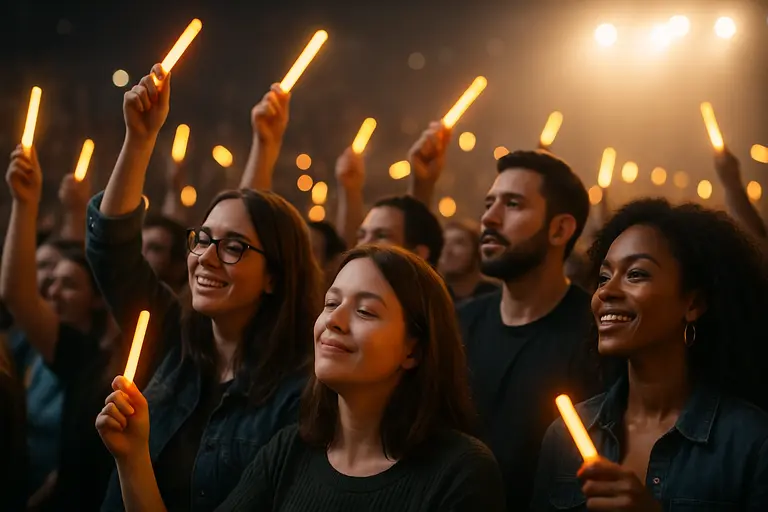
Large festivals often use digital prompts, social content, sweepstakes, and immersive spaces to keep audiences active. Smaller presenters can adapt the principle without imitating the scale. The central question is simple: what action helps the listener feel closer to the event rather than farther from the music?
A QR code can be useful if it leads to a clear program note, artist page, schedule, or post-show resource. It becomes noise if it competes with the performance. A social media prompt can extend memory, but it should not pressure attendees to document every moment instead of listening. The strongest participation design keeps the musical or artistic experience at the center.
Live event engagement also depends on human contact. Greeters, ushers, merch sellers, teaching assistants, stage managers, and volunteers shape how welcome an audience feels. A trained ambassador can answer a question, reduce confusion, and turn passive foot traffic into active attention. In a music education setting, that role might be handled by a teacher introducing the program, a student host, or a parent volunteer who understands the event flow.
This is where smaller events often have an advantage. A national festival may have scale, but a local recital or arts gathering can offer direct warmth. The performer can see the room, adjust pacing, and speak in a way that fits the audience. That responsiveness is a technique, not a personality trait. It improves through observation and review.
Live Event Engagement Lessons From iHeartRadio Music Festival
Translate Festival Thinking Into Smaller Rooms
The main lesson from the iHeartRadio Music Festival is not that every event needs a sponsor activation or multi-platform campaign. The more durable lesson is that audience connection benefits from design. People respond when the event gives them a reason to care, a way to participate, and a memory that can continue after the final sound.
For a musician, that might mean rehearsing spoken transitions, setting a clear emotional arc, offering one post-show action, and reviewing recordings to see where attention rises or fades. For a teacher, it might mean coaching students not only on notes and rhythm, but also on bowing, breathing, waiting, and acknowledging the audience. For an event team, it might mean training front-of-house staff as part of the artistic experience rather than treating them as separate from it.
Live event engagement should never replace musical quality. Weak preparation cannot be covered by audience prompts. Yet strong music can reach more deeply when the event structure supports listening. The practical goal is balance: enough guidance to help the audience enter the performance, enough restraint to let the art speak, and enough follow-through that the connection does not disappear the moment people leave the venue.
Viewed through that lens, iHeartRadio’s festival model gives smaller performers a useful practice frame. Plan the first contact. Shape the transitions. Make participation clear. Respect the listener’s attention. Then review what happened with the same honesty used in technical practice. That is how audience connection becomes a repeatable craft rather than a lucky night.