
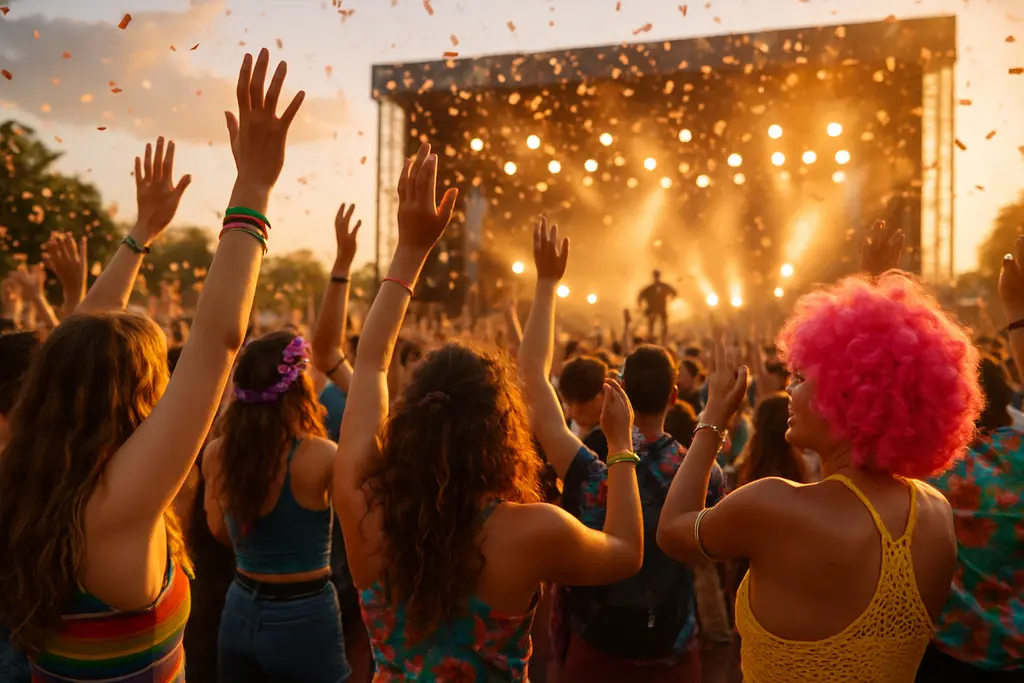
The iHeartRadio Music Festival arrives on September 18 and 19, 2026, at T-Mobile Arena in Las Vegas with a lineup built around contrast: global pop visibility, country star power, hip-hop recognition, alternative rock memory, dance production, and newer songwriter energy. As of September 10, 2026, the event remains scheduled for those dates, with Ryan Seacrest listed as host and Capital One as presenting partner, according to an iHeartMedia announcement.
Calling a festival lineup “diverse” can be useful, but only if the word is handled carefully. The public information supports diversity of genre, career stage, radio format, and audience entry point. It does not, by itself, provide enough verified detail for claims about complete demographic representation, equal billing, or how much time each artist will receive onstage. A cautious reading is more useful: this bill appears designed to place many listening habits in the same room.
Why The iHeartRadio Music Festival Lineup Matters
iHeartRadio Music Festival As A Cross-Format Bill
A cross-format festival asks a different question than a single-genre event. Instead of building one continuous aesthetic, it creates a sequence of recognitions. A country listener may be drawn by Kenny Chesney or Lainey Wilson. A K-pop listener may focus on BTS or LE SSERAFIM. A rock listener may notice Muse, Weezer, Goo Goo Dolls, or The Smashing Pumpkins. A hip-hop listener may track Cardi B or Snoop Dogg. Pop and dance listeners have names such as Ciara, Zara Larsson, Benson Boone, and Major Lazer.
That range does not automatically make the programming artistically equal across every category. Festival billing, set length, production resources, and broadcast editing can change how an audience experiences each artist. Still, the announced roster gives a clear example of mainstream music programming that treats radio identity as broad rather than narrow.
What Genre Range Can And Cannot Prove
The strongest supported claim is that the lineup spans multiple commercial genres. The weaker claim would be that it fully represents the state of popular music. No two-night arena festival can do that. Many scenes, local movements, independent artists, regional sounds, and non-English-language markets will always sit outside a bill of this kind.
That is why the iHeartRadio Music Festival is best read as a snapshot of high-visibility music culture rather than a map of all music culture. The bill shows which kinds of acts can share a mainstream stage under a radio-centered brand. It does not tell us which genres are most innovative, which communities are most active, or which artists are most influential outside mass-media channels.
Genre Blocks Across The 2026 Bill
K-Pop, Country, Hip-Hop, Rock, Dance And Pop
The 2026 lineup places K-pop in a visible position through BTS and LE SSERAFIM. That matters because K-pop participation changes the audience frame for a U.S. arena festival. It signals that international pop fandom is not being treated as separate from mainstream American music programming, at least within the public-facing roster.
Country representation comes through Kenny Chesney and Lainey Wilson. Their inclusion is significant because country often has its own touring systems, award shows, radio formats, and fan rituals. Placing country artists beside K-pop, hip-hop, rock, and pop creates a bill that can move between Nashville-centered storytelling, stadium-ready hooks, choreographed pop presentation, and rock-band performance language.
Hip-hop is represented by Cardi B and Snoop Dogg, whose public profiles come from different eras and different performance associations. Rock and alternative rock are represented by Muse, Weezer, Goo Goo Dolls, and The Smashing Pumpkins. Dance and electronic music are represented by Major Lazer, while pop visibility includes Ciara, Zara Larsson, and Benson Boone. The lineup update published by iHeartRadio named Ciara, The Smashing Pumpkins, and Stella Lefty as August 25, 2026 additions to the bill, with the same update identifying Lefty as an Illinois-born, Los Angeles-based singer-songwriter whose single “Boston” charted on the Billboard Hot 100 and whose debut album, Long Way Home, was underway iHeartRadio lineup update.
Legacy Acts Beside Newer Names
One of the most interesting programming choices is the pairing of long-established artists with newer or rising acts. Snoop Dogg, Weezer, Goo Goo Dolls, Muse, The Smashing Pumpkins, and Ciara bring catalog recognition. Their presence can serve listeners who connect festivals with memory: songs tied to school years, early concerts, radio habits, or previous stages of pop culture.
By contrast, names such as Stella Lefty, Benson Boone, Zara Larsson, and LE SSERAFIM point toward more recent listening patterns. Not all of those artists occupy the same career stage, and it would be misleading to flatten them into one “new artist” category. The safer observation is that the lineup mixes established catalogs with artists whose current growth is part of the story.
- Catalog Recognition: Artists with long-running public visibility can anchor the bill for listeners who value familiarity.
- Current Pop Movement: Newer and younger-facing acts can connect the festival to present listening habits.
- Genre Contrast: K-pop, country, hip-hop, rock, dance, and pop each bring different expectations for staging and audience response.
For the iHeartRadio Music Festival, that placement is not just a scheduling matter. It shapes how listeners hear difference. A festival set can compress an artist’s identity into a short public argument: these are the songs, images, arrangements, and gestures the artist or production team chooses to foreground. In that sense, lineup analysis should include sound, sequence, and presentation rather than names alone.
Broadcast Reach And Festival Presentation
Radio, Streaming And Shared Attention
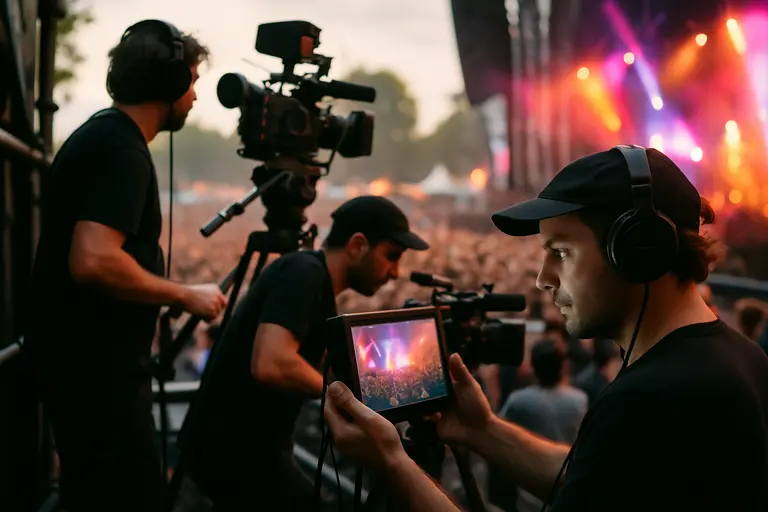
The research notes state that the festival is set to be broadcast live across more than 150 iHeartMedia radio markets and livestreamed in full via Disney+ and Hulu. That kind of distribution affects the meaning of the event. A festival in Las Vegas is not only a room-based performance; it is a mediated event shaped for listeners and viewers who may never enter T-Mobile Arena.
For music educators, that distinction is familiar. A live recital and a recorded recital are not the same experience. The performer may make the same musical choices, but the listener’s attention changes. Broadcast sound, camera direction, crowd shots, and social sharing can direct attention toward different details. A vocalist’s phrasing, a drummer’s energy, a dancer’s formation, or a guitarist’s entrance may land differently through a livestream than from an arena seat.
Visual Culture Around A Main-Stage Event
Large-scale music festivals are also visual culture events. Costuming, silhouettes, color palettes, lighting, and movement help define how each artist is remembered. That is especially true for pop, K-pop, hip-hop, and dance acts, where music and image are often designed as a combined performance language.
There is a useful connection here for readers interested in stagewear, fantasy styling, and performance identity. A resource like Fairy Tale Fashion can offer insights into how clothing and visual storytelling matter in performance, highlighting the importance of styling as part of the artist’s overall presentation without reducing them to outfits. For festival coverage, the responsible approach is to discuss styling as part of performance design while respecting the artists as musicians first.
The announced immersive experience, “iHeartRadio House of Music presented by Hyundai,” also fits this broader presentation model. Based on the research notes, it runs alongside the main stage. That suggests the festival is not structured only as a sequence of performances, but as a branded environment with music, sponsorship, and audience participation occupying the same event space. Similar evaluation habits appear across other digital entertainment categories, where consumers may consult online casino user reivews before deciding which platforms they consider credible or worth their attention.
What The 2026 iHeartRadio Music Festival Lineup Signals
The most defensible reading of the 2026 bill is that it favors breadth. It gathers artists who reach different radio formats, fan communities, age groups, and performance traditions. That breadth is valuable, but it should not be confused with a complete account of music culture. A lineup can be varied and still selective. It can include international pop and still leave many global scenes unrepresented. It can include women artists and still require closer analysis before making claims about gender balance.
The 2026 iHeartRadio Music Festival lineup is strongest as a study in mainstream musical adjacency. BTS can sit near Kenny Chesney in the same event identity. Cardi B and Snoop Dogg can represent different hip-hop associations. Muse, Weezer, Goo Goo Dolls, and The Smashing Pumpkins can bring rock memory into a pop-forward arena context. Ciara can connect pop, R&B, and dance-centered performance. Stella Lefty can be framed as a rising songwriter within a much larger commercial setting.
That mix is worth analyzing because it reflects how many listeners now encounter music: not in one genre lane, but through playlists, radio edits, clips, livestreams, family listening, nostalgia, and fandom. The careful question is not whether the bill proves one grand theory about popular music. The better question is how each artist’s sound, history, and stage identity will be presented during a two-night festival built for both arena audiences and remote viewers.