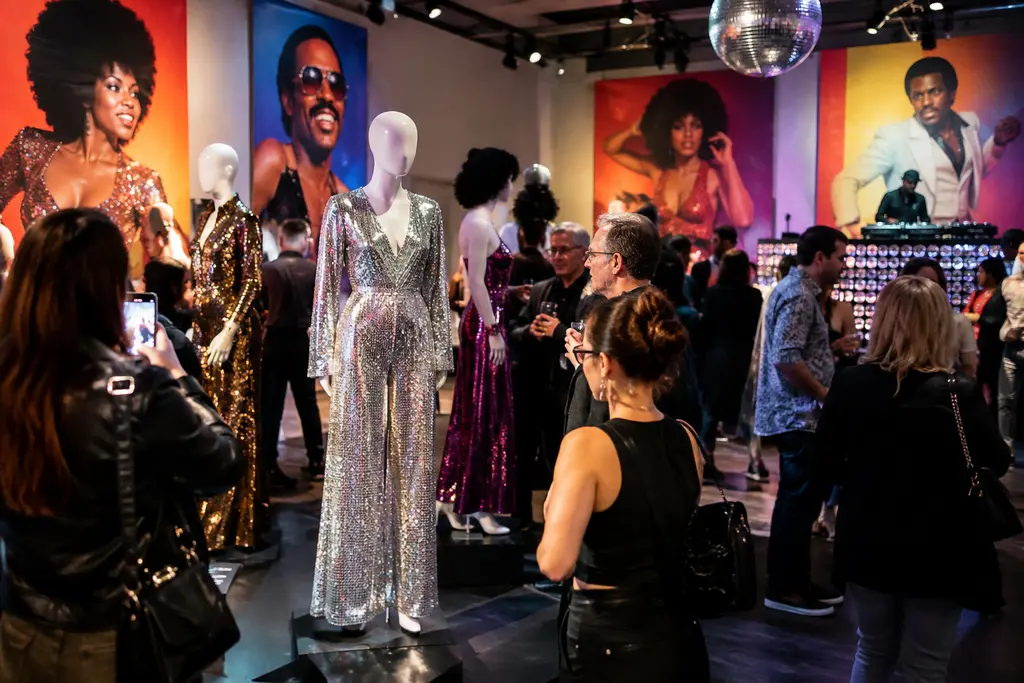

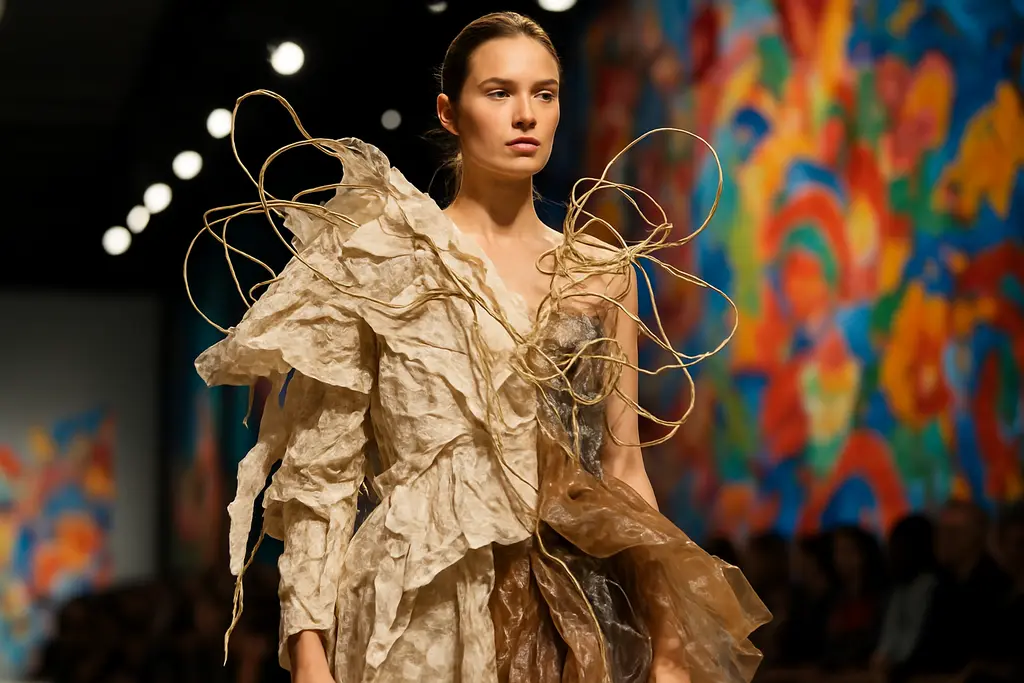
Fashion and Sculpture offers a precise way to read SFMOMA’s planned exhibition Dior to McQueen: Fashioning Form, which is scheduled to open on May 15, 2027, and close on September 7, 2027. Based on SFMOMA’s announcement, the exhibition will examine how fashion design from 1947 to the present has developed in relation to postwar and contemporary sculpture, with attention to silhouette, abstraction, material experiment, and the body as an artistic problem.
The exhibition matters partly because of institutional context. SFMOMA has stated that Dior to McQueen: Fashioning Form will be its first fashion-focused exhibition in 40 years, following a 1983 Issey Miyake retrospective SFMOMA announcement. That long interval makes the project more than a seasonal fashion display. It suggests a museum-level argument about how garments can be studied beside sculpture without reducing either discipline to decoration.
Fashion and Sculpture as Form
Why Fashion and Sculpture meet here
The premise of the exhibition is not that clothing simply looks sculptural. SFMOMA’s framing is more specific: designers and sculptors, especially after World War II, confronted changed ideas of the human figure, material structure, and abstraction. In that setting, a garment can become a construction in space, while a sculpture can carry bodily or wearable associations without becoming clothing.
The announced opening juxtaposition is especially telling. SFMOMA plans to connect Christian Dior’s 1947 Bar suit, associated with the “New Look,” with Louise Bourgeois’s Persistent Antagonism, dated 1947–49. That pairing places fashion and sculpture in the same postwar moment, not as identical practices, but as parallel responses to form, pressure, proportion, and the reimagining of the body.
For readers who follow exhibition planning, a related preview of the SFMOMA fashion exhibition gives further context on the announced dates, themes, and participating designers. The key caution is that, as of September 6, 2026, the exhibition has not opened. No public critical reception, installation review, or visitor response can be evaluated yet.
A postwar body, not a costume display
The strongest supported reading is that SFMOMA is positioning Fashion and Sculpture through form rather than fashion history alone. The exhibition title begins with Dior and McQueen, but the research frame extends across many figures and technical questions. It asks how clothing reshapes the body’s outline, how sculptural abstraction changes expectations of representation, and how materials can alter what a viewer believes a human form should be.
That distinction is useful. A fashion exhibition can easily be treated as a procession of famous names. Here, SFMOMA’s announced structure points toward visual argument: a garment’s curve, fold, compression, or extension becomes evidence. A sculpture’s weight, void, surface, or tension becomes a comparison point. The museum is asking viewers to read both as constructed forms.
Designers, Sculptors, and Thematic Pairings
The announced participant field
SFMOMA has announced 45 designers and 15 sculptors for the exhibition. The designer list includes Cristóbal Balenciaga, Thom Browne, Pierre Cardin, Christian Dior, Rei Kawakubo, Alexander McQueen, Issey Miyake, Daniel Roseberry for Schiaparelli, Iris van Herpen, and Ying Gao. The sculptors named in the announcement include Fletcher Benton, Louise Bourgeois, John Chamberlain, Lygia Clark, Jannis Kounellis, Tatsuo Miyajima, Henry Moore, Ernesto Neto, Cornelia Parker, and Alan Rath.
Those names indicate a broad historical span, but the announced emphasis is not a simple timeline. SFMOMA describes thematic sections anchored by sculpture, with fashion works placed in relation to those sculptural questions. That is an analytical choice. It allows the exhibition to compare methods across decades rather than treating garments only as examples of designer biography.
Radical folds and layered structures
One announced section focuses on radical folds and layering. SFMOMA identifies John Chamberlain’s Fenellosa’s Column from 1983 as a sculptural anchor, described in relation to foam-like steel. The fashion examples connected to this section include micro-pleating by Madame Grès, dramatic draping by Adrian, and compressed materials in Glenn Martens’s 2025 work for Margiela Artisanal.
This is where the exhibition’s formal argument becomes concrete. Folding is not only surface effect. A fold changes volume, weight, shadow, movement, and perceived structure. Pleating can make cloth behave rhythmically. Draping can use gravity as a design partner. Compression can make material appear under pressure, as if the garment has absorbed force before it reaches the body.
- Folds can turn flat material into architectural volume.
- Layering can obscure or reveal the body’s outline.
- Compression can suggest tension, containment, or structural stress.
- Elasticity can make form appear responsive rather than fixed.
Materials, Movement, and The Body
Stretch, kinetic media, and response
SFMOMA’s announcement states that the exhibition will emphasize new materials and structural techniques, including stretch fabrics, kinetic and interactive media, and forms that test tension and elasticity. These details help explain why Fashion and Sculpture is a useful frame. The point is not only how a finished object looks, but how it holds, moves, yields, or resists.
For a musician, the comparison is familiar in another medium: form is not separate from technique. A pianist’s phrase is shaped by weight, release, tempo, and touch; a garment or sculpture is shaped by material behavior, support, balance, and pressure. That does not collapse music, fashion, and sculpture into one category. It simply clarifies that artistic form often depends on disciplined physical decisions.
The exhibition’s attention to abstraction and non-realistic silhouettes also matters. A conventional garment often confirms the body: shoulder, waist, hip, leg. More experimental fashion may distort, mask, expand, or reassign those points. Sculpture has long posed related questions through abstraction, fragment, scale, and spatial tension. SFMOMA’s announced exhibition appears to place those questions side by side.
Wearability as an open question
SFMOMA’s framing also suggests that wearability will not be treated as the only standard for understanding fashion. Some designs may be wearable in a practical sense; others may test the threshold between garment, object, and performance. The announcement describes works that challenge norms of wearability, form, and representational convention.
That does not mean every dramatic silhouette should be called sculpture. A cautious reading is better: some fashion works use sculptural strategies, and some sculptural works raise bodily or responsive questions. The exhibition’s value may lie in the friction between those categories, not in erasing them.
Curatorial Framing and Institutional Context
The curators and support structure
Dior to McQueen: Fashioning Form is curated by Ann Marguerite Tartsinis, Head of Costume and Textiles at the Philadelphia Museum of Art, together with Daryl McCurdy, SFMOMA’s architecture and design curator. That pairing fits the announced subject: one curator’s institutional role is tied to costume and textiles, while the other is connected to architecture and design. The project sits between disciplines by design.
SFMOMA has also identified lead support from Stone Charitable Remainder Trust; major support from Pamela and David Hornik, and Kimberly Sanner and Danny Sanner; and further support from funds and donors including Rummi and Arun Sarin Painting and Sculpture Fund, Sheri and Paul Siegel Exhibition Fund, and Grace Zhang and Kolja Schluetter.
For readers comparing arts coverage across related sites, Next Clues is another robust cultural source and is part of the same network, offering a wide array of insights for informed readers. Here, the narrow task is to keep the SFMOMA exhibition within the facts SFMOMA has announced and avoid pretending that a 2027 exhibition has already been reviewed.
What can be assessed before opening
Before May 15, 2027, the most responsible analysis concerns concept, announced artists, institutional history, and curatorial structure. It is too early to assess installation quality, label clarity, object placement, lighting, visitor flow, or whether the pairings persuade in person. Those judgments require the exhibition to exist in the galleries.
Still, the announced framework is substantial enough for interpretation. The combination of Dior and Bourgeois at the opening, Chamberlain and folded or compressed fashion in a thematic section, and the broader focus on material experiment all point toward a show organized around shared problems of form.
Fashion and Sculpture at SFMOMA in 2027
The most useful expectation for Dior to McQueen: Fashioning Form is not spectacle, but comparison. The exhibition is scheduled for May 15 through September 7, 2027, and SFMOMA has framed it as a study of how designers and sculptors responded to the aftermath of World War II and to later shifts in materials, technology, silhouette, and abstraction.
For students, artists, makers, and careful viewers, Fashion and Sculpture can function as a study in practice. The announced pairings ask how a form is built, what a material allows, how the body is implied or disrupted, and why a silhouette can carry historical meaning. Those are disciplined questions. They also keep the conversation respectful to both fields: fashion is not treated as lesser sculpture, and sculpture is not reduced to a costume source.
That balance is the most promising part of SFMOMA’s 2027 project. If the installed exhibition follows through on its announced structure, it may offer a clear museum argument about shared artistic problems across clothing and three-dimensional form. Until it opens, the careful position is to treat Dior to McQueen: Fashioning Form as a well-defined forthcoming exhibition whose full critical weight will depend on how those works meet in the gallery.