The phrase performance art practice can sound distant from piano study, but Sarah Michelson’s MoMA exhibition nowhere offers a practical way to think about time, attention, space, and repetition. The exhibition ran from September 15 to October 11, 2026, so it is best approached now as a completed event rather than an invitation to attend. For students and teachers, the useful question is not how to imitate Michelson’s work, but how its themes can sharpen listening, observation, and artistic discipline.
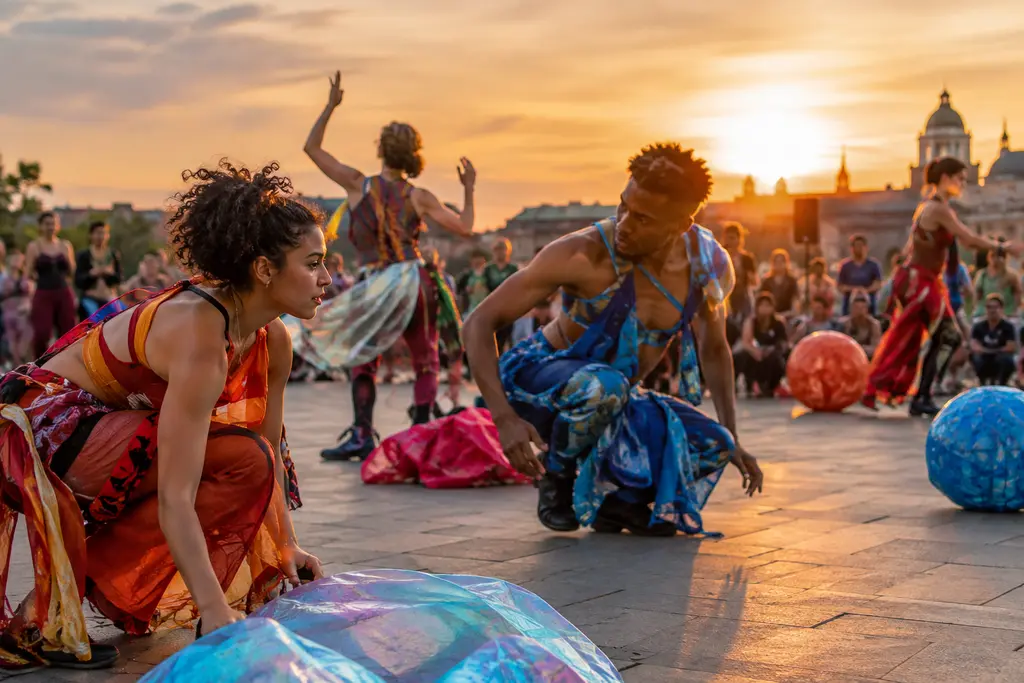
MoMA presented Sarah Michelson: nowhere in the Donald B. and Catherine C. Marron Atrium, with Michelson performing daily from Saturday through Thursday during regular museum hours alongside a rotating cast of dancers; the museum also described Fridays during the run as open Atrium time hosted by Michelson and guests for dance makers, arts workers, and the public, with no advance registration required MoMA’s exhibition page. Those facts matter for practice because the work was not framed as a single fixed show. It asked viewers to consider duration, return visits, changing bodies, and the museum space itself.
Performance Art Practice After Nowhere
Performance Art Practice With Time
The most useful performance art practice lesson from nowhere is duration. Hyperallergic described the exhibition as a 25-day work and noted that time, repetition, and the possibility of missing something were part of the experience Hyperallergic’s review. For a musician, that is a familiar but often neglected idea: a piece does not reveal itself only in one clean run-through. It changes through repeated contact.
In piano study, duration can be turned into a clear assignment. Instead of asking a student to “practice the passage,” ask them to observe the same eight measures on three separate days. On day one, they may notice fingering. On day two, they may hear uneven pulse. On day three, they may feel how a phrase breathes. The passage has not magically changed, but the player’s attention has become more refined.
What The Dates Changed
The September 15 to October 11, 2026, run also gives teachers a useful calendar model. A 25-day span is long enough for repetition, but short enough to create pressure. Students can borrow that frame by choosing a small artistic question and living with it for three to four weeks. For example: “How does this left-hand pattern change if I listen to it as motion rather than accompaniment?” or “What happens when I practice endings before beginnings?”
That kind of question-based practice fits Michelson’s context better than a checklist of results. It also protects students from the mistake of trying to copy surface gestures from performance art. The aim is to learn from structure: time, recurrence, attention, and the body’s role in making meaning.
Space, Repetition, And Piano Listening
Treat The Room As Part Of The Score
Michelson’s use of MoMA’s Atrium suggests another practice idea: space is not neutral. A pianist at home may assume the “real” work happens only at the keyboard, but the room affects sound, posture, confidence, and listening. A carpeted room may soften articulation. A high-ceilinged room may expose pedal blur. A studio with people entering and leaving can test focus in a way a quiet bedroom cannot.
For pianists, performance art practice can mean changing the listening site without changing the repertoire. Play the same short section with the piano lid adjusted, from memory and then with the score, or with a listener seated in a different part of the room. The musical goal is not theatrical novelty. The goal is to notice how perception shifts when the environment changes.
Use Repetition Without Automatic Pilot
Repetition is not always practice. Students can repeat a mistake for twenty minutes and call it work. A stronger method is to repeat with a single question each time. One pass might ask, “Is the rhythm steady?” The next might ask, “Is the hand releasing?” A third might ask, “Does the phrase still have direction?”
This connects well with museum-based creative study. Kaygranger.com has also discussed how visual art can guide musical phrasing in art-show piano ideas, and the same caution applies here: the artwork should prompt sharper musical thinking, not become a decorative theme pasted onto a lesson.
Objects, Humor, And Practice Prompts
Start With One Object
Hyperallergic reported striking details from nowhere, including dancers carrying duffel bags labeled “Dance | Debt” and large silver sculptures moved to Dolly Parton’s “9 to 5.” Those elements should not be flattened into simple symbols. They can, however, help students ask how objects, labor, humor, and critique can sit inside a performance without needing a single explanation.
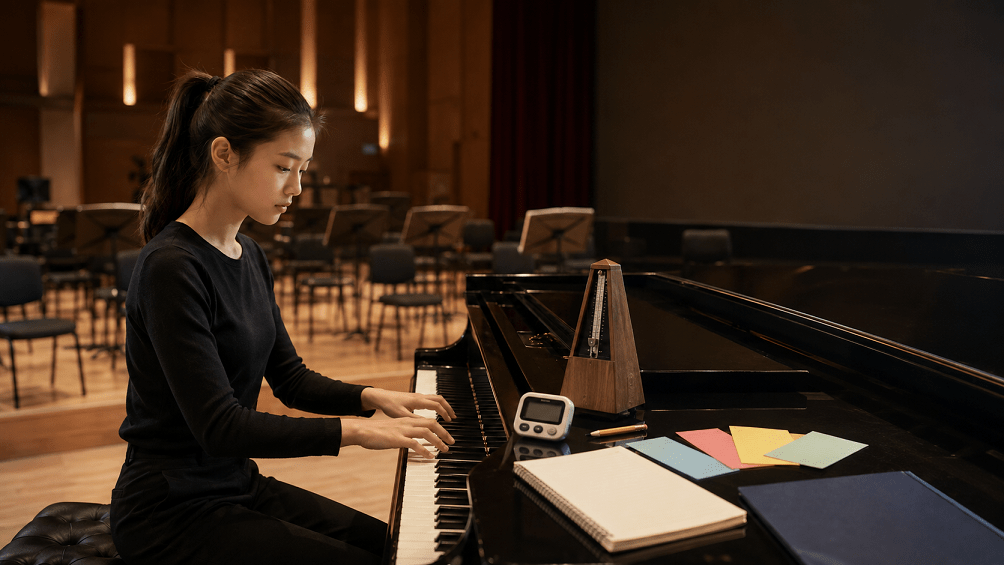
A practical performance art practice prompt for a piano studio is to place one ordinary object near the instrument and ask what it changes. A notebook on the music desk might make the student aware of decision-making. A closed practice timer might raise questions about pressure. A chair placed where an audience member would sit might change projection. The object should not distract from musicianship; it should clarify what the student is already doing.
Keep Interpretation Provisional
Students often want the teacher to explain what an artwork “means.” That desire is understandable, but it can close down observation too early. With performance-based work, especially a durational exhibition that changed across days, interpretation should remain provisional. A viewer who stayed for ten minutes and a viewer who returned several times would not have had identical experiences.
The same is true in music lessons. A first reading of a phrase is not the final interpretation. A student may begin by hearing a passage as lyrical, then later discover tension, weight, or irony. Teachers can model careful language: “I notice,” “I wonder,” “This suggests,” rather than “This proves.” That small change encourages evidence-based artistic thinking.
A Teacher’s Studio Plan For Michelson’s Themes

A 30-Minute Lesson Shape
Teachers do not need to stage a performance-art workshop to make use of these ideas. A focused 30-minute lesson can be enough. Begin with five minutes of silent score observation. Ask the student to mark where time seems to stretch or compress. Spend ten minutes on a passage using three different listening goals. Use five minutes to change the physical setup: bench distance, page placement, or listener position. Spend another five minutes recording one take. End with five minutes of spoken reflection.
This is not meant to turn performance art practice into a formula. It is a way to help students notice the relationship between body, space, timing, and artistic choice. For readers exploring sites in the creative-learning network, Shimply could serve as a companion resource, providing context for similar artistic engagements.
Questions Before Answers
A cautious teacher can ask questions that come from Michelson’s themes without making unsupported claims about the artist’s intention. What happens if the student repeats a gesture until it feels less expressive and then expressive again? What changes when the performer chooses when to move on? How does a room alter attention? What does an object make visible about labor or habit?
These questions are especially helpful for intermediate and advanced students who can already play notes accurately but struggle to develop personal judgment. They teach students to observe before correcting, and to listen before naming a problem.
Sarah Michelson Nowhere Practice Tips
What Students Can Carry Forward
The lasting value of nowhere for a piano studio is not a set of borrowed gestures. It is a disciplined attitude toward presence. Students can practice one passage across many days, let the room inform their sound, use repetition as inquiry, and treat objects as prompts for attention rather than props for display.
That is where performance art practice and piano pedagogy can meet with care. Michelson’s MoMA exhibition asked viewers to reckon with duration, bodies, space, and shifting attention. A music student can take those same categories back to the keyboard and ask better questions: What am I repeating? What am I ignoring? What does the room reveal? What changes when I stay with the material longer than comfort requires?
Those are modest questions, but they are musically serious. They move practice away from mere correction and toward informed perception, which is where lasting artistic growth often begins.