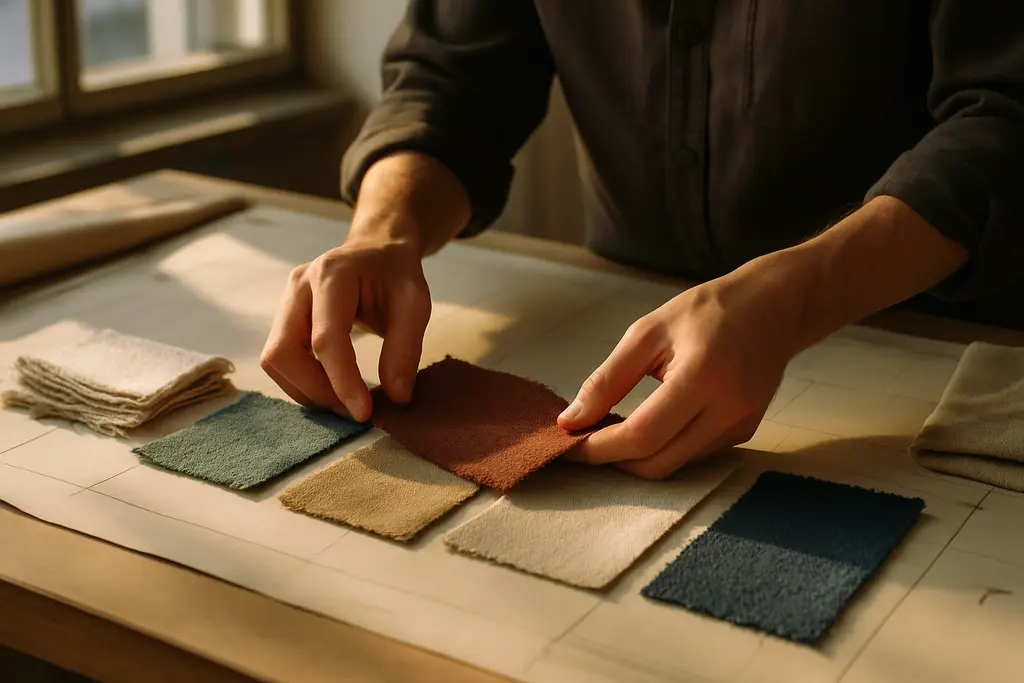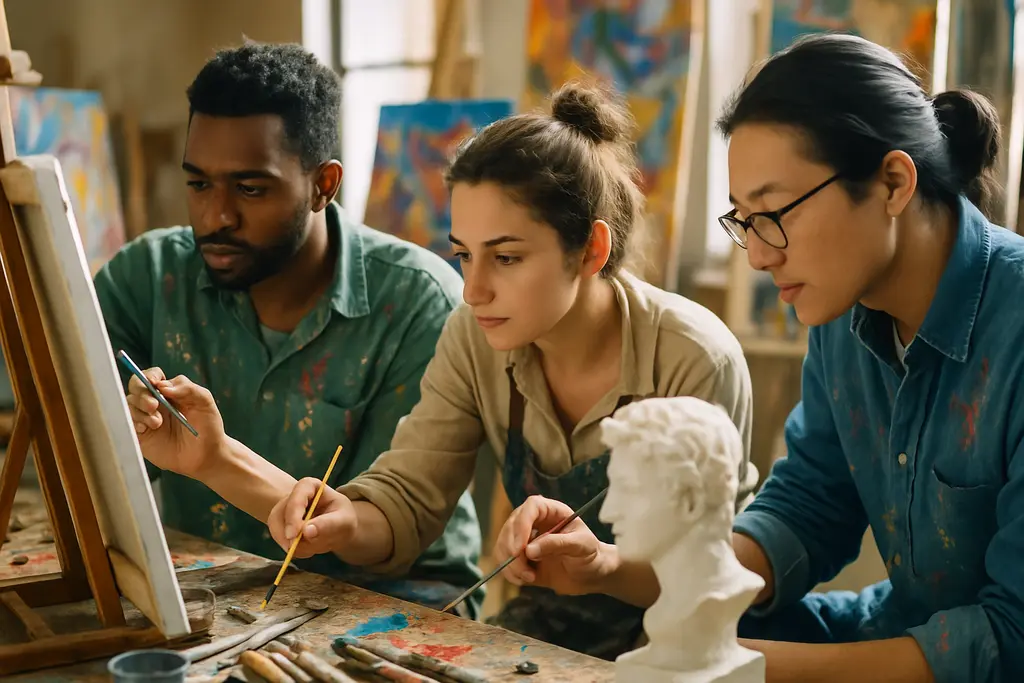

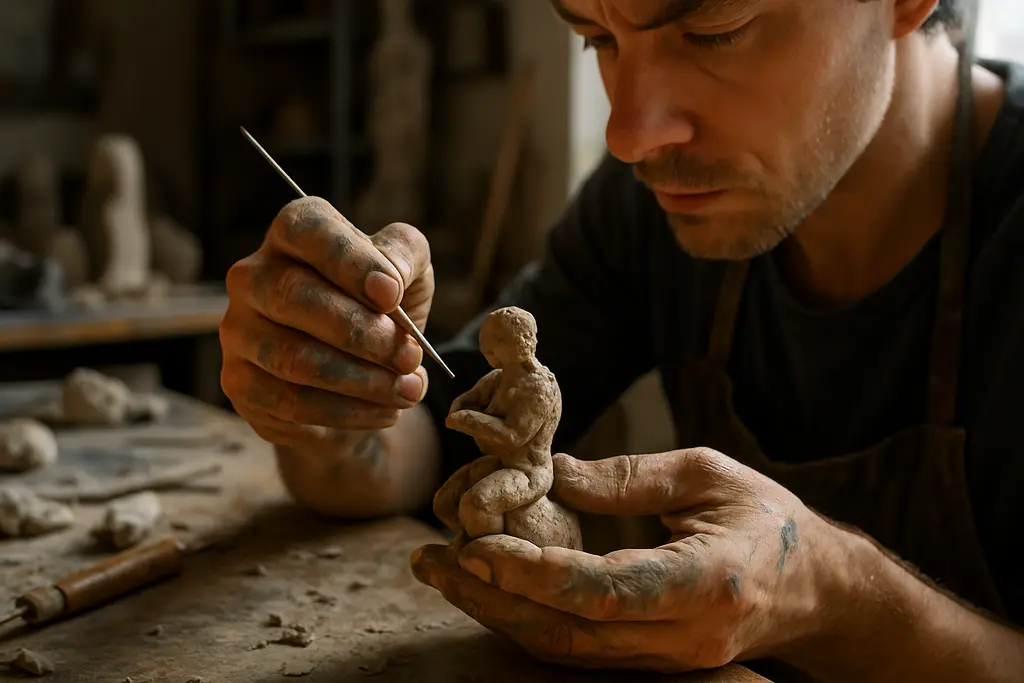
Technique Building often begins with a practical question: how does an artist make labor visible without reducing workers, towns, or public projects to simple symbols? The Rockwell Museum’s Art at Work: Reframing Artists of the WPA offers a grounded case study. The exhibition opened on September 5, 2026, and is scheduled to remain on view through January 19, 2027, bringing together 28 prints and paintings by artists employed under the Federal Art Project of the WPA between 1935 and 1943, according to The Rockwell Museum.
For a teacher of technique, the exhibition is useful because it does not isolate craft from purpose. It frames artistic decisions around labor, community life, and government patronage. That matters for musicians, visual artists, and teachers alike: technique is not only the ability to execute a passage, line, figure, or surface. It is the set of choices that makes an idea legible.
Technique Building In A WPA Context
The Federal Art Project supported artists during the Great Depression, and the Rockwell exhibition looks at works made by artists connected to that program between 1935 and 1943. The list of included artists named in the museum’s materials includes Thomas Hart Benton, Douglass Crockwell, Philip Evergood, Michael Gallagher, Riva Helfond, Yasuo Kuniyoshi, Reginald Marsh, Elizabeth Olds, and Dox Thrash, among others.
The show’s emphasis is not limited to murals, even though mural work is strongly associated with the WPA period. The Rockwell’s framing gives attention to prints and easel paintings, which could carry public subjects through different scales, surfaces, and methods. That shift helps students see how public meaning can be built through relatively intimate formats as well as large wall studies.
Technique Building In Figure And Setting
Technique Building in this context is partly about figure work: how bodies bend, strain, gather, pause, or stand in relation to work. Labor scenes ask for more than anatomical accuracy. The artist must decide how much weight to place in a shoulder, how much rhythm to suggest through repeated forms, and how much space to give to a worker’s surroundings.
For piano students, this has a parallel in phrasing. A scale passage is never only a scale passage once it sits inside a musical sentence. In the same way, a painted or printed worker is not only a figure study once that worker is placed within a scene of shared activity. The technical decision carries social meaning.
Media Choices And Public Subjects
The exhibition’s inclusion of both printmaking and painting is significant because each medium asks the artist to solve a different problem. A print can use contrast, pressure, repetition, and reduction to make an image direct. A painting can build mass, color, atmosphere, and gesture through layered handling. Neither approach is automatically more public or more private; each offers a different route toward clarity.
That distinction is useful for teaching. Students often treat technique as a fixed skill to be improved in isolation. The Rockwell exhibition suggests a better question: what does this subject require from the hand? A labor scene may need strong contour, compressed space, dramatic contrast, or broad compositional grouping. A community subject may need spatial relationships, repeated gestures, and a sense of shared time.
Labor, Community, And The Hand At Work
The Rockwell Museum describes the exhibition’s thematic structure around dignity of labor, community life tied to place, and government patronage. Those categories are not merely historical labels. They help viewers ask how technique changes when the subject is not an individual portrait alone, but a larger social condition.
Labor imagery can become sentimental if every worker is shown as heroic in the same way. It can also become distant if the image turns people into anonymous signs. The strongest technical lesson here is balance: an artist can use repetition to show collective work while still giving bodies enough specificity to feel observed rather than generalized.
Printmaking As Repetition With Variation
Printmaking is especially useful for students because it makes repetition visible. Even without naming every method in the exhibition, the museum’s description of varied printmaking approaches gives teachers a starting point. Repeated marks can create tone. Repeated figures can suggest shared labor. Repeated shapes can connect a person to tools, architecture, or public works.
This is close to the way musicians build touch. A repeated note pattern does not become expressive through speed alone. It becomes expressive when each repetition has proportion, weight, and direction. In visual art, repeated cuts, lines, or tonal areas can do similar work. They can make labor feel rhythmic rather than static.
Painting And The Mural Study
One notable loan in the exhibition is William Gropper’s 1938 mural study for the U.S. Department of the Interior in Washington, D.C. The study is oil on canvas and measures 27¼ × 87¼ inches. The size alone signals a compositional challenge: a long horizontal format asks the artist to organize movement across width, not only depth.
The research notes describe the Gropper study as representing infrastructure work. That subject encourages viewers to look at how scale, grouping, and physical action are organized. A mural study is not just a smaller version of a wall work; it is a planning space where gesture, proportion, and public address can be tested.
Practice Lessons From The Rockwell Exhibition
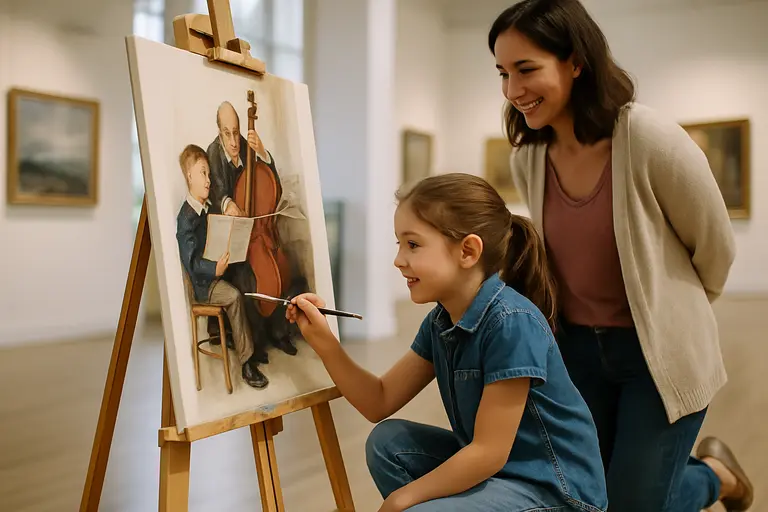
For teachers, the exhibition can be treated as a practice room for looking. Technique improves when students learn to name what they see. Rather than saying a work feels “strong,” a student can ask which choices create that strength: dark-light contrast, diagonal thrust, repeated tools, clustered figures, simplified forms, or a controlled relation between people and place.
That habit has value beyond visual art. A pianist listening to a phrase must also ask what produces the effect: voicing, timing, articulation, release, pedal, or register. The shared lesson is that craft becomes clearer when the student moves from reaction to diagnosis.
Slow Looking As Technical Study
A useful classroom method is to give students a limited technical task before discussing social interpretation. For example, ask them to identify how a work directs the eye. Then ask how that direction affects the meaning of labor or community. This keeps the discussion from treating technique as decoration placed on top of content.
- Track the strongest diagonal or horizontal movement in one work.
- Identify where repetition appears in figures, tools, buildings, or tonal areas.
- Describe one technical choice that gives dignity to labor without overstating it.
- Compare how printmaking and painting handle weight, motion, and public feeling.
A related kaygranger.com piece on Rockwell fall exhibitions places this show beside other museum programming through January 2027. For those interested in culture-focused writing, Robsonic offers additional arts coverage in the same network.
Respecting Context Without Imitation
Technique study should not become an instruction to copy historical artists as if style were detachable from lived context. The safer and more respectful lesson is to study decisions: how an artist composes groups, handles repeated forms, and connects individual bodies to collective experience. Students can learn from those decisions without making false claims of equivalence between the 1930s and their own work.
This distinction is especially useful for creator-commerce and classroom settings. If a student or seller is inspired by WPA-era public art, the responsible path is to study composition, medium, and historical framing rather than imitate a recognizable artist’s manner for commercial effect. That caution protects both context and craft.
Rockwell’s WPA Artists Exhibition And Technique Building
Rockwell’s WPA exhibition gives Technique Building a concrete subject: the working body, the shared town, the public commission, and the artist’s hand. Its 28 prints and paintings show that labor and community can be addressed through many technical routes, from graphic repetition to painted scale and from intimate formats to mural-related studies.
The most useful lesson is disciplined attention. A viewer can ask how each work uses medium, figure, grouping, and space to make social experience visible. A student can then carry that question back to the studio, practice room, or classroom. Technique Building is not a separate exercise before meaning begins. In this exhibition, technique is one of the ways meaning is made.