
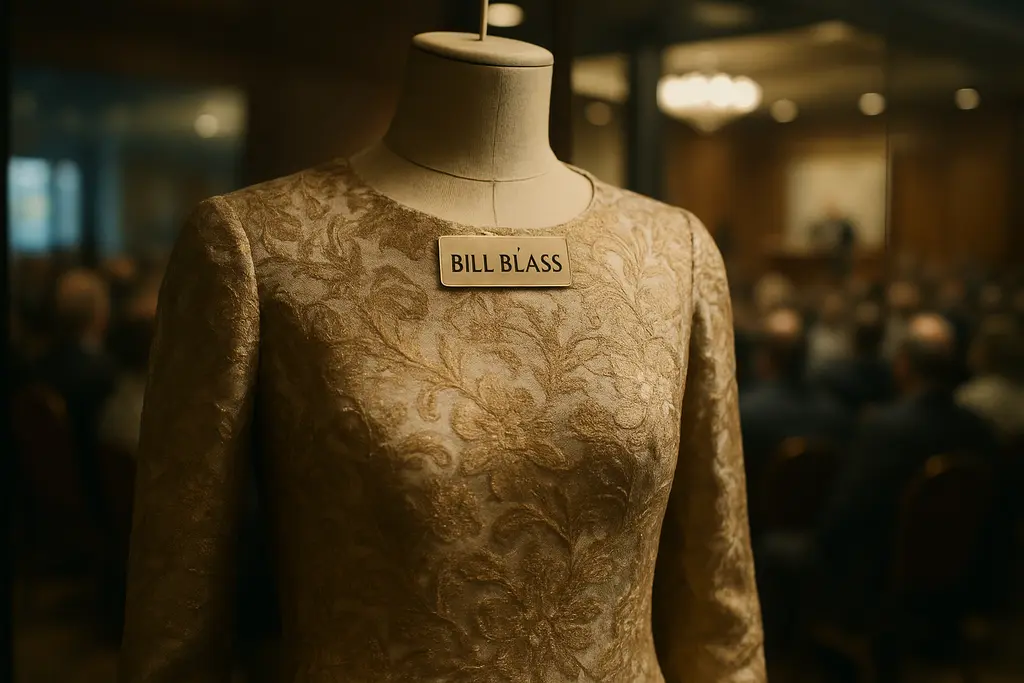
For collectors, buying vintage couture is less like impulse shopping and more like preparing a serious performance: the catalogue is the score, the deadline is fixed, and the quiet work happens before a bid. Christie’s Bill Blass: American Elegance is a useful case study because Christie’s sale page describes an online-only auction scheduled from September 9, 2026 at 10 AM EDT through September 23, 2026 at 10 AM EDT, with over 100 looks from the Bill Blass archive.
The sale materials point to evening wear, suiting, sportswear, black-and-white ensembles, and signature red looks. That range matters because it asks buyers to compare different kinds of value: rarity, condition, wearability, archive context, and the practical cost of owning a fragile garment. A striking dress may be more than an image on a screen. It may require careful storage, conservation advice, shipping planning, and a clear sense of why the piece belongs in a collection.
Why Buying Vintage Couture Starts With Context
Buying Vintage Couture Through Bill Blass
Buying Vintage Couture through a named archive sale gives the buyer more context than many scattered secondary-market listings. In this case, the sale is centered on Bill Blass’s archive and grouped under the title American Elegance. That does not mean every lot has the same importance, the same condition, or the same future market strength. It means the catalogue has a curatorial frame, and buyers should read that frame carefully rather than treating every garment as interchangeable.
The listed categories also help buyers define their own collecting aim. Evening wear may appeal to collectors interested in formal construction and surface detail. Suiting may speak to those who study proportion and tailoring history. Sportswear can be valuable for understanding how a designer’s vocabulary worked outside gala settings. Black-and-white ensembles and red signature pieces may attract attention because they are easy to read visually, but visual force alone should not replace condition review.
What The Dates Say
Timing shapes strategy. The auction opens on September 9, 2026 and closes on September 23, 2026, so a buyer has a defined window for research and bidding decisions. Christie’s also announced public previews: a highlights exhibition at Rockefeller Center from September 8–13, 2026 and the full archive from September 18–22, 2026 at Blass’s townhouse in Midtown Manhattan, according to the Christie’s press notice.
Those dates are not minor logistics. They create a chance to compare online impressions with physical evidence where access is possible. Fabric weight, bead loss, fading, repairs, lining condition, odor, and structural weakness can be difficult to judge from photographs alone. A buyer who cannot inspect in person should consider whether a trusted representative can review the garment before bidding.
Read Estimates As Starting Points
A Low Estimate Is Not A Final Cost
Estimates are useful, but they are not budgets. The research notes for this sale list examples such as a sequin-embroidered “Matisse” strapless cocktail dress from Spring 1988 estimated at US $2,000–3,000, a gold metallic beaded “Klimt” dress ensemble from Fall 1995 estimated at USD $1,500–2,500, and a multi-coloured silk-flower dress coat from the 1960s estimated at USD $1,000–2,000. Those figures may help a buyer compare lots, but they do not represent the full amount a successful bidder may pay.
For buying vintage couture, the practical number is the total acquisition cost. Hammer price is only one part of that figure. Buyer’s premium, taxes, shipping, duty or import fees, insurance, storage materials, and restoration or stabilization can change the real cost. A garment estimated at USD $2,000 can become meaningfully more expensive once those items are included.
Use Estimates To Ask Better Questions
A higher estimate may reflect several possible factors, including design significance, rarity, condition, materials, archive interest, or market demand. A lower estimate does not automatically mean a weaker object. It may indicate a narrower audience, a less formal category, condition concerns, or simply a more accessible entry point. The disciplined buyer asks why the estimate sits where it does and whether the answer supports the intended use of the piece.
That intended use should be named early. Is the garment for study, display, occasional wearing, resale, lending, or personal collecting? Each answer changes the risk profile. Wearing a vintage garment can increase stress on seams, closures, beads, and fabric. Display can expose textiles to light and gravity. Long-term storage can create its own issues if materials are not supported correctly.
Condition And Provenance Questions
Condition Reports Are Evidence, Not Decoration
Condition reports should be treated as essential reading. The research notes state that Christie’s lots include condition reports and that lots are sold “as is,” with photographs offering only partial visibility. That should slow the buyer down. A beautiful front-facing catalogue photograph may not show underarm wear, hem issues, missing embellishment, weakened fastenings, lining stains, or earlier alterations.
A careful buyer reads the condition report, then compares it against the images and the estimate. If a heavily embellished evening garment carries a moderate estimate, condition may be one reason. If a lot appears simple but has strong archive context, its value may sit in documentation rather than spectacle. Neither situation is a problem by itself, but both require a buyer to understand what is being purchased.
Provenance Can Add Meaning
Provenance and archive materials can add interest when they are documented. The research notes connect this sale with archive material and documented wearers, including famous clients. A buyer should still avoid making claims beyond what the catalogue supports. If a lot is linked to a sketch, letter, exhibition, season, or wearer, keep records of that documentation. If the documentation is absent or ambiguous, describe the garment more cautiously.
This is especially relevant for collectors who share acquisitions publicly or sell later. Clear wording protects the object’s history. “From the Bill Blass archive” is not the same as “worn by” a specific person unless the sale materials support that statement. Careful language is part of responsible collecting.
A Practical Bidding Framework

Set A Ceiling Before The Final Hour
Online auctions can encourage last-minute decisions. A ceiling bid should be set before that pressure begins. The ceiling should include the buyer’s premium, taxes, shipping, possible import duties, insurance, storage supplies, and a reserve for conservation review. If that total exceeds the value the piece has for the buyer, the rational answer is to stop.
That discipline is similar to practice planning in music. A pianist does not learn a demanding passage by hoping pressure will create clarity. The work happens before the performance. Collectors benefit from the same structure: read, compare, inspect, calculate, then bid. Readers who compare collecting habits across art, fashion, and culture may also find related arts coverage at NextClues culture coverage.
- Read the full lot description and condition report before bidding.
- Check whether the estimate fits the garment’s category, season, materials, and archive context.
- Calculate total cost rather than relying on the low estimate.
- Decide whether the garment is for study, display, wearing, or long-term collecting.
- Keep copies of catalogue text, invoices, and any archive references supplied with the lot.
Do Not Confuse Desire With Evidence
The strongest buying decisions separate taste from proof. A collector may love a red evening piece, a beaded dress, or a graphic black-and-white ensemble. That response is real, but it should sit beside evidence: condition, documentation, cost, fit with the collection, and storage plan. Desire can choose the direction. Evidence should set the limit.
Buying Vintage Couture With Bill Blass In Mind
Buying vintage couture from a sale such as Bill Blass: American Elegance asks for patience. The opportunity is not only the chance to acquire a garment; it is the chance to study how a fashion archive is presented, divided, estimated, and documented. The online-only format makes images and descriptions central, while the preview dates give some buyers a chance to check physical details.
The cautious buyer should treat the sale as both a market event and a research exercise. The most attractive lot is not always the best purchase. The best purchase is the one whose condition, provenance, cost, and purpose can be explained clearly after the excitement of bidding has passed.