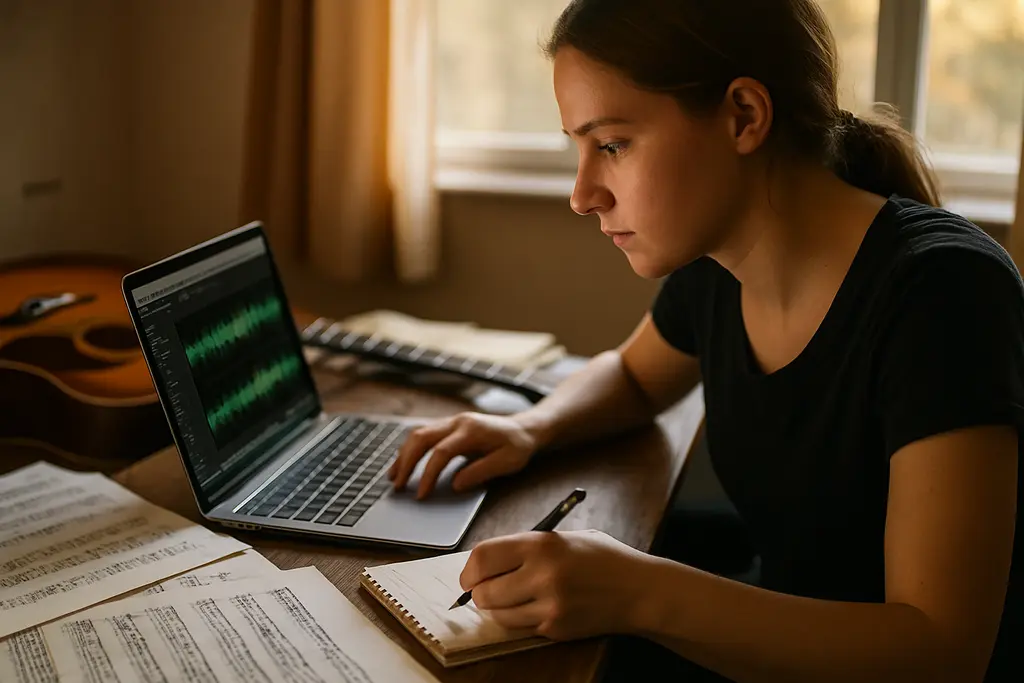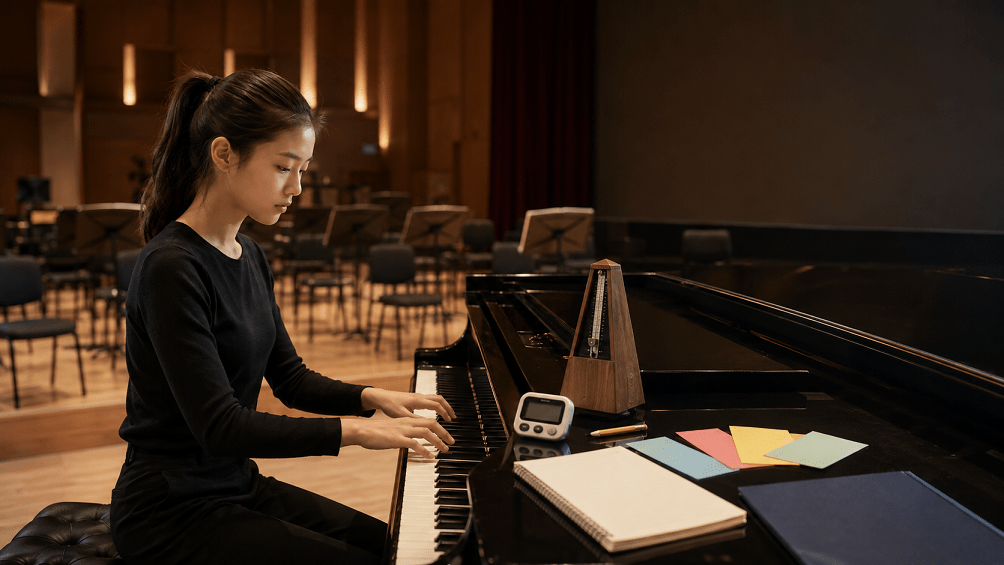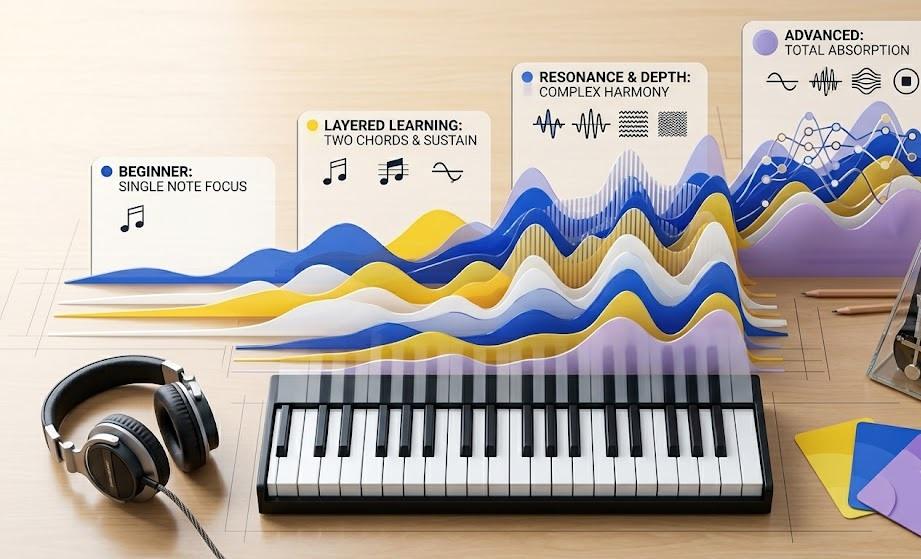
Video tutorials changed piano learning by making lessons available at any hour. AI-driven MIA practice assistants are changing the next layer: what happens after the video ends. In 2026, a student can watch a demonstration, play the same passage, receive instant feedback, ask a music question, review lesson notes, track weak spots, and return to a custom practice plan without waiting for the next weekly lesson.
For kaygranger.com readers, the important shift is practical. MIA, used here as a shorthand for music intelligence assistant, is not a replacement for serious teachers, careful listening, or structured repertoire study. It is a new layer between the student and the instrument. The best tools can listen, watch, remember, organize, and respond. That moves online piano learning beyond passive viewing and into guided practice.
The rise of MIA assistants matters because most piano progress happens away from the teacher. Students may understand a concept during a lesson, then forget the exact fingering, rhythm correction, or practice goal by the next day. AI-driven tools are trying to close that gap by turning daily practice into a more interactive loop.
Why Video Tutorials Reached Their Limit
Video tutorials remain useful. They let beginners see hand position, hear rhythm, replay explanations, and learn songs at a flexible pace. The weakness is that a video cannot hear what the student is doing. It cannot tell whether the left hand is late, whether the sustain pedal is blurring harmony, whether a student is guessing rhythms, or whether tension is building in the wrist.
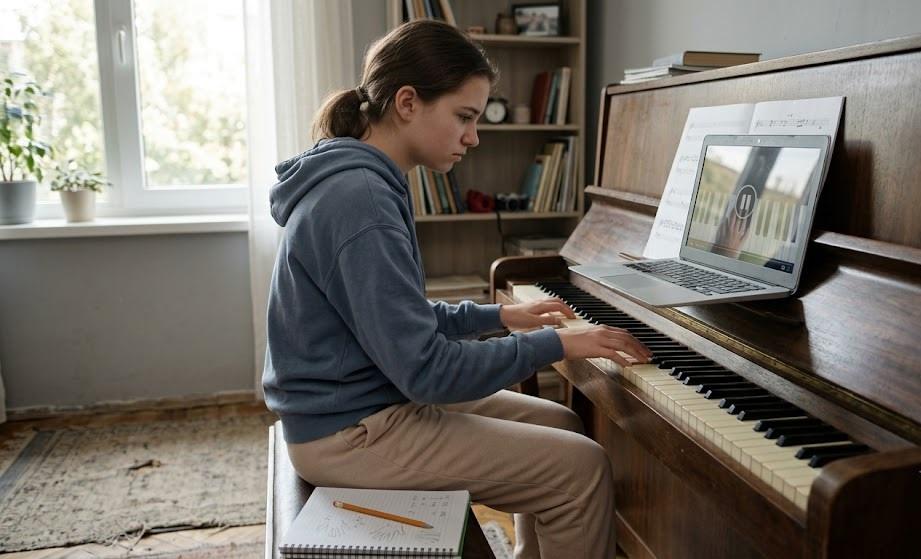
That limitation becomes obvious once a student moves past the first few songs. Piano learning is not only about copying motions. It depends on timing, touch, reading, memory, hand independence, voicing, listening, and daily correction. A video can show a correct version. It cannot reliably diagnose the student’s version.
That is why AI-driven practice tools are gaining attention. ROLI’s AI Music Coach, announced in 2026, is built into the ROLI Learn app and is described by the company as a coach that can stay with the learner, give real-time spoken feedback, decide when the learner is ready to progress, and support 40 languages through its voice models. The official ROLI AI Music Coach announcement shows how piano learning is moving from “watch this lesson” to “play, respond, adjust, and continue.”
This difference matters for students who struggle with consistency. A learner who only watches tutorials may feel busy without actually improving. A learner who receives feedback during practice has a better chance of catching repeated errors early. That does not make the AI perfect. It means the practice session becomes less silent.
How MIA Assistants Change Daily Piano Practice
The strongest MIA practice assistants do three things that video cannot do well. They listen to performance, remember past lesson material, and shape the next practice step. That changes the psychology of practice. Instead of wondering what to do after a mistake, the student receives a prompt, correction, or suggested exercise while the problem is still fresh.
flowkey is a clear example of the interactive direction. Its official learning page says the app helps students practice notes and chords interactively and receive instant feedback using a piano or keyboard. The company’s about page also describes note-recognition technology that listens as users play and gives real-time feedback. For beginners, that feedback can make the difference between repeating a wrong note for a week and catching the mistake in the first session through flowkey piano feedback.
Yousician follows a similar feedback-first model. Its official site says the app listens as users play and gives instant feedback on accuracy and timing. For piano students, that makes the learning environment more active than a static lesson library. The app is still software, but the student is no longer practicing completely alone. The official Yousician piano app description makes accuracy and timing feedback part of the product’s core value.
The next step is memory. Arco, a newer music-learning tool, records or imports music lessons, creates intelligent Lesson Notes, and gives students and teachers an AI practice assistant grounded in their own lesson history. That matters because many students do not need generic advice. They need to remember what their teacher said about their exact piece, their exact fingering, and their exact recurring habit. Arco’s AI practice assistant points toward a more personal model of practice support.
Why Teachers Should Treat AI As A Practice Bridge
A healthy MIA workflow keeps the teacher at the center. The danger is assuming that instant feedback equals complete instruction. It does not. A tool may detect wrong notes or uneven rhythm, but it may not understand long-term musicianship, emotional pacing, physical tension, repertoire readiness, or the student’s personality. Teachers still decide what matters most.
The better use is to treat AI as a bridge between lessons. A teacher can assign a goal, then let the student use feedback tools to reinforce accuracy, rhythm, and repetition during the week. The next lesson can start from better evidence. Instead of asking, “Did you practice?” the teacher can ask, “What did the assistant keep flagging?” or “Which measure still felt unstable after three days?”
This matches the direction kaygranger.com has already covered in AI piano teachers in 2026, where smart apps were framed as complements to traditional lessons rather than replacements. That framing matters. A student who treats AI as a shortcut may become dependent on prompts. A student who treats AI as a practice mirror can become more independent.
Teachers should also decide which features are useful for each student. A young beginner may need note recognition and short goals. An adult learner may need flexible scheduling, recording review, and a library of songs. An advanced student may need score-following, lesson notes, and performance playback. The same MIA system will not serve every learner in the same way.
What Students Should Expect From A Good MIA Tool
A good MIA practice assistant should make practice clearer, not noisier. The best tools reduce confusion by giving the student one focused next step. They should help answer simple questions: What did I miss? Where should I repeat? Am I rushing? Did I play the correct rhythm? What should I practice tomorrow?
The wrong kind of AI tool can create the opposite effect. Too many badges, too many corrections, or too much conversational advice can distract from listening. Piano practice already requires attention. A useful assistant should support that attention instead of turning practice into app management.
Students should look for a few practical signals before relying on any AI-driven practice system:
- It gives feedback close to the moment of playing, especially on pitch, timing, or practice focus.
- It works with the student’s real instrument setup, whether acoustic piano, digital piano, MIDI keyboard, tablet, phone, or headphones.
- It keeps the practice goal musical rather than only numerical.
- It allows teacher involvement or at least does not contradict lesson assignments.
- It respects privacy, recordings, and lesson history with clear settings.
Those points are especially important for families and schools. If a student is recording lessons or practice sessions, adults should understand where that data goes, how it is stored, and whether it can be deleted. The newest tools are exciting, but music education still involves trust.
Why Real-Time Feedback Is Only Part Of The Story
Real-time feedback is the feature that gets attention, but it is not the whole value of MIA assistants. The larger promise is continuity. Piano progress depends on many small decisions: what to repeat, what to slow down, what to ignore for now, what to fix before it hardens into habit. A good assistant can help preserve those decisions across a week of practice.
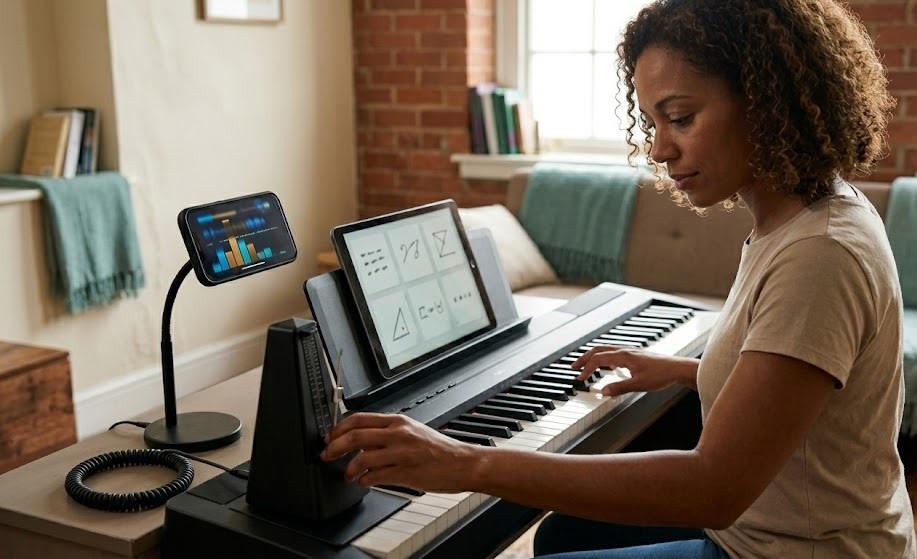
ROLI’s newer system shows how far this can go. The company describes its AI Music Coach as part of a piano learning system that can listen, watch, and respond as the student plays. Its Airwave technology is described as using infrared camera tracking to watch hand movement, while the AI coach provides spoken guidance and next-step support. The official ROLI Piano System frames this as a teacher-like feedback experience rather than a simple video course.
That does not mean every student needs a camera-based system. It does show the direction of the market. Piano learning tools are moving from content libraries to responsive systems. The student is no longer only selecting a tutorial. The system is watching the learning process and trying to shape the next action.
For some learners, that will be motivating. For others, it may feel intrusive or too structured. The right choice depends on temperament. A self-directed adult learner may love flexible song libraries and light feedback. A young student may need a teacher-approved practice path. A serious intermediate player may benefit most from recording review and lesson-note memory.
How MIA Assistants Could Reshape Piano Learning In 2026
The rise of MIA assistants suggests that piano learning is becoming more continuous. The weekly lesson, the home practice session, the online tutorial, and the digital piano are starting to connect. A student can watch a concept, play it, receive feedback, ask a question, save notes, and return with more specific problems. That loop is stronger than video alone.
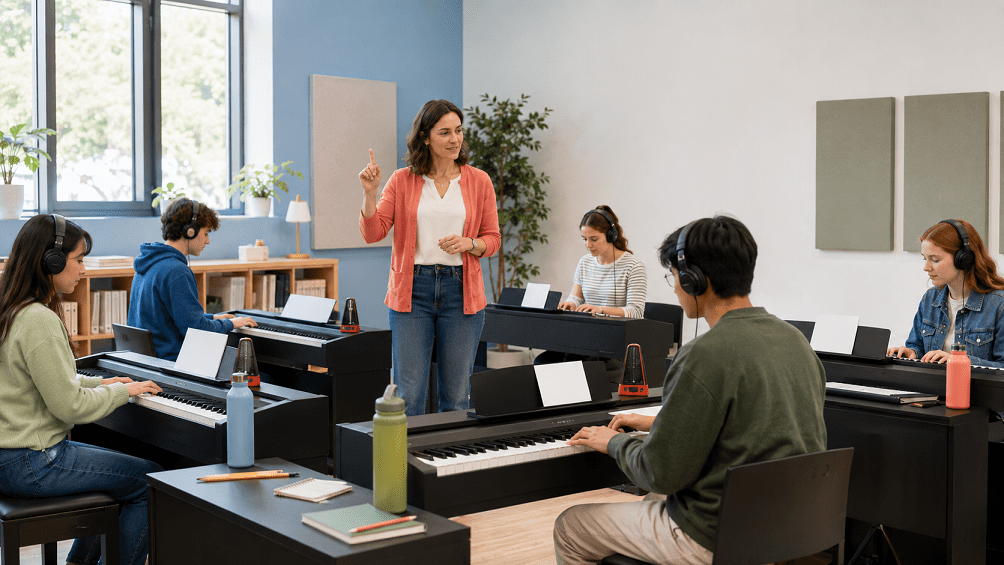
For music schools, this could change how practice rooms are used. A digital piano with headphones, MIDI, recording tools, and an AI assistant can become a guided practice station. For private teachers, lesson-aware tools can help students remember assignments more clearly. For parents, progress reports and practice summaries may make it easier to support children without needing to understand every technical detail.
The risk is overconfidence. AI can make practice feel more supported, but it cannot guarantee musical growth. Students still need patience, repetition, listening, physical awareness, and a human standard for tone and interpretation. A tool may say the note is correct. A teacher can ask whether the phrase says anything.
That difference should shape how students use these assistants. MIA tools are strongest when they handle routine correction, structure, memory, and repetition. Human teachers are strongest when they shape taste, technique, interpretation, repertoire choice, and long-term confidence. The future of piano learning is not a contest between the two. It is a question of how well students learn to use both.
Why The Best Practice Assistant Still Points Back To The Music
The most useful AI-driven practice assistant does not make the student think more about AI. It makes the student listen more closely to music. That is the standard kaygranger.com readers should use when judging any new piano tool in 2026.
If the assistant helps a learner slow down, hear rhythm more clearly, correct repeated mistakes, remember a teacher’s advice, and return to the piano with less confusion, it has value. If it turns practice into a screen-first experience with constant interruptions, it misses the point. Piano learning is still physical, musical, and personal.
Video tutorials opened the door to flexible learning. MIA practice assistants are trying to guide what happens after the door is open. The next stage will belong to tools that respect the student’s attention, support the teacher’s role, and keep the piano at the center of the session.
For students, the message is simple: do not replace practice with prompts. Use prompts to practice better. The best assistant is not the one that talks the most. It is the one that helps you hear what changed between yesterday’s version and today’s playing.