The 2026 Thomas F. Hulbert International Piano Competition gives adult amateur pianists a useful lesson: serious practice is not reserved for children chasing conservatory auditions or professionals building careers. Adult amateurs can practice with the same discipline, structure, and musical intention as serious musicians, even when piano has to fit around work, family, travel, and ordinary life.
The official 2026 Hulbert competition page listed both the International Young Artist Piano Competition for ages 6–17 and the International Amateur Adult Piano Competition for ages 18+. In the live Amateur Adult division, Irene Lee won first prize, William Bloomquist won second prize, and Illya Bunyakyn won third prize. In the Amateur Adult Video division, Caleb Hu won first prize, Christine Yoon won second prize, and John Cheng won third prize.
For kaygranger.com readers, the important point is not competition glamour. It is the practice model. Adult amateurs who prepare for a judged performance have to think beyond “playing when there is time.” They need clear repertoire goals, recording habits, deadline planning, performance simulation, and honest recovery.
Why Adult Amateur Competitions Matter
Adult amateur competitions are different from youth competitions because the musical pressure sits beside adult responsibility. A teenager may have school and activities, but an adult pianist may be practicing after work, before parenting duties, during lunch breaks, or on weekends.
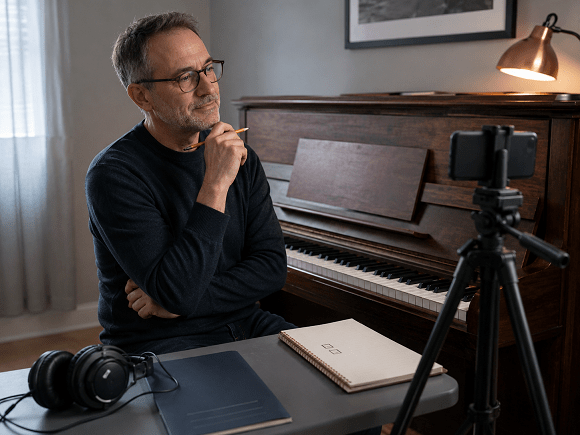
That makes the Hulbert adult division especially useful as a practice example. The official 2026 Hulbert competition page listed live and video-only options for adult amateurs ages 18+, which means preparation had to work in two formats: live performance and recorded performance.
That distinction matters. A live pianist must handle nerves, room acoustics, stage pacing, and recovery after mistakes. A video competitor must manage takes, recording pressure, consistency, and the temptation to chase perfection. Both need serious preparation.
Adult amateurs should not copy a child prodigy’s schedule. They need a grown-up version of serious practice.
Practice Like The Calendar Is Real
The first lesson from the Hulbert format is deadline planning. The 2026 competition page listed application deadlines in April and live rounds beginning in July at the University of Maryland, Baltimore County. That gives a pianist a real preparation window.
Adult amateurs often practice in open-ended ways. They say, “I want to get better at this piece,” but never define when the piece should be ready. A competition changes the question. The music must be ready by a specific date.
That does not mean every adult should enter a competition. It means every adult can borrow the deadline structure. Pick a date for a home performance, studio class, teacher run-through, recital, video recording, or informal living-room concert. Then work backward.
A serious adult practice plan might divide the timeline into four stages: notes, repair, performance, and polish. Notes are for learning. Repair is for fixing weak spots. Performance is for full runs. Polish is for refinement, not rebuilding.
Record Before You Feel Ready
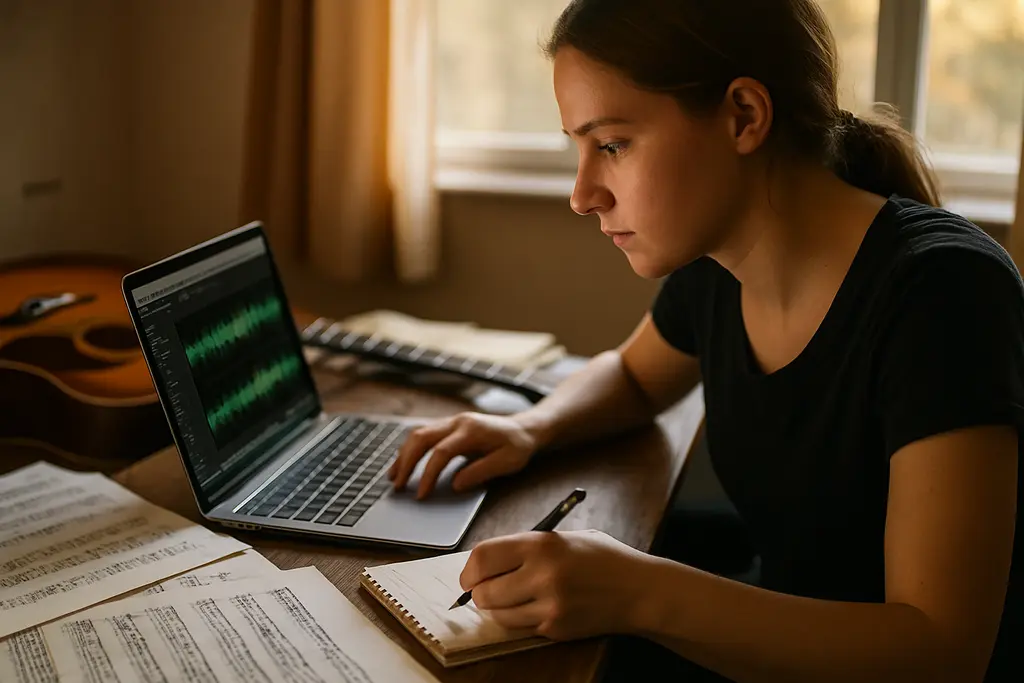
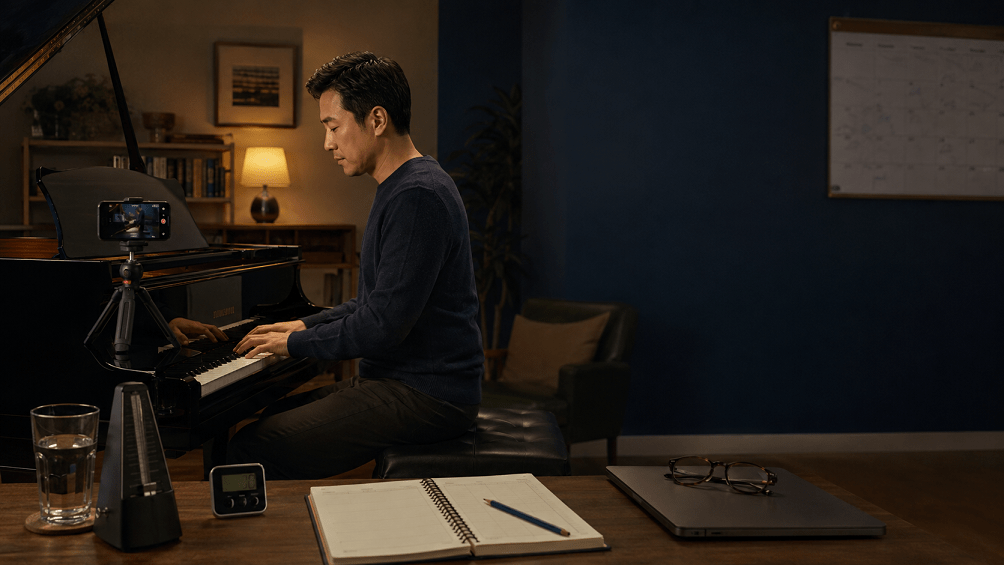
The Hulbert competition included video-only adult amateur participation, which offers an important lesson. Recording is not only for polished performances. It is also one of the best practice tools adult pianists have.
Many adults avoid recording because it feels uncomfortable. The phone hears uneven rhythm, pedal blur, rushed endings, and weak memory spots. That discomfort is useful. It shows what the player may not notice while performing.
A recording routine does not need to be complicated. Record one section, listen once for rhythm, once for tone, and once for continuity. Write down only two fixes. Then return to the piano.
This keeps recording from becoming punishment. The goal is information, not self-criticism.
Build A Serious Adult Practice Routine
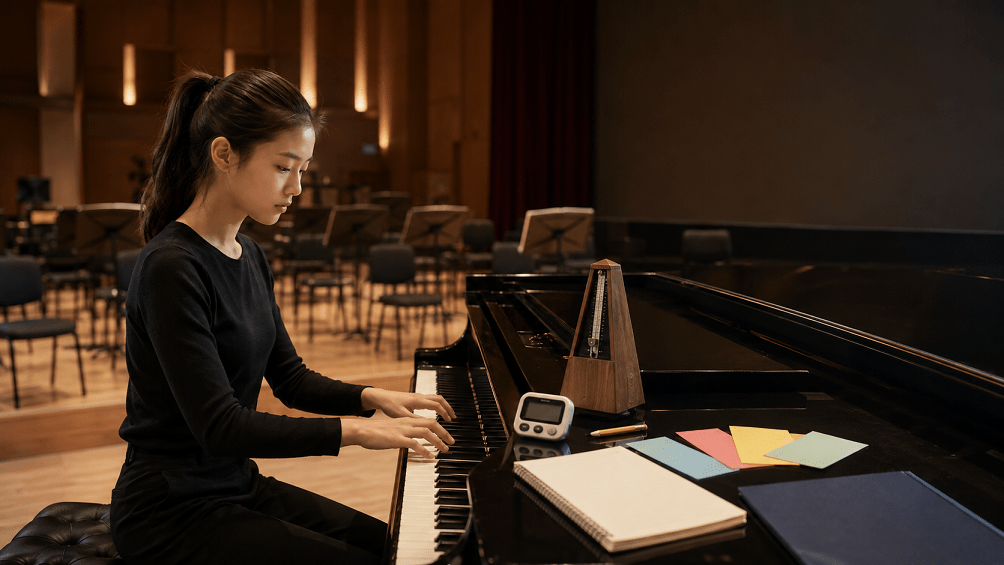
Adult amateurs need routines that are realistic enough to survive the week but serious enough to produce progress. A 35-minute routine can work well when each block has a job.
| Practice Block | Time | Purpose |
|---|---|---|
| Warm-Up And Sound | 5 minutes | Prepare touch, tone, and breathing |
| Technical Problem | 8 minutes | Repair one passage slowly |
| Repertoire Section | 10 minutes | Connect small sections into music |
| Memory Or Structure | 5 minutes | Start from landmarks, not only the opening |
| Recording Review | 5 minutes | Listen, mark, and choose tomorrow’s fix |
| Calm Run-Through | 2 minutes | Finish musically, not frantically |
This echoes the same principle in kaygranger.com’s 10-minute piano practice routine: practice improves when time has a purpose. Adult amateurs may need more advanced blocks, but the structure remains the same.
Stop Practicing Like A Beginner Forever
Many adult amateurs stay trapped in beginner-style practice even after their repertoire becomes harder. They play from the beginning, stop at the first mistake, repeat the same section, and hope the piece improves. That method works poorly for serious music.
A serious musician practices from multiple starting points. They isolate transitions. They test memory from the middle. They practice endings before they are tired. They separate rhythm from notes and sound from speed.
Adult amateurs should also practice recovery. A performance rarely goes exactly as planned. Instead of restarting after every mistake, practice continuing. Mark the spot afterward. Fix it later. During performance, continuity matters.
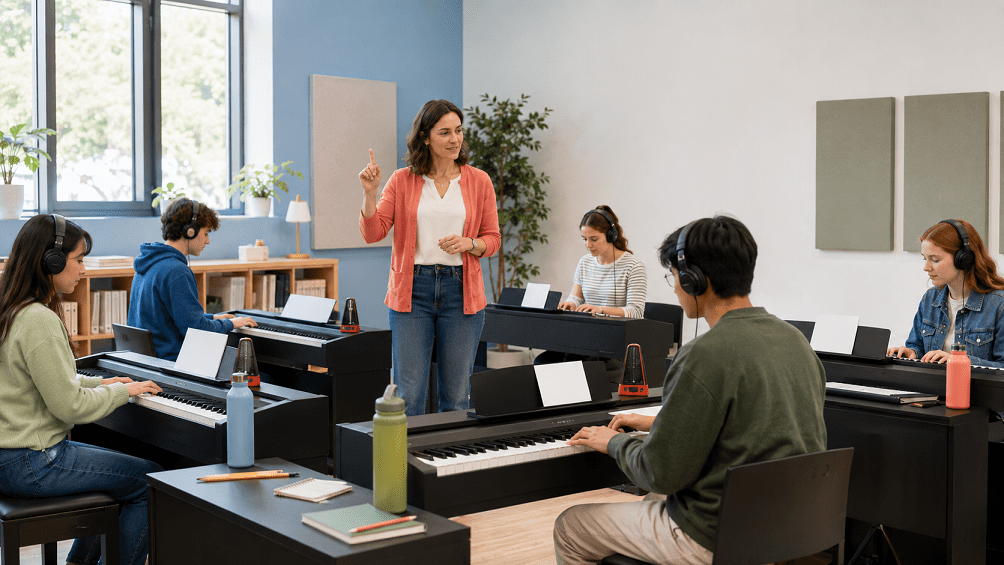
The Washington State University Piano Pedagogy Lab School’s practice tips emphasize reading the assignment book, pacing practice across the week, following specific teacher instructions, and keeping a regular schedule. Those ideas are especially valuable for adults because consistency often matters more than occasional long sessions.
Respect The Amateur Identity Without Lowering Standards
The word “amateur” can be misunderstood. It does not mean careless, casual, or unserious. It means the pianist is not pursuing music as a profession. Adult amateurs can still play beautifully, prepare thoughtfully, and take music seriously.
The Hulbert adult winners show that amateur categories can still involve strong preparation. Irene Lee, William Bloomquist, Illya Bunyakyn, Caleb Hu, Christine Yoon, and John Cheng were not listed as symbolic participants; they were competition winners in named adult divisions.
That should encourage adults who feel awkward about taking piano seriously. A person can have a job outside music and still practice like a musician. A person can return to piano after years away and still build performance goals. A person can study for joy and still expect quality.
High standards do not cancel enjoyment. They often deepen it.
What Teachers Should Do For Adult Amateurs
Teachers should avoid treating adult students as either fragile beginners or informal hobbyists with no ambition. Adult amateurs need clear goals, honest feedback, and flexible systems.
A teacher can help by assigning performance checkpoints. For example: play the exposition without stopping by week three, record the slow section by week four, perform for one friend by week six, and complete a full run by week eight.
Teachers should also talk about practice psychology. Adults often carry perfectionism, embarrassment, or old memories of lessons. A competition-style plan can help because it makes the work objective. The question becomes: what is the next musical task?
That is more useful than asking whether the student is “talented.”
Why The 2026 Hulbert Lesson Applies At Home
Most adult amateurs will not travel to a competition or perform at Carnegie Hall. That is fine. The value of the 2026 Hulbert competition is not that every adult should compete. The value is that it shows a better way to think.
Adult practice should have dates, sections, recordings, run-throughs, recovery, and musical goals. It should not depend only on motivation. Motivation changes. Structure holds.
The serious adult amateur does not need to practice all day. They need to practice with purpose. They need to know what piece is being prepared, what deadline matters, what section is weakest, what the recording reveals, and what musical result they want.
That is the real lesson from the 2026 Hulbert Piano Competition. Adult amateurs can practice like serious musicians because seriousness is not a career category. It is a way of listening, planning, and returning to the piano with intention.