Billy Joel’s “Piano Man” remains one of the clearest songs for teaching beginners how a left-hand pattern can carry an entire performance. The song was released on Joel’s 1973 album Piano Man, and its barroom waltz feel still gives new pianists a practical way to learn accompaniment, pulse, bass movement, and singalong support without turning the lesson into a difficult transcription project.
The song is back in the cultural conversation for a local Long Island reason. Mike DelGuidice, a longtime Billy Joel collaborator and vocalist-guitarist in Joel’s touring band, recently opened Live On The Porch, a 125-seat venue in Smithtown, New York, after Joel paused touring. The July 2026 coverage framed DelGuidice’s new space as a home for local musicians, with his family piano inside the venue and a clear connection to the Long Island piano-song tradition that Joel helped define through the Smithtown concert hall story.
For kaygranger.com readers, that makes “Piano Man” more than a classic request song. It is a practical beginner tutorial in how to make the left hand sound steady, human, and supportive while the right hand handles melody or chord color. This guide does not reproduce lyrics, melody notation, or a full copyrighted transcription. It focuses on the technique behind a beginner-friendly piano arrangement.
Why “Piano Man” Works For Beginner Left-Hand Practice
“Piano Man” is useful for beginners because its feel is easy to recognize before every note is mastered. Students hear the rolling barroom rhythm, the gentle sway, and the way the accompaniment supports the story. That recognition gives beginners confidence. They can learn a simplified left-hand pattern and still feel connected to the song’s identity.
The official Billy Joel site lists Piano Man with a November 9, 1973 release date and places the title track inside the album’s original sequence. The official Piano Man album page is useful for students because it confirms the song’s place in Joel’s recorded catalog without relying on fan summaries.
The Library of Congress later selected “Piano Man” for the National Recording Registry, with Joel’s official site noting its recognition as culturally, historically, or aesthetically significant. That status matters in a piano lesson. Students are not just learning a famous song. They are learning a piece of American popular music that has lasted because its accompaniment, story voice, and communal chorus feel immediately playable through National Recording Registry recognition.
For beginners, the left hand is the doorway. Once the left hand can keep the waltz pulse steady, the arrangement has a foundation. The right hand can stay simple, the melody can be added slowly, and the student can focus on making the song feel like a lived-in piano performance rather than a stack of notes.
Start With The Waltz Feel Before The Notes
Many students make the mistake of learning pop songs as chord names first. “Piano Man” should start with feel. The song has a waltz-like pulse, which means the left hand should create a pattern that feels like one strong beat followed by two lighter beats. A beginner does not need to play the full original arrangement to capture that motion.
The simplest starting pattern is bass note, chord, chord. The bass note lands on beat one. The lighter chord taps land on beats two and three. That creates the familiar “oom-pah-pah” support often used in waltz and pub-style piano playing. The trick is keeping the second and third beats lighter than the first.
A student should practice this pattern away from the full song first. Pick one comfortable chord. Play the root in the lower register, then play a small chord shape in the middle register twice. Count out loud. Keep the wrist loose. Avoid making every beat equally heavy.
Once the motion feels steady, move between two chords. Then three. Then a short phrase. The goal is not speed. The goal is trust. A left hand that can keep the pulse without tension gives the student a safe place to build the rest of the arrangement.
This approach connects naturally with kaygranger.com’s beginner-friendly piano songs guidance, where simple songs are used to build rhythm, coordination, and confidence before harder repertoire.
Build The Pattern In Layers
A beginner-friendly “Piano Man” arrangement should grow in layers. Students should avoid starting with both hands, full rhythm, full melody, and pedal at the same time. That creates overload. The left hand needs to become automatic enough that the right hand can sing above it.
The first layer is single bass notes. Play only beat one of each measure. This lets the student feel the harmonic movement without worrying about chord coordination. The second layer is bass plus one chord on beat two. The third layer is bass plus two lighter chord taps. By the third layer, the left hand has the basic waltz support.
The next layer is chord inversion. Beginners often jump between root-position chords, which makes the hand travel too much. A teacher can help the student choose closer chord shapes so the middle-register chord taps move smoothly. Smooth movement makes the song sound more musical and reduces left-hand panic.
The final layer is dynamic shape. Beat one should feel grounded, while beats two and three should feel lighter. If every chord tap sounds like a hammer, the song loses its relaxed barroom character. A beginner should think of the left hand as the room’s pulse, not the lead singer.
| Practice Layer | Left-Hand Task | Student Goal |
|---|---|---|
| Layer 1 | Bass notes only | Feel the chord changes without pressure |
| Layer 2 | Bass plus one chord tap | Build coordination between low and middle registers |
| Layer 3 | Bass plus two light chord taps | Create the beginner waltz pattern |
| Layer 4 | Closer chord inversions | Reduce jumping and smooth the sound |
| Layer 5 | Dynamic contrast | Keep beat one grounded and beats two-three lighter |
This layered method makes the song more accessible. A student can stop at the version that fits their level and still play something recognizable.
Keep The Right Hand Simple At First
The left-hand pattern works best when the right hand does less at the beginning. A beginner may want to play the full melody immediately, but “Piano Man” becomes easier when the right hand starts with guide tones or simple chord shapes.
One beginner option is to play only a few melody notes at phrase points. Another is to play soft chord tones in the right hand while singing or humming the melody. A student who wants a solo-piano version can add more melody later, but the first goal should be keeping the left hand steady.
This teaches a lesson that applies to many piano songs. The right hand does not need to carry every detail on day one. A strong arrangement starts with a stable accompaniment. The melody can grow once the pulse feels secure.
Teachers can use this song to explain the difference between playing a piano solo and accompanying a singer. In an accompaniment version, the right hand may stay lighter because the voice carries the tune. In a solo version, the right hand must project the melody more clearly. Beginners should know which version they are practicing before they begin.
That decision affects the left hand too. If the student is singing, the left hand must be dependable but quiet enough not to cover the voice. If the student is playing solo piano, the left hand can be slightly fuller, but it still should not overpower the melody.
Use Pedal Only After The Pattern Is Clean
The sustain pedal can make “Piano Man” sound fuller, but beginners often use it too early. Pedal can hide uneven rhythm, heavy chord taps, and muddy changes. The student should first play the left-hand pattern cleanly without pedal.
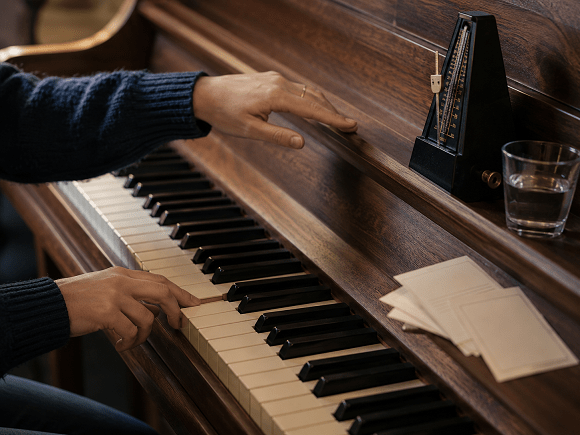
Once the pattern is stable, add small pedal changes with the harmony. The pedal should clear when the chord changes. Holding through too many changes can blur the bass line and make the waltz feel messy. A beginner using a digital piano may need especially clean pedal changes, since different instruments handle resonance in different ways.
A useful exercise is to play the same short section three times. First, no pedal. Second, pedal on each harmony. Third, very light pedal with careful clearing. Record all three. The best version will usually be the one where the left-hand rhythm still sounds clear.
Pedal should serve the song’s warmth, not cover the student’s uncertainty. In a beginner tutorial, clarity is more valuable than a big wash of sound.
Why The Bass Line Should Feel Like Storytelling
“Piano Man” is famous because it feels like a story told from the bench. That storytelling quality begins in the left hand. The bass notes should not sound random. They should feel like steps through the scene.
Beginners can practice this by saying the chord changes quietly while playing the bass notes. They do not need advanced theory. They only need to hear when the bass moves down, when it returns, and when the harmony turns back toward home. That awareness makes the accompaniment feel intentional.
A stronger beginner arrangement will use left-hand motion to shape phrases. The student can play slightly softer under verse-like sections and slightly fuller when the song reaches a singalong moment. These changes do not require extra notes. They require listening.
The goal is to make the left hand feel alive. A beginner pattern can still have character when the player understands its job. The left hand sets the room. The right hand, voice, or melody tells the story.
How Teachers Can Adapt “Piano Man” For Different Beginners
Not every beginner should play the same version. A true beginner may need only bass notes and simple chord taps. A late beginner may add chord inversions. An adult beginner may sing while playing. A teen student may prefer a fuller solo-piano version with right-hand melody.
Teachers can adapt the left-hand pattern based on coordination. If the student struggles to jump from bass to chord, keep the chord shape closer to the bass. If the student rushes beats two and three, practice tapping the rhythm on the fallboard before playing. If the student plays too loudly, ask them to play the chord taps as if they are background conversation.
A teacher can introduce harmony through the song without turning the lesson into a theory lecture. Ask which chord feels settled. Ask which change feels like it wants to move. Ask where the left hand should get quieter. These questions help students connect technique to sound.
The current Long Island context around Mike DelGuidice’s Live On The Porch venue can make the lesson feel modern rather than nostalgic. Students can see how Joel’s piano-centered song tradition still influences working musicians, local venues, and community performance spaces in 2026. That gives the tutorial cultural life beyond the page.
How To Practice The Pattern Over One Week
A weeklong plan helps beginners avoid frustration. The left hand needs repetition, but repetition should have a clear target. One unfocused hour can do less than ten careful minutes.
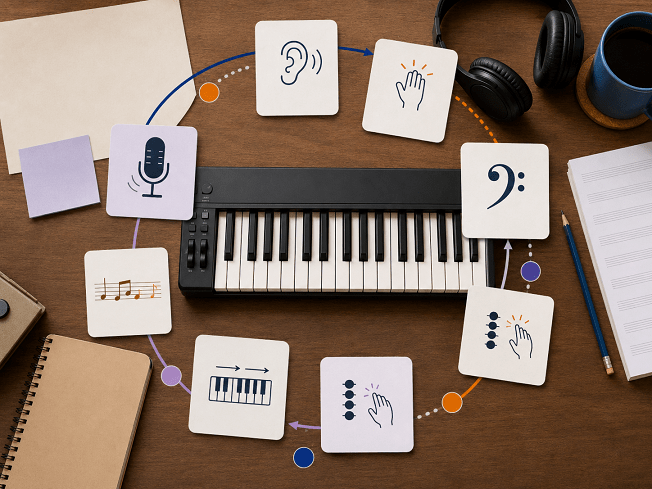
On the first day, listen to the recording and tap the waltz pulse. On the second day, play bass notes only. On the third day, add one chord tap. On the fourth day, add the second chord tap. On the fifth day, smooth the chord changes. On the sixth day, try the right hand or singing. On the seventh day, record a short version and listen for steadiness.
This plan keeps practice realistic. A beginner does not need to finish the whole song in one sitting. The song becomes stronger when the left-hand pattern grows gradually.
The student should listen for three things during playback: is the pulse steady, are beats two and three lighter than beat one, and does the left hand stay quiet enough for the melody? If the answer is yes, the arrangement is working.
Why “Piano Man” Still Belongs In Beginner Song Tutorials
“Piano Man” belongs in beginner song tutorials because it teaches accompaniment in a way students can feel immediately. The pattern is simple enough to start, but flexible enough to grow. It can become a singing accompaniment, a solo-piano arrangement, a rhythm lesson, a chord-inversion study, or a first step into classic piano songwriting.
The song’s lasting value comes from the relationship between the piano and the room. The left hand creates the sway. The right hand adds color. The voice or melody carries the story. Beginners who understand that balance learn far more than one song.
For new pianists, the best version is not the most complicated one. It is the one that keeps the pulse steady, lets the melody breathe, and makes the player feel like they can hold a room with a simple pattern. That is the real beginner lesson inside “Piano Man”: a left hand does not need to be difficult to be musical. It needs to be steady, shaped, and worth singing over.