“Golden” from KPop Demon Hunters is a strong beginner piano anthem because it gives students something many easy songs do not: a big emotional lift, a clear pop structure, and enough licensed sheet-music options to learn responsibly without relying on random internet transcriptions. The song is performed in the film by HUNTR/X, the fictional K-pop trio connected to Rumi, Mira, and Zoey, whose music is part of the story’s demon-fighting fantasy world.
The song has also become a real music-industry story. Forbes reported on July 13, 2026, that HUNTR/X’s “Golden” had reached 52 weeks on Billboard’s Streaming Songs chart, climbed to No. 33 on that ranking, and remained the longest-running K-pop No. 1 in that chart’s history with 13 weeks at the top. That matters for piano students because “Golden” is not only a soundtrack cut. It is a current pop anthem with enough cultural momentum to make students want to practice.
For kaygranger.com readers, the lesson is practical. This tutorial does not reproduce lyrics, melody notation, or a full copyrighted transcription. Instead, it shows how beginners can approach “Golden” through licensed scores, chord reduction, left-hand support, chorus-building, and pop-ballad dynamics. The goal is to turn a huge soundtrack song into a playable piano arrangement that still feels bold, clear, and musical.
Why “Golden” Works As A Beginner Piano Anthem
A beginner piano anthem needs more than a famous hook. It needs a structure students can understand, a chorus that feels rewarding, and a texture that can survive simplification. “Golden” has all three. Netflix’s official materials describe HUNTR/X as K-pop superstars Rumi, Mira, and Zoey, who protect fans from supernatural danger while facing a rival demon boy band. That story context gives the song a theatrical quality: it has to sound like a pop hit and a character moment at the same time through Netflix’s official Golden music video.
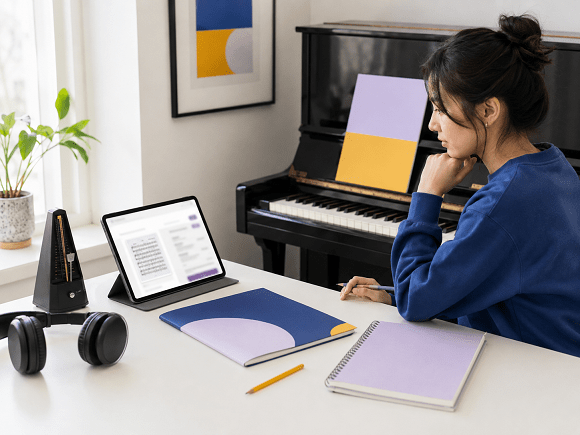
That theatrical quality is helpful for pianists. Students can think of the song as a rise from tension to confidence. The piano arrangement does not need every production layer to capture that shape. A beginner can start with a soft verse texture, a stronger pre-chorus build, and a wider chorus pattern.
The first step is to listen for form. Before touching the keys, students should mark the sections: opening, verse, pre-chorus, chorus, return, and final lift. Even without reading a full score, this gives the arrangement a map. A student who knows where the chorus lands will build toward it instead of playing every section with the same energy.
That is what makes “Golden” useful for piano lessons. It teaches arrangement thinking. The student is not only learning notes. They are learning how a pop anthem grows.
Start With A Licensed Score, Then Simplify It
Because “Golden” is a current copyrighted song, students should use a licensed score if they want exact notation. Musicnotes lists 45 arrangements for “Golden” from KPop Demon Hunters, including Piano/Vocal/Chords, Easy Piano, Beginner Notes, Instrumental Solo, leadsheet, piano accompaniment, 2-part choir plus piano, and band options. That range gives learners several legitimate entry points through the official Golden sheet music listings.
A beginner should not automatically choose the most complete score. A Piano/Vocal/Chords version may be useful for singers and teachers, but a new pianist may feel overwhelmed by full notation and lyrics. A Beginner Notes or Easy Piano version may offer a cleaner start. An intermediate student who wants a performance-style solo can choose an instrumental solo arrangement.
The key is to match the score to the student’s real skill level. If a student cannot keep a steady left hand while reading the right hand, the arrangement is too dense for day one. Start with the simplest version that preserves the song’s identity. Then add layers.
A teacher can help students compare score types. A leadsheet teaches melody and chord symbols. Easy Piano reduces texture. Piano/Vocal/Chords supports singing. Instrumental solo arrangements are often fuller and more performance-focused. Picking the right format is part of learning the song well.
Build The Left Hand Around Strong Bass Support
“Golden” needs a left hand that can support the anthem feeling without becoming too heavy. Beginners can start with one bass note per chord change. That keeps the structure clear and lets the right hand focus on melody or chord shapes.
The next step is adding fifths or octaves, but only when the hand can do it without tension. A beginner with smaller hands can alternate low and higher root notes instead of forcing an octave stretch. The goal is strength, not strain.
A simple left-hand plan can work like this: hold single bass notes in quieter sections, add repeated roots in the build, then use stronger bass or octave support in the chorus. That creates growth without requiring complicated runs.
This connects with kaygranger.com’s earlier left-hand patterns for easy songs because the same learning principle applies. The left hand should give the song a reliable foundation first. Extra motion comes later.
Students should practice the left hand alone with a metronome. Keep it even, quiet, and relaxed. If the left hand rushes, the whole anthem will feel unstable. If it gets too loud, the melody loses its lift.
Turn The Chorus Into A Big Piano Moment
The chorus is where “Golden” earns its anthem label. A beginner arrangement needs to make that section feel wider than the verse. That does not mean pounding the piano. It means using register, rhythm, and chord spacing carefully.
The easiest chorus upgrade is to move the right hand higher while the left hand drops slightly lower. That creates space. Another beginner-friendly trick is to switch from held left-hand bass notes to repeated roots or gentle broken chords. The texture changes, so the listener feels the arrival.
Right-hand chords can also grow in the chorus. A verse may use melody only or small two-note shapes. A chorus can add fuller triads under longer melody notes. Students should avoid harmonizing every single note. Too much right-hand harmony can make the arrangement sound crowded.
| Arrangement Area | Beginner Version | Stronger Chorus Upgrade |
|---|---|---|
| Left Hand | Single bass notes | Repeated roots or light octaves |
| Right Hand | Melody only | Melody with simple chord support |
| Register | Middle keyboard range | Wider space between hands |
| Rhythm | Held chords | Stronger pulse in chorus |
| Pedal | Light changes | Slightly fuller sustain with clean clears |
This table gives students a safe path. The chorus should feel bigger because the arrangement opens up, not because the player attacks the keys harder.
Use Chord Shapes Instead Of Chasing Every Production Layer
K-pop production often includes stacked vocals, synths, percussion, sound effects, and dramatic transitions. A beginner pianist cannot and should not try to copy every layer. The piano version should capture the song’s harmonic and emotional shape.
Start by finding the chord symbols from a licensed score. Then reduce the right hand to simple chord shapes. Play them in a comfortable register. Use inversions to keep movement smooth. If one chord jump feels awkward, look for a closer position.
This is where beginners learn one of the most useful pop-piano skills: reduction. A full production can become bass, chords, melody, and dynamics. Once those parts work, the song sounds musical even without every studio detail.
Students should also listen for where the arrangement needs space. Big pop songs often feel powerful because silence and contrast set up the payoff. If the piano plays constant eighth notes from start to finish, the chorus may stop feeling special. Leave room in the verse. Save the fuller texture for later.
A beginner-friendly anthem arrangement is not smaller because it is weaker. It is smaller because it is clearer.
Shape The Melody Like A Vocal Line
Even if a student learns from an Easy Piano score, the right hand should not sound mechanical. “Golden” is a vocal-driven anthem, so the piano melody needs to breathe. The player should imagine a singer taking air between phrases.
Play the melody alone first. Mark where phrases begin and end. Notice which notes feel like arrivals. Then add the left hand quietly. If the left hand covers the melody, reduce it. If the melody sounds stiff, slow down and shape it with dynamics before increasing tempo.
Students should avoid copying vocal runs too literally if they are beyond their level. A beginner arrangement can simplify fast figures while keeping the main contour. The goal is a playable version that sounds confident, not a messy version that tries to include every detail.
This is also a good place for teachers to talk about taste. A student may be tempted to make every chorus loud and every phrase dramatic. Better playing comes from contrast. A softer phrase can make the next big moment stronger.
Practice The Song In Short Sections
A song like “Golden” can feel exciting, which makes students want to play the whole thing immediately. That usually slows progress. The better method is section practice.

Start with the chorus if motivation is the goal. Learn the simplest left hand and right hand for the most recognizable section. Then go back to the verse and build the path toward it. This keeps the student emotionally connected while still building structure.
A useful one-week plan might look like this:
- Day 1: Listen and mark the form.
- Day 2: Learn the chorus left hand only.
- Day 3: Add the chorus right-hand melody or chords.
- Day 4: Practice the verse with a quieter texture.
- Day 5: Connect verse into chorus.
- Day 6: Add light pedal and record a short section.
- Day 7: Play the simplified arrangement without stopping.
The student should record short sections and listen for three things: steady pulse, clear melody, and chorus lift. If those are working, the arrangement is on the right path.
What Teachers Should Emphasize In A Lesson
Teachers can use “Golden” to teach several core skills in one modern song. The first skill is score choice. Students should learn why licensed arrangements differ and why the easiest legal score may be the smartest starting point.
The second skill is texture. A teacher can ask: what should the left hand do in the verse? What should change in the chorus? Where does the right hand need melody, and where can it use chords? These questions help students think like arrangers instead of note collectors.
The third skill is dynamic growth. The song should not be one volume. The teacher can help students build a quiet opening, a growing middle, and a confident chorus. That is where a beginner anthem becomes musical.
Netflix’s oral-history material on “Golden” describes the song as growing bigger with time after the June 2025 soundtrack release, with HUNTR/X’s singing voices EJAE, Audrey Nuna, and Rei Ami tied to the song’s public life. That background can help teachers frame the lesson as both current pop culture and serious song construction through Netflix’s Golden oral history.
Why “Golden” Belongs In A Beginner Song Tutorial List
“Golden” belongs in a beginner song tutorial list because it gives students a modern anthem they can grow into. A true beginner can play bass notes and simple chords. A late beginner can add melody and chorus dynamics. An intermediate student can work from a fuller licensed score, add inversions, and shape the arrangement for performance.
The song also teaches responsible learning. Current pop songs should be learned through licensed scores, teacher guidance, or personal ear training, not copied from unauthorized full transcriptions. That does not make the tutorial less useful. It makes the learning process more respectful and more flexible.
For kaygranger.com readers, the practical takeaway is clear: start with a legal arrangement that fits your level, reduce the texture, build the chorus carefully, and use dynamics to make the song feel like an anthem. “Golden” does not need to be simplified into something dull. It needs to be simplified into something playable.
How To Make The Beginner Version Sound Confident
The best beginner version of “Golden” should feel clear, bright, and steady. The left hand supports the harmony. The right hand carries melody or chord color. The chorus opens up. The pedal adds warmth without blurring rhythm.
Students should not judge success by whether their version sounds exactly like the recording. A piano arrangement is a translation. The real question is whether the song’s energy survives on the keyboard. Does the chorus feel bigger than the verse? Does the melody sing? Does the left hand stay steady? Can the student play through without stopping?
That is what makes “Golden” a strong 2026 piano tutorial choice. It connects current pop culture with real practice skills: listening, form mapping, score reading, chord reduction, left-hand control, dynamic shaping, and arrangement growth. A beginner who learns those skills through one song can use them on many others.
The anthem feeling does not come from playing the hardest version. It comes from building a version that fits the hands, supports the melody, and grows with confidence. That is how beginners can turn “Golden” from a streaming hit into a piano-learning milestone.