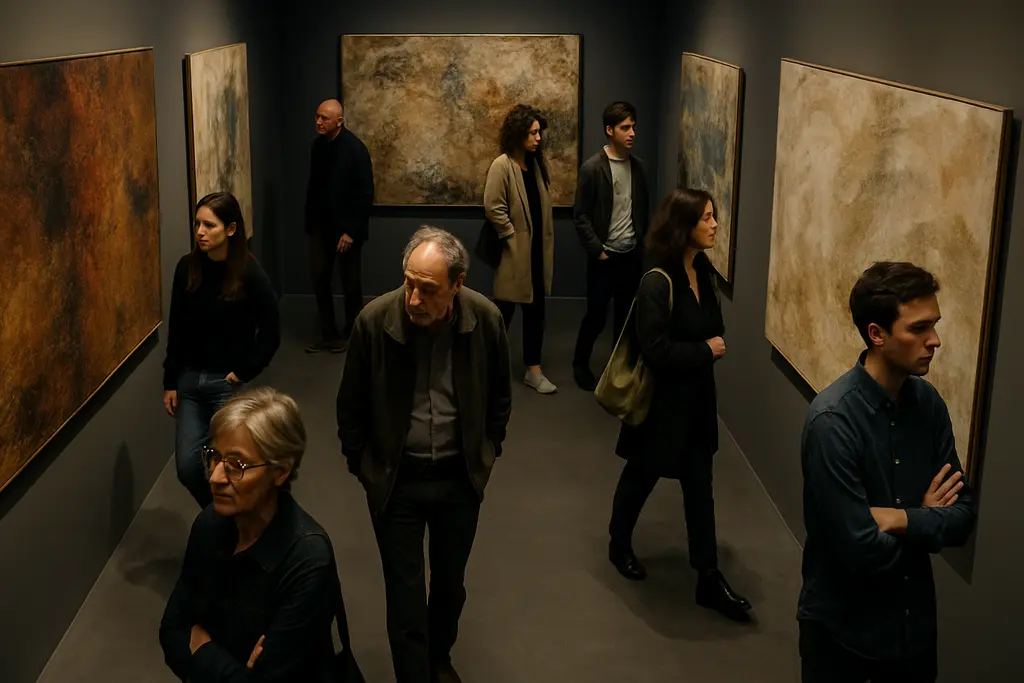

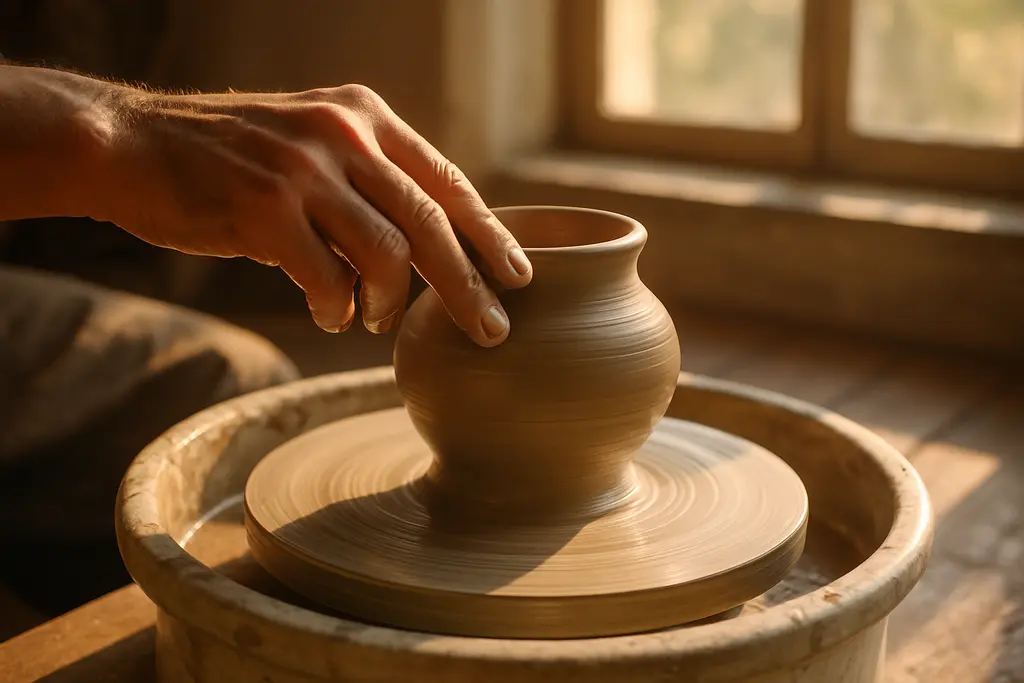
The Doyle Lane Retrospective at The Huntington places a long under-recognized ceramic practice into a clearer institutional frame. “Doyle Lane: Master of Clay” opened on September 13, 2026, and is scheduled to run through March 1, 2027, at The Huntington Library, Art Museum, and Botanical Gardens in San Marino, California. The museum describes it as the first major museum retrospective devoted to Lane, with more than 100 works spanning the 1950s through the 1980s, including weed pots, glazed vessels, architectural tile murals, jewelry, beads, and sculpture, according to The Huntington.
That framing matters because Lane’s work does not sit comfortably inside a single category. It touches functional pottery, architectural design, post-war California modernism, color field abstraction, and handmade object culture. A cautious reading should avoid treating the exhibition as a sudden discovery. The supported record points instead to a serious artist whose work circulated among peers and collectors while facing limits in mainstream gallery visibility.
Why The Doyle Lane Retrospective Matters
The First Major Museum Survey
The exhibition’s scale gives viewers a rare chance to compare Lane’s small vessels with his larger architectural work. A weed pot asks for close attention: proportion, glaze, opening, silhouette, and the way a single stem might alter the object’s visual balance. A tile mural asks a different kind of looking. The eye moves across repetition, color variation, texture, and the tension between individual units and the full wall.
The Doyle Lane Retrospective is especially useful because it places those two modes beside each other. Smallness and monumentality are not treated as separate careers. They become related tests of clay, kiln behavior, surface, and public visibility.
Reading The Doyle Lane Retrospective Through Context
Lane was born in New Orleans in 1923 and moved to Los Angeles in 1946 after World War II. From his home studio in El Sereno, he worked independently for more than five decades across pottery, murals, sculpture, jewelry, and beads. That biographical frame helps explain why the exhibition is not only about beautiful objects. It is also about studio labor, self-directed practice, and the uneven systems through which some artists enter museum history later than their work merits.
For readers interested in cultural reframing through temporary exhibitions, this exhibition aligns with broader issues highlighted in kaygranger.com’s analysis of temporary exhibition framing: a short-term show can change how a body of work is read, but its lasting effect depends on scholarship, acquisitions, conservation, and public access after the show closes.
Technique, Glaze, And Controlled Risk
Color As Material Evidence
Lane’s glazes are central to the exhibition’s art-historical value. The research describes red-to-orange tones that shift subtly, burned glaze edges, burn marks, bubbles, and exposed clay. In a less informed reading, those features might be mistaken for flaws. In Lane’s work, they are better understood as part of the visual language of firing, chemistry, and acceptance of kiln variation.
This is where a music educator’s practice lens offers a useful analogy without forcing the comparison. In piano study, tone is not an afterthought added once the notes are correct. It is built through touch, timing, weight, and listening. Lane’s surfaces suggest a similar principle in another medium: surface is not decoration placed on top of form. It is part of the work’s structure and meaning.
Tiles, Murals, And Scale
One of the exhibition’s major works is the 1964 Mutual Savings and Loan Mural, a 17-by-8-foot installation made from 4,876 individually glazed earthenware tiles. The Huntington acquired the mural in 2014 and conserved it before this installation. The work is significant not only because of its size, but because it shows how Lane’s ceramic thinking could operate architecturally.
Each tile carries its own fired surface, yet the mural depends on the relation among thousands of units. That makes the work an argument for ceramic art as both object and environment. It also complicates any narrow definition of mid-century ceramics as primarily vessel-based.
Weed Pots, Clay Paintings, And Category Pressure
Small Vessels With A Focused Function
Lane’s weed pots, made circa 1960 to 1978, are among his most associated forms. The research describes them as small vessels often intended to hold a single stem. Their modest scale can be misleading. A small pot leaves little room for indecision. The contour, lip, opening, weight, and glaze all have to carry visual interest without excess.
The best lesson for makers is not to imitate Lane’s surfaces, especially for commercial work that could mislead buyers about authorship or origin. The more ethical lesson is disciplined attention: a small handmade object can hold serious formal thinking. Scale does not determine artistic ambition.
Ceramics In Conversation With Painting
Lane also made what have been described as “clay paintings”: geometric, wall-mounted assemblages that allowed ceramics to function in relation to painting, especially in changing outdoor light, as discussed by Ceramics Monthly. This point is central to reframing his work. It moves the discussion away from a simple craft-versus-art division and toward a more precise question: what can fired clay do that canvas, pigment, or industrial wall material cannot?
The Doyle Lane Retrospective asks viewers to treat clay as a medium of optical, architectural, and tactile thought. The works do not need to be defended by borrowing status from painting. Rather, the comparison helps clarify how Lane used ceramic form to enter conversations often dominated by painting and sculpture.
Race, Recognition, And Museum Framing

Barriers Named In The Record
The exhibition also foregrounds the racial barriers Lane faced. The research states that, despite architectural commissions and recognition among peers, he was often excluded from mainstream gallery circuits. It also notes that Lane spoke in 1981 about limited opportunities for Black artists in the 1950s and 1960s.
That context should be handled with care. It is not enough to praise the work while ignoring the conditions around its reception. At the same time, Lane should not be reduced only to exclusion. The body of work shows technical command, sustained invention, and a broad practice across forms. A respectful account can hold both truths: the work stands on its own, and the systems around it affected how widely it was seen.
What A Temporary Exhibition Can Reframe
A retrospective cannot repair every absence in the historical record. It can, however, gather evidence in one place and give scholars, artists, students, collectors, and general viewers a firmer basis for discussion. In that sense, the Doyle Lane Retrospective functions as a corrective frame rather than a simple celebration.
For creators and small sellers looking at historical art for inspiration, the responsible path is study rather than replication. Lane’s work can encourage research into materials, kiln testing, scale, and presentation. It should not be treated as a style sheet to copy. Readers comparing arts coverage across the same network may also find insights at Shimply for adjacent culture and creator-focused reading.
What The Doyle Lane Retrospective Changes About Ceramic Art
A More Careful Mid-Century Reading
The Doyle Lane Retrospective changes the conversation by making it harder to keep mid-century ceramic art in a narrow category. Lane’s practice connects vessel-making, mural scale, glaze experimentation, geometric abstraction, and public architecture. His work also requires attention to the social conditions of post-war California art, especially the exclusions that shaped access to galleries and recognition.
The most grounded insight from the exhibition is not that Lane suddenly matters because a museum now says so. The evidence points to an artist who had already built a serious, varied, technically demanding practice. The museum frame helps more viewers see the full range at once. For students of art, craft, and disciplined practice, Lane’s career offers a clear lesson: sustained material investigation can produce works that resist easy categories, and a careful exhibition can help those works be read with the context they deserved all along.