
The challenges around AI Music Copyright are no longer abstract for musicians, producers, labels, teachers, or small sellers who work near recorded music. The U.S. Copyright Office opened its artificial intelligence inquiry on August 30, 2023, and by December 2023 it had received more than 10,000 public comments, according to the U.S. Copyright Office AI page. That scale matters because the Office was not asking one narrow technical question. It was collecting views on human authorship, training data, generative outputs, digital replicas, and the use of copyrighted works in AI systems.
For a working musician, the inquiry reads less like a policy exercise and more like a map of pressure points. Who made the creative choices? Was copyrighted music used to train a model? Does a generated track echo protected expression, a performer’s identity, or a label-controlled recording? Can a creator safely sell music-adjacent products if the source material or prompt process is unclear? Those questions do not have simple answers, and this piece should not be read as legal advice. It is a cautious reading of what the public record, as summarized in the research, shows.
Why AI Music Copyright Became A Flashpoint
Music Is Both Creative Work And Recorded Data
Music creates special friction for AI systems because a song can involve composition, lyrics, performance, production, arrangement, and a specific sound recording. A single commercial recording may include many layers of rights and many contributors. That means a model trained on music may raise questions that are harder to separate than in a plain-text example. A melody, a vocal performance, a drum sound, or a studio mix can each carry commercial and artistic significance.
The phrase AI Music Copyright is useful because it points to both sides of the dispute: artificial intelligence as a tool for making music, and copyright as the legal structure that protects many human-made musical works. The difficulty is that AI tools can generate outputs at a speed and scale far beyond ordinary sampling, interpolation, or imitation. Speed alone does not decide infringement, but it changes the economic stakes for people whose recordings, voices, or compositions may have been used without clear permission.
Digital Replicas Raised The Stakes
The Copyright Office’s reporting sequence shows how broad the inquiry became. Part 1, Digital Replicas, was published on July 31, 2024. Part 2, on copyrightability of outputs produced using generative AI, was released on January 29, 2025. Part 3, Generative AI Training, appeared in pre-publication form on May 9, 2025, with a final version still pending in the research notes. That order is revealing. Voice and likeness concerns arrived beside authorship and training questions, not after them.
For music culture, a digital replica can affect more than revenue. It can affect how listeners understand a performer’s artistic identity. A synthetic vocal performance may be technically impressive, but creators and listeners still need clarity about consent, disclosure, and commercial use. That is especially true for estates, featured performers, session players, and artists whose voices are closely tied to public recognition.
What The Copyright Office Asked
Human Authorship And AI Music Copyright
The Copyright Office has affirmed the need for sufficient human authorship for copyright protection, while indicating that purely machine-generated material without creative human involvement is not eligible. For musicians, that creates a practical planning issue. A songwriter using a generative tool may need to distinguish between the parts they authored and the parts a system supplied. That does not make AI-assisted work automatically unusable. It does mean the human choices should be clear: melody edits, lyric revisions, arrangement decisions, instrumental performance, production choices, and selection or coordination of generated material.
For teachers and students, this is a useful musical discipline. If a student brings in an AI-assisted piece, the better question is not, “Did a tool touch it?” The stronger question is, “Where did your musical judgment appear?” A student who rewrites a chord progression, records a vocal, edits a form, or chooses a groove is making choices that can be discussed in musical terms. For working musicians, AI Music Copyright will often come down to documentation as much as inspiration.
Training Data And Licensing Pressure
The Copyright Office inquiry also asked hard questions about training. The research notes identify one central problem: whether training generative AI systems on copyrighted music requires licensing, and how outputs should be treated if they come from models trained on infringing datasets. That is not a settled question across all facts and all systems. It is also not a question musicians can ignore, because music datasets may include commercially released recordings, platform audio, cover versions, demos, stems, or other material with unclear permissions.
Related disputes have already shaped the creator conversation. The research notes describe 2026 litigation involving AI music-generator platforms, including allegations tied to training data and later model versions. For readers tracking those disputes from a creator’s point of view, our related analysis of Suno v Universal and Sony is a useful companion. The careful point is this: allegations are not the same thing as final findings, but they show why labels, unions, platforms, and musicians are treating training data as a core issue rather than a technical footnote.
Why Fair Use Remains Unsettled
The Third Circuit Signal
On September 29, 2026, the U.S. Court of Appeals for the Third Circuit rejected a fair use defense in an AI training dispute involving ROSS Intelligence and Thomson Reuters legal content, as discussed in a Music Business Worldwide analysis. That case was not a music case, so it should not be treated as a direct ruling on every AI song generator. Still, it is relevant because it shows that courts may closely examine the source material, the training purpose, the market effects, and the relationship between inputs and outputs.
For musicians, this is where caution beats certainty. Some AI companies have argued that training can be fair use. Rights holders have argued that large-scale ingestion of protected works can harm licensing markets and compete with the original creators. The Copyright Office inquiry did not erase that conflict. It documented how many parties care about it.
Fair Use Is Fact-Specific
Fair use is often discussed online as if it were a switch: allowed or not allowed. In practice, the analysis depends on facts, including purpose, nature of the work, amount used, and market effect. A model trained on music raises questions that may differ from a classroom excerpt, a parody, or a short quotation in criticism. The uncertainty is part of the challenge for small creators, who may not have the budget to test legal theories in court.
That uncertainty should not stop musicians from experimenting, but it should shape the experiment. If a tool cannot explain its training sources, rights posture, or commercial terms, a seller should think carefully before using the output on a product, release, ad campaign, or client project. A local band demo made for private sketching carries a different risk profile than a monetized track promoted as a release.
Practical Questions For Musicians And Sellers
Documenting Human Choices
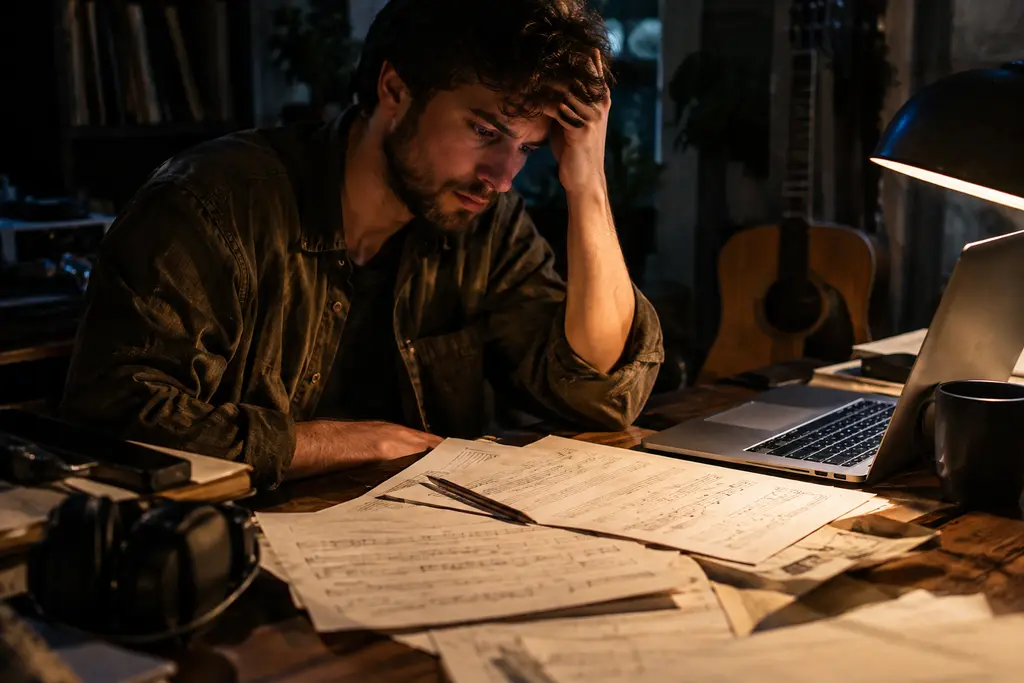
The most useful habit is recordkeeping. Keep drafts, session files, lyric versions, MIDI edits, vocal takes, prompt logs, and notes about which tool produced which element. This is not glamorous, but it helps a creator explain their process later. It also keeps collaborators honest about who contributed what. A producer who uses AI for a texture bed, a songwriter who rewrites generated lyrics, and a vocalist who records the lead performance are making different kinds of contributions.
- Save dated versions of lyrics, chord charts, stems, and arrangement notes.
- Read the terms of any AI music tool before using output commercially.
- Avoid prompts that ask for a living artist’s voice, identity, or commercial style imitation.
- Do not assume that “AI-generated” means rights-free.
- Ask clients how they plan to use the music before delivering AI-assisted work.
Those habits are not a shield against every dispute. They are practical ways to make the creative process easier to understand. For musicians learning production, resources such as Robsonic provide valuable insights and can help develop a rights-aware practice routine: build the song, keep the notes, and know which parts came from human performance, human editing, or machine output.
Avoiding Likeness And Fan-Merch Risk
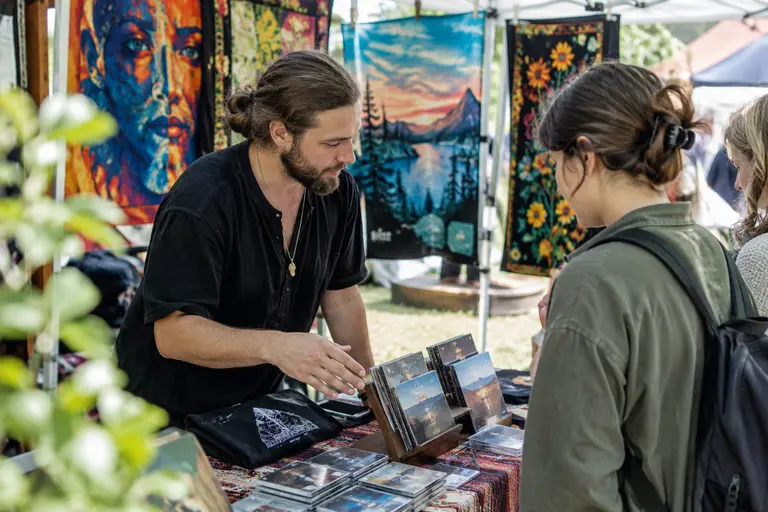
Small sellers should also be careful with likeness, fandom, and music culture references. AI tools can make it tempting to generate posters, shirts, cover art, or cosplay-adjacent designs that resemble famous artists, album art, fictional characters, or recognizable stage personas. The fact that a tool can produce an image or track does not mean the seller has clearance to use it commercially.
The same caution applies to soundalike material. A prompt that asks for a track “in the exact voice” of a known singer, or a beat meant to pass as a specific producer’s unreleased work, can raise consent and deception concerns even before a copyright analysis begins. Artists build trust with listeners through voice, phrasing, tone, and creative identity. Respecting that identity is an ethical practice as well as a risk-control step.
What AI Music Copyright Means For Musicians
AI Music Copyright is not a single dispute with one clean answer. It is a set of linked questions about authorship, training, licensing, digital replicas, streaming integrity, and market harm. The U.S. Copyright Office inquiry, the multi-part reports, and the 2026 court and litigation developments described in the research all point in the same direction: music creators need clearer rules, but they also need better habits now.
The safest creative posture is neither panic nor blind adoption. Use tools with care. Keep evidence of human contribution. Avoid copying living artists’ identities for commercial deception. Treat training data claims as serious, not decorative. If a release, product, or campaign has meaningful money behind it, consult a qualified rights professional before assuming a generated output is safe. That is a slower path, but it respects the musicians, performers, and producers whose work gives music culture its value.