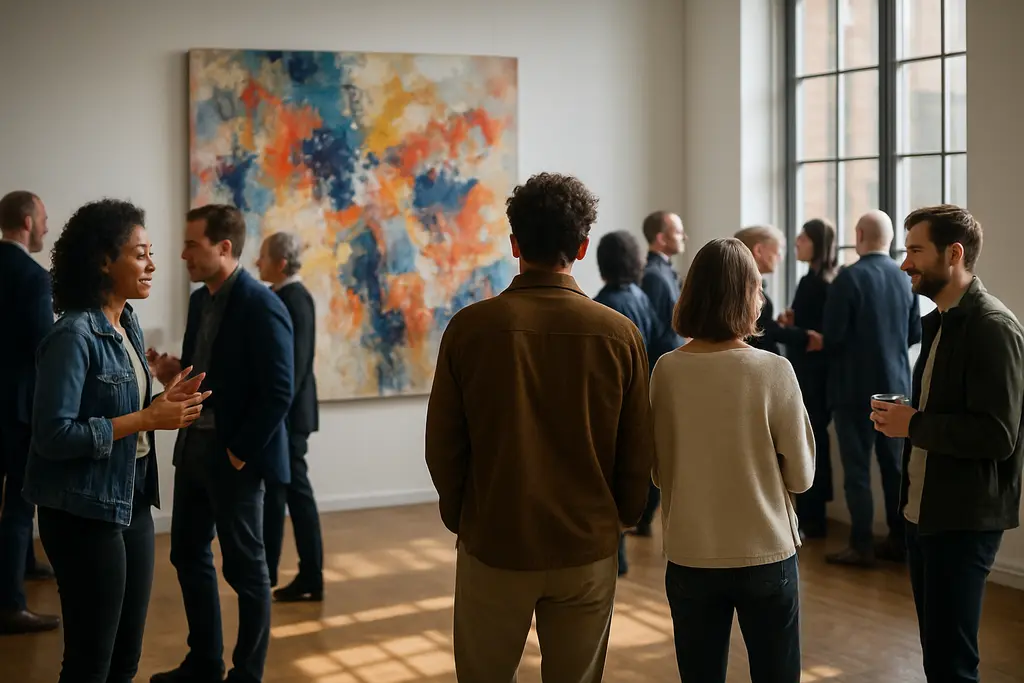


Shoppe Object Paris is scheduled for September 5-7, 2026, and as of August 24, 2026, it remains an upcoming professional trade event rather than a finished recap. The official event page lists those September dates and names Phoebe Stone as Artist of the Season, which gives artisans a clear but short preparation window before buyers begin walking the floor official Paris show page.
For artisans, the practical question is not whether a Paris show sounds appealing. The better question is whether the collection, pricing, production capacity, visual language, and rights clearance are ready for a wholesale setting. A trade show can reward clear thinking, but it can also expose weak preparation quickly. I approach that much like coaching a pianist before a judged performance: the final week should not be used to invent the program. It should be used to test, edit, and stabilize what is already there.
Shoppe Object Paris Dates And Trade Context
Shoppe Object Paris Schedule Details
The September edition is scheduled across three days: September 5, September 6, and September 7, 2026. The supplied event details list hours of 9 AM-7 PM on September 5-6 and 9 AM-6 PM on September 7. That schedule matters because artisans should think in blocks: opening-day introductions, second-day follow-ups, and final-day order review. A seller who treats all three days as the same may miss the rhythm of buyer behavior.
The reported venue is Paris Expo Porte de Versailles, Hall 1, according to the September 2026 launch press release, which identifies the location and the collaboration behind the Paris edition September launch release. The same research notes identify the event as a collaboration between Shoppe Object and WSN Group. That context is relevant because artisans are not preparing for a casual craft market. They are preparing for a professional wholesale environment where buyers may expect clear terms, consistent product information, and a concise brand presentation.
What The Venue Signals
A large trade-show venue does not automatically guarantee strong results for every maker. It does, however, change the standards of presentation. Booth sightlines, samples, line sheets, product photography, and order minimums all become part of the work. Handmade does not have to mean improvised. In a wholesale room, handmade can read as considered, durable, and buyer-ready when the supporting materials are as clear as the objects themselves.
The earlier January 17-19, 2026 edition reportedly featured about 80 brands, with a balance of 50% French and 50% international exhibitors from 17 countries. The research notes also report that 68% of visitors were international and 32% were French. Those figures should be read as context, not a promise of September results. Still, they suggest that artisans should prepare for cross-border conversations, including shipping terms, wholesale currency expectations, lead times, and product descriptions that can be understood quickly by buyers from different markets.
Artisan Positioning Before September 5
Assortment Choices For Wholesale Buyers
The event’s categories, based on the supplied research, span design, lifestyle, decoration, artwork, gifting, tableware, stationery, and related home and gift objects. That range can be encouraging, but it also creates pressure. A booth with too many unrelated products can feel unfocused. A booth with too few price points may be hard for a retailer to test. The stronger temporary strategy is to edit the line into a buyer-readable set: core products, supporting pieces, a few statement works, and clear reorder logic.
- Confirm wholesale pricing, minimum order quantities, and lead times before September 5.
- Prepare a short line sheet with product names, materials, dimensions, care notes, and wholesale terms.
- Choose samples that show range without making the collection look scattered.
- Practice a 30-second explanation of the work, then a shorter 10-second version for busy moments.
- Set a realistic follow-up process for buyers who request images, terms, or custom information.
That last point is easy to underestimate. Many artisans prepare the display but not the recovery system. In piano practice, I ask students to rehearse the moment after a mistake because performance rarely follows the ideal script. Trade-show preparation has the same principle. Rehearse what happens when a buyer asks a question you cannot answer immediately, requests a delivery date you cannot meet, or wants a variation you have not priced.
Rights And Visual Identity Checks
Creator commerce also requires caution around rights and likeness. Artisans should avoid assuming that fan references, celebrity likenesses, protected characters, or close imitation of a living artist’s recognizable commercial style are safe just because they appear in handmade spaces. This is not legal advice, and individual cases depend on facts and jurisdiction. As a practical readiness step, sellers can review product names, packaging, booth imagery, and marketing copy for references that may create avoidable risk.
Visual identity should also be honest. If an object is handmade in small batches, say so clearly. If some production is outsourced, avoid language that implies every step is made personally by the founder. Wholesale buyers need reliable information because they are making decisions for their own stores. Clear materials and origin statements can support trust without exaggeration.
How To Use The Artist Context
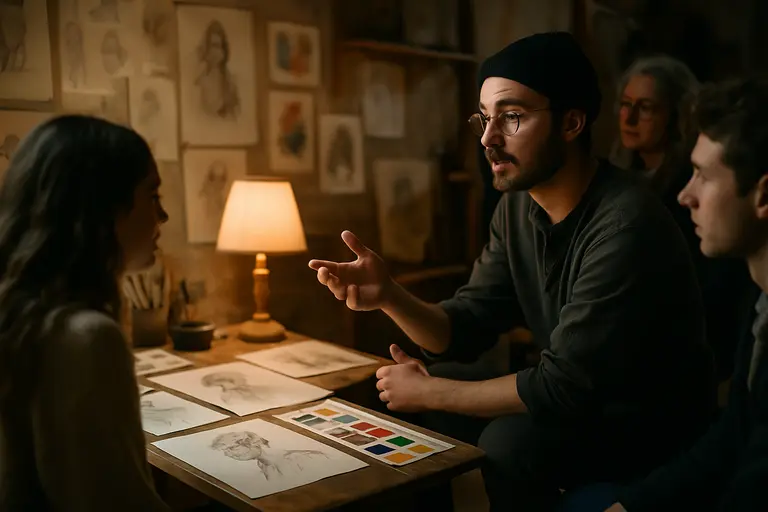
Reading Phoebe Stone’s Role Carefully
The official event information names Phoebe Stone as Artist of the Season for the September 2026 edition. The research describes her as an artist from Sydney, Australia, known for oil pastels and still-life images of domestic scenes. That is useful context, but artisans should not overstate what her role means for the entire show. It does not prove a single dominant aesthetic across all exhibitors, nor does it mean sellers should imitate her work.
A better reading is atmospheric. Domestic scenes, still-life attention, and drawn texture can remind makers to think about how objects live in rooms, not only how they look in isolation. Tableware, stationery, artwork, and gifting products often succeed when buyers can imagine them in use: on a shelf, beside a chair, near a meal, or inside a thoughtful gift story. This is a presentation lesson rather than a directive to copy an artist’s style.
The supplied research also states that the September 2026 edition has a sold-out exhibitor lineup, including high-profile brands such as &tradition, Vitra, and Bang. If accurate, that points to a competitive floor where independent makers may be seen beside established design names. The useful response is not intimidation. It is precision. Small brands can often communicate material care, founder knowledge, and limited-run character with a directness that larger companies may not emphasize in the same way.
Shoppe Object Paris Artisan Readiness
Shoppe Object Paris should be treated as a deadline with artistic and commercial weight. On August 24, 2026, artisans still have time to refine presentation, but not much time to rebuild a collection from scratch. The strongest temporary preparation is practical: edit the line, check the numbers, rehearse the pitch, prepare buyer materials, and decide which questions require a firm answer before the doors open.
Artisans seeking additional perspectives on broader cultural and commerce topics can explore related content at NextClues, which belongs to the same network and offers insights on how aesthetic context and market timing influence public interest. However, for this specific Paris event, preparation should focus strictly on confirmed dates, venue details, buyer-facing materials, and the studio’s actual capabilities.
The most useful mindset is disciplined but calm. A trade show is not only a display opportunity; it is a performance of readiness. Buyers are listening for clarity in the same way an audience hears steadiness in a musical phrase. The artisan’s job is to make the work legible without flattening its character. That means giving the objects enough room to speak while making the commercial path easy to understand.
For makers who are still deciding how seriously to prepare, the September 5-7, 2026 dates create a simple test. If the line sheet, pricing, samples, rights checks, and follow-up plan can be completed before the event, the show may be approached with purpose. If those pieces remain uncertain, the wiser move may be to observe, learn, and prepare for a later cycle. Either way, the preparation itself is valuable because it forces the studio to answer the questions wholesale buyers will ask first.