As of October 13, 2026, Fall Exhibitions are no longer only a preview subject. Several major shows opened in August, September, and early October, while other programs scheduled for late October and November still remain ahead. That timing matters because the art conversation is already shifting from anticipation to early interpretation: viewers can now compare institutional announcements with the actual arguments made by temporary shows.
The strongest pattern across the fall 2026 museum schedule is not a single style or movement. It is a shared pressure on questions of identity, history, protest, archives, material change, and embodiment. Temporary exhibitions are well suited to these questions because they can concentrate attention for a limited period, place different practices beside one another, and ask audiences to read works against a specific civic or institutional moment.
For readers exploring cultural narratives within the same network, shimply.com provides an alternative perspective on the movement of cultural events beyond conventional museum spaces. On kaygranger.com, the useful task is more focused: to examine what these exhibitions can reasonably be said to do, without overstating their influence before the full run has unfolded.
Why Fall Exhibitions Carry More Than Seasonal Weight
Fall Exhibitions As Temporary Arguments
Fall Exhibitions often arrive with institutional energy: new seasons, public programs, press cycles, donor attention, and teaching calendars all converge. Yet the season itself does not guarantee importance. A temporary exhibition shapes discussion only when its curatorial frame gives viewers a reason to connect artworks to a broader question.
In 2026, that question often concerns how museums present public memory. The Nasher Museum of Art at Duke University opened Nari Ward’s We the People on August 27, 2026, with the installation scheduled through January 3, 2027. The museum describes the work as a massive participatory installation made from thousands of shoelaces, and rare historic copies of the Declaration of Independence went on view beginning September 24, 2026, according to the Nasher fall lineup.
That pairing is not neutral. A participatory work using everyday material sits near founding political documents, creating a setting where civic ideals, bodily labor, and collective symbolism can be read together. The exhibition’s impact will depend on how visitors encounter that relationship in person, but the framing already places contemporary installation practice inside a discussion about national language and public belonging.
Openings Already In Motion
Several New York exhibitions were already open by October 13, 2026. The New Museum opened Arthur Jafa: I Am Tony on September 24, 2026, presenting what the research describes as the artist’s largest museum survey to date, running through January 3, 2027, across two floors of its expanded Bowery building. The same opening date also marked Diego Marcon: Arrivederci, Piggies!, identified in the research as Marcon’s first solo museum show in New York.
Those two projects create different kinds of institutional attention. A large survey asks viewers to consider duration, development, repetition, and change across decades of practice. A first solo museum show in a major city asks a different question: how does an institution introduce an artist’s work to a wider public without reducing it to a single debut narrative?
Identity, Memory, And The Public Record
Survey Scale And Institutional Framing
The scale of Jafa’s New Museum presentation is significant because surveys can stabilize an artist’s public reception, even as they risk simplifying a practice into a museum-friendly arc. The research supports only a few core facts: the exhibition opened on September 24, 2026, runs through January 3, 2027, spans more than four decades, and occupies two floors. From those facts, the cautious reading is that the museum has allocated unusual space and time to the artist’s work, not that the exhibition’s critical legacy is already settled.
That distinction matters for criticism. Large museum surveys can invite sweeping claims, but responsible viewing should begin with evidence: what works were selected, how they were sequenced, what contexts were offered, and how the exhibition handled changes in medium, theme, and reception over time.
Collections As Civic Memory
The Studio Museum in Harlem’s fall season also directs attention toward memory and collection-building. Dreams of This Future: The Collection of Peggy Cooper Cafritz opened on August 19, 2026, and is scheduled through February 28, 2027. The research states that the season showcases works by more than 800 artists and includes A sustained becoming: Studio Museum Artists in Residence 2026, which opened on October 1, 2026, and runs through January 3, 2027, spotlighting three new artists in residence.
Here, the conversation turns from the single-artist survey to the collection as a social instrument. A collection exhibition can show taste, patronage, access, education, and community formation. A residency exhibition can show emerging positions before they are fully absorbed by market or museum narratives. The relationship between those formats is especially productive: one looks at accumulated support, while the other presents work still being tested in public.
Kaygranger.com has treated related seasonal framing in Fall Exhibitions And The Art Conversation, where temporary museum presentation is considered as a force in shaping debate rather than merely filling a calendar.
Material Practice, Embodiment, And Craft
Toronto Shows And Bodily Form
Toronto’s fall schedule adds another thread: material change as a way to discuss spirituality, body, place, and memory. MOCA Toronto launched its fall 2026 season on October 4, 2026, with major exhibitions by Bharti Kher, titled Bones, and Delcy Morelos, titled Ombligo. The season also includes a presentation of Beverly Glenn-Copeland’s recently recovered album Light of the Heavens, with these projects running through February 14, 2027.
The presence of a recovered album inside a contemporary art setting is especially useful for readers who think across sound and visual practice. As a music instructor, I hear that kind of programming as a reminder that museums increasingly frame listening, embodiment, and archival recovery as related acts. The research does not support a broad claim about a new movement, but it does support a narrower observation: MOCA Toronto’s season places material transformation and sound-based recovery in proximity.
The Power Plant Contemporary Art Gallery’s fall season is scheduled to open on October 24, 2026. Its program includes site-specific works by Zadie Xa with Benito Mayor Vallejo, Sharon Lockhart’s solo exhibition Fogo, including her film Windward, a five-artist film program, and new commissions from Ella Gonzales, Morgan Sears-Williams, and Sami Tsang. Since that season had not opened by October 13, 2026, any assessment should remain anticipatory rather than critical.
Archives Without Nostalgia
The Smithsonian schedule extends the material and archival thread into late fall. At the Hirshhorn Museum, Yoshitomo Nara: Sentinels of Stillness is scheduled to open on October 31, 2026, and run through November 7, 2027. The Smithsonian also lists Materials, Methods, and Meanings: Craft in the Archives of American Art as beginning on November 6, 2026, and continuing through April 16, 2027, on its upcoming exhibitions page.
Archive-based craft exhibitions can be misunderstood as backward-looking by default. A more careful reading asks how materials record method, labor, teaching, and exchange. If the Smithsonian exhibition follows the promise of its title, the archive becomes less a storehouse of finished objects and more a record of decisions: what artists used, how they worked, and what meanings institutions preserved or failed to preserve.
What Remains Open To Debate
Temporary Shows Can Overstate Certainty
Temporary museum programming can sharpen attention, but it can also create false certainty. A press release may describe themes clearly, yet the exhibition itself may produce contradictions. A show on identity may be strongest where it resists fixed identity categories. A show on protest may matter most where it slows the viewer down rather than announcing a position too quickly. A show on materiality may succeed through quiet decisions that are hard to capture in advance language.
That is why the late-2026 schedule should be read as a set of propositions. The New Museum, Studio Museum, Nasher, MOCA Toronto, the Power Plant, and Smithsonian programs all point toward major topics in contemporary art, but none should be treated as having settled those topics. Exhibitions enter conversations; they do not end them.
Audience Attention Is Uneven
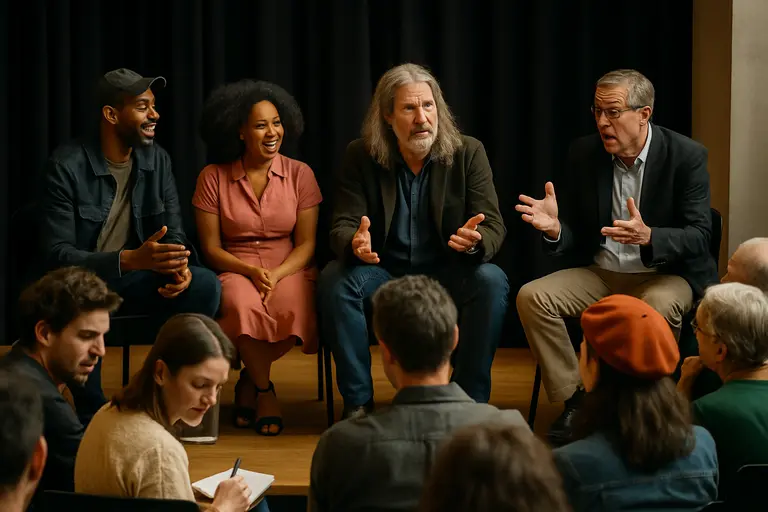
Fall Exhibitions also depend on audiences that are not uniform. Scholars, artists, students, collectors, local visitors, tourists, and casual museumgoers may leave the same gallery with different questions. That unevenness is not a weakness. It is part of how temporary shows generate public meaning.
The most useful criticism will track those differences rather than flatten them. For artists, these shows may offer models for scale, installation, sound, film, and archive-based work. For educators, they may offer case studies in how institutions frame civic memory. For general viewers, they may provide a way to ask how contemporary art speaks to public documents, inherited collections, spiritual practice, and the body.
Fall Exhibitions And Contemporary Art Conversations
A Cautious Reading For Artists And Viewers
Fall Exhibitions in late 2026 are best understood as temporary structures for attention. Some have already opened and can now be judged through direct viewing; others remain scheduled for later dates and should be discussed with restraint until audiences can see the work in place.
The strongest supported reading is that these exhibitions gather several durable concerns in contemporary art: identity, public history, protest, craft, archives, embodiment, and place. The season’s value is not that every show says the same thing. It is that each exhibition tests a different format for public thought: the survey, the collection exhibition, the residency presentation, the site-specific commission, the film program, the archive show, and the long-running museum presentation.
For viewers, the practical approach is simple: read the dates, attend to the institution’s framing, and then test that framing against the works themselves. For artists and writers, the more demanding task is to notice how a temporary exhibition creates argument through placement, duration, material, and sequence. That is where Fall Exhibitions can shape contemporary art conversations without needing exaggerated claims about instant cultural change.