
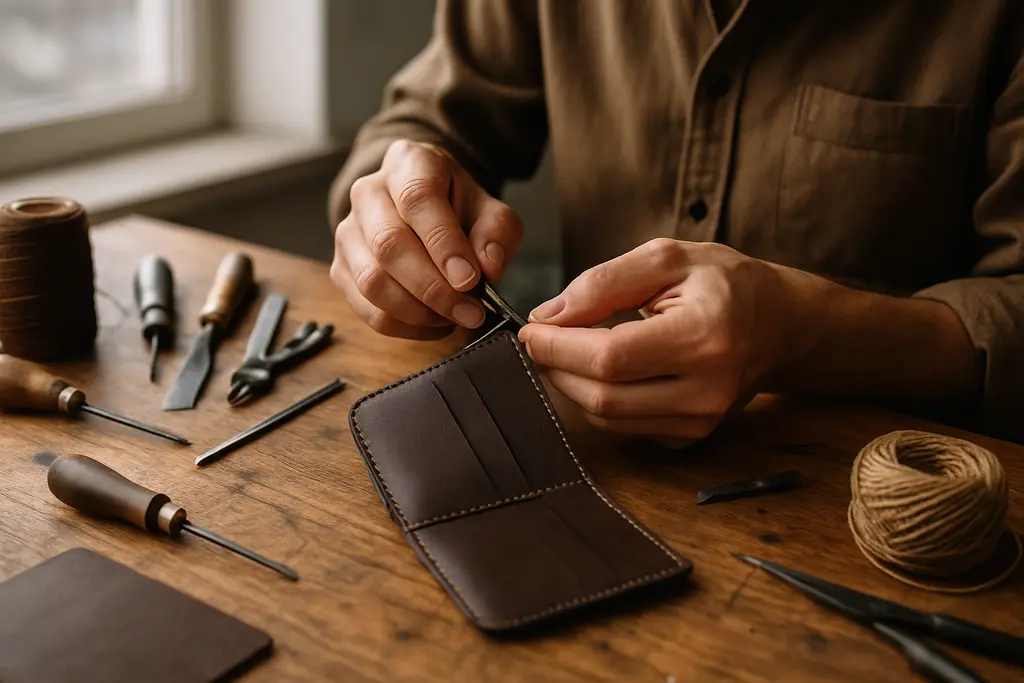
Amazon Handmade policies now ask sellers to think more carefully about two connected promises: the item is genuinely handmade under Amazon’s rules, and the listing does not misuse another party’s intellectual property. For small makers, that can feel administrative, but it is also close to the work itself. A craft listing is not only a product page; it is a public record of authorship, process, materials, naming, and buyer trust.
As of October 10, 2026, the policy direction was already in effect. Amazon had expanded proactive IP screening, restricted some branded ASIN creation, moved Handmade listings toward standard product types, and continued to expect sellers to document how goods are made. This is not a reason for panic. It is a reason to run a calmer, cleaner shop with better records and fewer risky shortcuts.
This guide is written for handmade sellers who want practical, evidence-aware steps rather than dramatic predictions. It is not legal advice, and sellers with specific trademark, copyright, or licensing questions should consult a qualified professional. The seller-side goal is narrower: make listings easier to verify, easier to classify, and less likely to raise avoidable IP or craftsmanship concerns.
What Amazon Handmade Policies Changed
Amazon Handmade Policies And IP Screening
Amazon’s published brand-protection reporting showed how much enforcement had moved before the complaint stage. In its 2024 Brand Protection Report, Amazon said its automated systems blocked more than 99% of suspected infringing listings before brand owners had to find and report them through the brand protection report. For handmade sellers, that matters because a listing can be affected even before a buyer sees it, especially if titles, images, keywords, or product claims resemble protected brands too closely.
The practical reading is simple: do not treat IP review as something that happens only after a rights owner complains. Sellers should assume that listing language, product identifiers, brand fields, image details, and repeated catalog patterns can be screened early. That does not mean every restriction is correct, and Amazon provides processes for some issues. It does mean sellers should reduce ambiguity before publishing.
Standard Product Types Require Cleaner Data
The Handmade category also moved away from older GUILD-style product types toward standard product types such as ordinary item categories. The research notes show that this shift began in October 2024 for new listings and continued through the reclassification of existing Handmade ASINs. That change is more than a label swap. Standard product types can bring different required attributes, such as size, department, material, intended use, or child-safety-related fields where relevant.
A seller who once thought mainly in shop collections now has to think like a catalog editor. A hand-thrown mug, a beaded necklace, a textile wall piece, and a repurposed lamp may each require different data. Missing attributes can affect listing quality or buyability. Vague attributes can also weaken the seller’s own evidence if a listing is reviewed later.
Craft Proof Under Amazon Handmade Policies
Show Who Made The Item
Craft proof should not be performative. It should be clear enough that a reviewer, buyer, or team member can understand the maker’s role. Amazon’s Handmade rules in the research notes allow items made, altered, upcycled, repurposed, or hand-designed by the seller or a small team, with a preference for family or small-team production of no more than 20 employees. The rules also distinguish hand tools and light machinery from assembly-line or outsourced mass production.
That distinction is central to Amazon Handmade policies because the category depends on a promise about authorship and production. Sellers should keep plain records: process photographs, material invoices, sketches, pattern notes, batch logs, tool lists, and short descriptions of who performs each step. These records do not need to become theatrical behind-the-scenes content. They should be accurate, dated where possible, and consistent with the listing.
Use Classification Terms With Care
After reclassification, Handmade listings may need classification attributes such as handcrafted, hand-designed, hand-altered, upcycled, or repurposed. Those terms should match the real process. A seller who designs a graphic and uses a production partner should not describe the item as handmade in the same way as a seller who cuts, forms, stitches, finishes, and ships each piece by hand. The policy question is not which process is more artistic. The question is whether the listing describes the process honestly under the category rules.
Buyers also benefit from this clarity. A careful shopper may value a hand-altered jacket differently from a fully handmade garment or a repurposed home object. Clear process language helps buyers understand what they are paying for, and it helps sellers avoid exaggerated claims that can later create compliance problems.
Catalog Discipline And ASIN Limits
Brand Registry Now Affects Listing Control
On June 1, 2026, Amazon restricted third-party sellers from creating new ASINs for branded products unless they were properly assigned a selling role in Brand Registry, according to Amazon’s Seller Central reference on ASIN creation policy. The same reference discusses error code 8571, which can appear when sellers exceed ASIN creation limits, including cases where many existing listings have little or no sales activity.
For a handmade seller with a true original brand, this makes brand governance more important. If a trademark strategy is appropriate for the business, Brand Registry may help connect the seller’s account, brand name, and catalog permissions. But that decision should be made with care. Not every hobby shop needs the same structure as a larger studio, and trademark filings carry costs and responsibilities.
Prune Before Expanding
Catalog discipline is often less glamorous than new product design, yet it can protect a shop. Sellers should review dormant listings, duplicated variations, unclear titles, weak attributes, and products that no longer match the shop’s current making process. A smaller catalog with strong documentation may be safer than a sprawling catalog full of old experiments.
- Check whether each listing uses the right standard product type.
- Confirm that the Handmade classification attribute matches the actual process.
- Remove brand names from titles and tags unless the use is accurate and permitted.
- Keep process notes and material records for items that sell repeatedly.
- Retire listings that no longer fit the shop’s production capacity or documentation.
This connects with broader seller planning. Kaygranger.com has also covered handmade seller strategies after policy shifts, where originality, sourcing clarity, and margin checks become practical safeguards rather than abstract ideals.
Rights Awareness Without Overclaiming

Avoid Names, Images, And Likeness Risks
Many handmade sellers work near pop culture, music scenes, cosplay, fantasy fashion, or fan-inspired aesthetics. Those communities can be imaginative and deeply skilled, but commercial listings require restraint. Sellers should not assume that a phrase, character reference, album-inspired design, celebrity likeness, sports mark, or brand-style pattern is safe because it is handmade or small-batch.
A cautious listing does not need to erase personality. It can describe materials, color, technique, fit, mood, and use without implying an official connection. For example, a seller can describe a rave accessory by its reflective material, adjustable closure, or handmade beadwork rather than naming a protected festival, artist, or character without permission. For broader creative-commerce insights across similar interests, Robsonic addresses overlapping topics in culture, music, and maker communities.
Document Inspiration Separately From Permission
Inspiration is not the same as authorization. A sketchbook note saying a design was inspired by a stage costume, anime character, or surrealist artwork may be meaningful for the maker, but it does not prove the seller has rights to market the product with protected names or imagery. Sellers should separate private creative references from public listing claims.
This is especially relevant for cosplay-adjacent accessories and fantasy fashion pieces. A handmade crown, cloak, mask, or jewelry piece can be described through its own materials and construction. If the seller lacks permission to use a protected character or franchise name, the safer commercial path is to avoid presenting the item as connected to that property.
Amazon Handmade Policies For Seller Resilience
Amazon Handmade policies reward a type of seller discipline that resembles good studio practice: name the work accurately, keep records, respect other creators’ rights, and avoid claiming more than the process supports. None of that guarantees a listing will never be questioned. Automated screening can make errors, requirements can change, and marketplace enforcement can feel blunt. Still, sellers can reduce risk by making their shops easier to understand.
A useful monthly review can be short. Choose five listings and ask whether the title is truthful, the product type is correct, the Handmade classification is accurate, the images show the actual item, and the process records are easy to find. Then check whether any wording suggests affiliation with a brand, artist, event, character, or rights owner that has not granted permission.
The strongest handmade shops do not depend on ambiguity. They make the buyer’s trust visible through process, language, and consistency. For sellers adapting after Amazon’s IP and craftsmanship changes, that is the most practical posture: fewer vague claims, better catalog hygiene, clearer maker evidence, and a steady respect for the creative rights of others.