
Art Fair Fatigue is not just a mood in dealer booths or a complaint heard between flights. Based on the available 2025 and 2026 market data, it is better understood as a cost-and-attention problem: fewer fairs, higher participation expenses, and more pressure on galleries to prove that each event can justify the outlay.
For artists, galleries, collectors, and cultural readers, the phrase can sound vague. It becomes clearer when the numbers are read together. A fair is not only a sales room. It is a shipping plan, a staffing plan, a collector-meeting plan, and a public signal. If any one of those benefits weakens while costs rise, galleries have reason to cut back.
That does not mean fairs have lost cultural value. It means their economic model is being tested. The same logic appears in music touring: a high-profile show can still matter, but travel, lodging, production, and attention are part of the score. For those interested in exploring arts coverage within the cultural ecosystem, the website robsonic.org provides insights into related creative sectors.
What Art Fair Fatigue Counts Now
Reading Art Fair Fatigue Through Numbers
The clearest starting point is the fair count. The Art Basel and UBS Art Market Report 2026 stated that 336 art fairs were held globally in 2025, the lowest total since 2021 and 71 fewer than the 407 fairs held in 2019, according to the Art Basel and UBS report. That is a structural change, not a passing scheduling oddity.
A smaller global fair count can mean several things at once. Some events may have closed because they lacked sustainable backing. Some galleries may have become more selective. Some regional markets may have found that a recurring fair no longer matched collector travel patterns. The data does not support a single cause, so the careful reading is broader: the fair system became more selective after the 2019 peak.
Why Fewer Fairs Matter
Fewer fairs can reduce calendar overload, which may help galleries focus on events with stronger collector alignment. But the contraction can also limit access for newer dealers and artists who depend on fairs for visibility outside their home city. That tension sits at the center of Art Fair Fatigue: the market may need fewer weak events, while emerging participants still need affordable ways to be seen.
A fair’s value is not equal for every booth. A blue-chip gallery can use a major fair to reinforce relationships already in motion. A younger gallery may be paying for discovery. If the discovery function weakens, the financial risk lands hardest on the dealer with the smallest cushion.
Cost Pressure For Galleries
Booths Travel And Shipping
The cost side of the problem is direct. The same 2026 report recorded a 10% average nominal increase in art fair booth and exhibition costs from 2023 to 2024, followed by another 9% rise in 2025. Travel and accommodation also rose, by 11% in 2024 and 6% in 2025. Those increases matter because galleries cannot treat a fair booth as an isolated bill. Transport, insurance, crating, installers, lodging, meals, staff time, and follow-up all sit around it.
For a gallery, the decision to attend a fair becomes a risk calculation. Sales at the fair are only one part of the return. Dealers may also count later sales, new collector relationships, press attention, curator contact, and artist confidence. Those benefits are real, but they are harder to measure than an invoice. If the bill rises faster than the visible return, fewer galleries will be willing to treat participation as routine.
A Smaller Gallery Problem
The cost issue is sharper for younger and mid-sized galleries because they often have less working capital. They may represent artists who need broader exposure, yet lack the financial room to absorb a poor fair. A single expensive event can affect payroll, shipping budgets, artist payments, and the gallery’s ability to produce future exhibitions.
This is why lower-cost sections, shared presentations, and more focused fair formats deserve close attention. They do not remove the risk, but they may rebalance it. Kaygranger.com has looked at this issue through emerging galleries in The Armory Show’s Presents, where the question was not simply who appeared, but how cost, access, and visibility interacted for smaller participants.
| Indicator | Reported Shift | Why It Matters |
|---|---|---|
| Global Fair Count | 336 fairs in 2025, down from 407 in 2019 | Suggests contraction from the pre-2020 peak |
| Booth And Exhibition Costs | Up 10% in 2024, then 9% in 2025 | Raises the sales threshold needed to justify participation |
| Travel And Accommodation | Up 11% in 2024, then 6% in 2025 | Makes cross-border fair strategy harder to defend |
Closures And The Strain On Fair Supply
What The Closure Data Suggests
The contraction is also visible in closures. MAYI Arts reported that, over the five years up to 2024, 129 fairs ceased operations while only 39 new events emerged worldwide; it also reported that 31 fairs closed in 2024, many of them in Europe, in its MAYI Arts analysis. The gap between closures and new events suggests that the fair system was not simply replacing old formats with new ones at the same pace.
That matters for cities as well as galleries. Art fairs can bring collectors, critics, curators, artists, hotels, restaurants, and local audiences into a short period of concentrated cultural activity. When an event closes, the effect may reach beyond sales. Still, not every fair has the same public role, and the research provided does not support broad claims about every local economy. A cautious reading is that closures reduce some points of contact while leaving stronger events to compete for attention.
The Visibility Question
Visibility is hard to price. A gallery may accept a low-sales fair if it brings serious curators or collectors into contact with an artist’s work. But visibility becomes less persuasive when there are too many events chasing the same collectors, or when travel costs make attendance thinner. Art Fair Fatigue, in this sense, is partly an attention problem. If buyers, writers, and institutions cannot give each event meaningful focus, the booth fee buys less than it once did.
This pressure may push galleries toward fewer, more intentional appearances. That can be healthy if it encourages better planning and stronger presentations. It can be damaging if it narrows the public stage to dealers already able to pay the highest costs.
Collector Caution And Sales Expectations
From Impulse To Selection
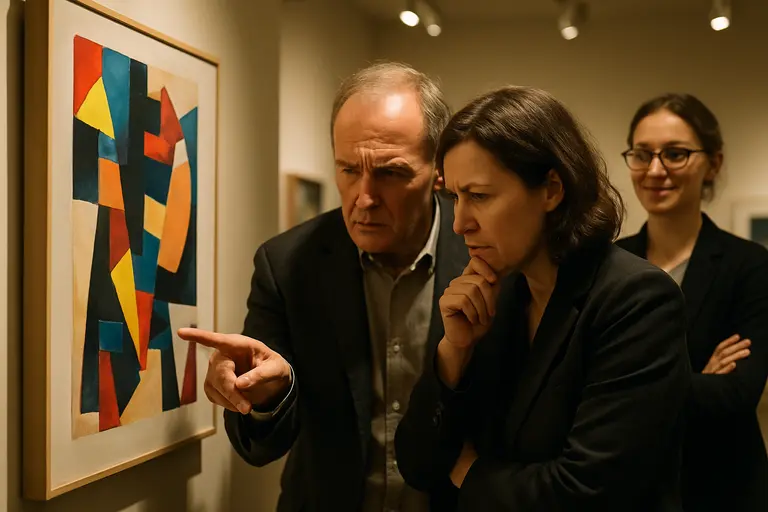
The research notes point toward more selective collector behavior in 2025, with some established buyers reported as pausing purchases and others buying fewer works with more attention to potential appreciation. Because those details depend on reporting outside the two cited sources used here, they should be read as contextual rather than universal. Even so, they align with the cost data: if collectors are slower to buy, galleries face more pressure to defend the same fair spend.
Sales can still happen in softer conditions. A fair can produce strong individual results while the wider system contracts. That is common in cultural markets. A sold-out booth does not cancel pressure elsewhere, just as a poorly performing booth does not prove an entire fair has failed. The better question is whether enough galleries, across size levels, can repeatedly attend without weakening their core programs.
Why The Gallery Premises Still Matter
One effect of Art Fair Fatigue may be renewed attention to the gallery’s own space. A gallery premises has slower rhythms than a fair booth. It allows repeat visits, deeper artist context, and programming that is not compressed into a few high-stakes days. Fairs still offer density and international contact, but the home gallery can carry the long-form relationship.
For artists, this distinction matters. A fair booth may create a first meeting, but artist development rarely happens in a five-day burst. Studio visits, local exhibitions, catalog writing, curator dialogue, and collector education often need time. If fair costs crowd out those activities, the loss is cultural as well as financial.
How Galleries Can Read The Signal
Questions Before Committing
Galleries weighing fair participation can ask practical questions without treating every event as either essential or wasteful. Which collectors are likely to attend? Does the fair match the artists being shown? Are shipping and travel costs proportionate to realistic sales and relationship goals? Can the booth presentation stand on its own, or is the gallery relying on the fair’s name to do too much work?
Those questions are not anti-fair. They are pro-sustainability. The fair circuit works best when the costs, audience, and artistic purpose are aligned. If a gallery attends too many fairs, staff can burn out, artists can feel rushed, and collectors may see repeated material without enough context. If a gallery attends too few, it may lose contact with buyers beyond its region. The hard work is finding the middle position.
Signals For Artists And Viewers
Artists should read fair participation as one form of exposure, not the only one. A gallery that skips a fair may be protecting resources for exhibitions, production, or slower sales work. Viewers should also resist treating a smaller fair count as simple decline. It may be a sign of correction after expansion, or a sign that costs have outpaced usefulness for some participants.
- Fewer fairs can reduce calendar overload but may narrow access for newer galleries.
- Higher booth, travel, and exhibition costs raise the break-even point.
- Selective collectors make follow-up and relationship quality more valuable.
- Smaller fair formats may matter if they reduce risk without reducing serious contact.
Art Fair Fatigue As A Practical Signal
What The 2025 And 2026 Data Allows Us To Say
Art Fair Fatigue is best treated as a practical signal rather than a slogan. The supported data shows a smaller global fair count in 2025 than in 2019, notable fair closures through 2024, and rising participation costs through 2025. Those facts do not prove that art fairs are fading as cultural events. They do show that the old assumption of constant fair expansion has weakened.
The most careful response is not to dismiss fairs, but to ask sharper questions about value. A fair can still introduce an artist to a collector, give a gallery a public platform, and concentrate cultural attention. Yet it has to do those things while competing with higher costs and a more selective audience. That is the economic shift behind Art Fair Fatigue: not an end to fairs, but a demand that each fair earn its place in the calendar.