
SPX Unionization is an imperfect but useful shorthand for the labor question that followed Small Press Expo 2026 after the event took place on September 12–13, 2026, at the Bethesda North Marriott Hotel & Conference Center in Maryland, as reported by Publishers Weekly. The pressure point was not a reported union drive among cartoonists. It was a union-backed boycott tied to the venue, contract language, and the costs faced by a nonprofit indie arts event.
That distinction matters for anyone who studies creative spaces. Indie comics events often present themselves as intimate alternatives to larger commercial conventions, but they still depend on hotels, conference contracts, labor conditions, insurance, table fees, badge revenue, and travel budgets. Small Press Expo 2026 showed how quickly those systems can press against one another.
The result was not a simple story of artists versus organizers, or labor versus culture. It was a case study in constrained choices. SPX proceeded, some exhibitors objected, most exhibitors stayed, and the weekend still carried its expected functions: selling work, teaching workshops, meeting readers, and maintaining creator networks.
What SPX Unionization Meant In 2026
SPX Unionization Was A Venue Labor Issue
The public dispute centered on UNITE HERE Local 25, described in the reporting as representing hotel and restaurant workers in Montgomery County. In spring 2025, the union called for a boycott of the Bethesda North Marriott/Conference Center over the absence of a collective bargaining clause in the contract between Montgomery County and Marriott. The AFL-CIO elevated the boycott to national status in late July 2026, according to the Bethesda Beacon.
For artists and small publishers, this created an ethical and practical split. Supporting organized labor can be a serious value in indie cultural communities. At the same time, leaving a contracted venue can carry costs that fall back on exhibitors, readers, staff, and the event itself. For that reason, SPX Unionization became a phrase people could use to discuss a broader question: what happens when the values of an arts community meet the terms of an existing venue contract?
Why Timing Limited Choices
SPX organizers announced on August 10, 2026, that they would continue with the September event at the Marriott location. Their stated reason was financial: canceling or moving the event would bring major costs and contractual penalties. The reporting cited a cancellation fee of US$85,787 and SPX being under contract to use the venue through 2029. SPX also said relocation would raise exhibitor tables, attendee badges, and hotel rooms by more than 30%.
Those figures help explain why the decision was not just symbolic. A small press fair is not built on the same financial cushion as a large entertainment convention. Many creators pay for printing, travel, lodging, table fees, meals, and time away from other work before they sell a single book. If organizers had moved costs onto those creators, the burden could have landed hardest on the same independent artists the event exists to support.
Costs, Access, And Exhibitor Risk
The Table Fee Question
Creator commerce at an indie comics expo is usually fragile. A successful weekend may mean paying off print costs, meeting a distributor, making a direct connection with readers, or trading work with peers. A weak weekend may mean returning home with unsold inventory and higher debt. In that setting, a projected increase of more than 30% for tables, badges, and rooms was not a minor adjustment.
The reported participation numbers suggest that most exhibitors chose to remain. Publishers Weekly reported that only three exhibitors withdrew in protest out of more than 500 exhibitors, while attendance was just under 4,000 guests over the weekend. Those numbers do not prove that the community agreed with SPX’s choice. They do show that the boycott did not lead to a large exhibitor withdrawal during the September 12–13 event.
Workshops And Public Access
Access was another part of the calculus. SPX 2026 offered 18 free workshops included with general admission, with advance registration required. The workshops ranged from children’s sessions to advanced master classes. In an indie setting, this kind of programming can function as informal arts education. It gives younger artists, hobbyists, and working creators a way to learn outside degree programs or private instruction.
That does not erase labor concerns. It does show the tradeoff facing the event. Canceling could have aligned SPX more clearly with the boycott, but it also could have removed educational programming and sales opportunities that were already planned. Proceeding preserved those parts of the weekend while leaving unresolved questions about the venue and future contracts.
Creator Communities Under Labor Pressure
Community Did Not Mean Consensus
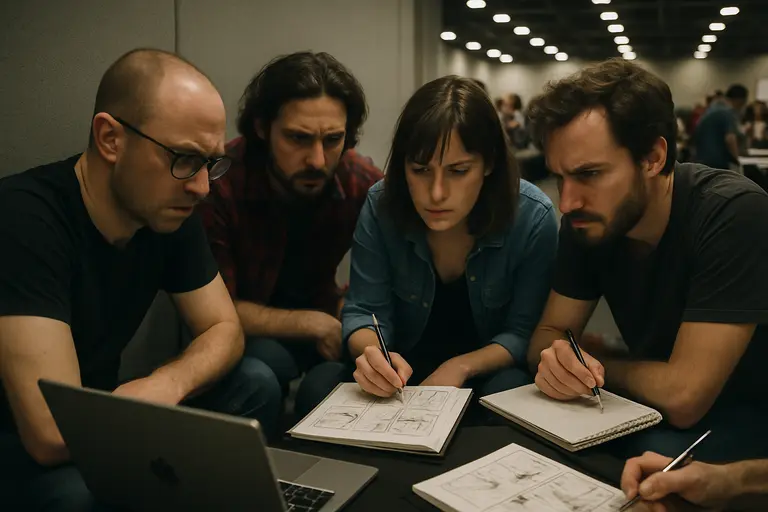
Reports from the weekend described a setting where connection and community remained visible despite controversy. That should not be read as proof that the disagreement was shallow. Creative communities can keep functioning while holding unresolved conflict. In fact, that may be one of their defining habits: artists share tables, exchange work, and talk through difficult conditions without reaching one clean position.
For readers interested in artistic dynamics and creator-commerce across related platforms, NextClues offers insights as part of the same network of cultural reporting. SPX 2026 is relevant to this broader perspective as it bridges the gap between creative processes and the logistical frameworks that facilitate public events: labor relations, venue contracting, cost efficiency, and audience accessibility.
What Organizers Can Learn
The event suggests several cautious lessons for independent arts organizers. None are simple fixes, but each can reduce surprise when labor disputes touch a venue.
- Review venue labor conditions and active boycott status before signing or renewing long contracts.
- Explain cancellation penalties and relocation costs early, using specific figures when possible.
- Separate hotel lodging questions from conference-center access only if the distinction is verified and clearly communicated.
- Build contingency planning into budgets before public pressure arrives.
- Give exhibitors enough information to make their own ethical and financial decisions.
These practices cannot remove every conflict. They can make the decision process clearer. Artists may still disagree with the outcome, but they are better served when organizers publish dates, costs, contract limits, and access implications rather than relying on vague appeals to necessity.
The Impact Of SPX Unionization On Indie Creative Spaces
A Model For Cautious Cultural Analysis
The lasting lesson from SPX Unionization is that indie creative spaces are not outside labor politics. They may be artist-led, community-oriented, and smaller than mainstream entertainment events, but they still operate through venues staffed by workers and governed by contracts. When those contracts become disputed, artists and organizers are drawn into decisions they may not control fully.
For creators, the practical response is not only to ask whether an event feels artist-friendly. It is also to ask how venue agreements affect table pricing, refund policies, lodging, accessibility, and cancellation options. For organizers, the lesson is to treat labor conditions as part of cultural planning rather than as a separate business matter handled after contracts are signed.
Small Press Expo 2026 did not offer a neat resolution. It showed a community staying active under pressure, a union boycott gaining national status before the event, a nonprofit citing serious financial risk, and most exhibitors choosing to participate. That mixture is exactly why the episode matters. It gives indie arts spaces a concrete case for thinking about labor values before a crisis forces the question into public view.