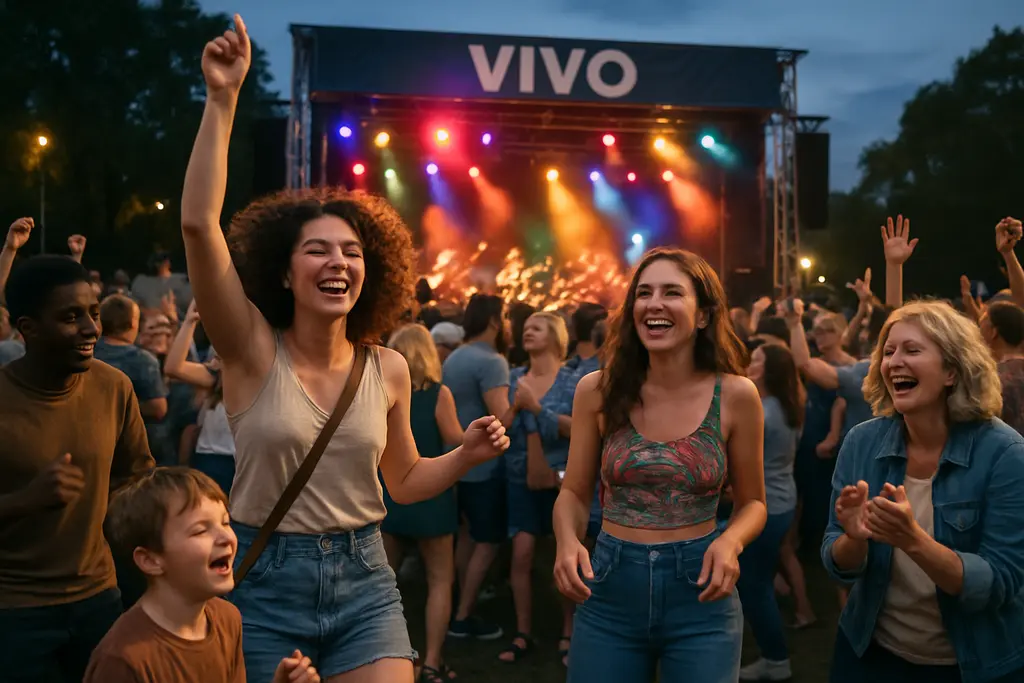
Music as art was made unusually clear at the 12th season of VIVO Music Festival, which ran from September 7-13, 2026, in venues around and beyond Columbus, Ohio. The festival had already concluded by September 18, 2026, so its value now is not as a calendar listing but as a case study in how living composers, historical repertoire, community outreach, and disciplined performance practice can sit inside one artistic frame.
For students and teachers, a festival like VIVO is useful because it shows music doing several jobs at once. It carries memory. It tests technique. It gives local composers a public setting. It asks listeners to hear form, texture, gesture, and cultural reference as part of one experience. That is not abstract theory; it is close to what happens at the piano during a serious practice week, only at festival scale.
The 2026 edition was reported as VIVO’s 12th season, with programming that spotlighted composers and musicians with strong Ohio ties WOSU reported. The season’s “America 250” theme, marking the U.S. 250th anniversary, also centered immigrant voices and composers who helped shape American musical language AOL described.
How Music as Art Framed The 2026 VIVO Season
Music as Art Beyond Decoration
One of the most practical lessons from VIVO is that music should not be reduced to atmosphere. Concert music can decorate a room, but that is rarely its strongest function. In the 2026 festival, works associated with American concert life appeared beside new commissions and premieres, which placed familiar repertoire in conversation with newer voices. That pairing can help audiences hear style as an artistic decision rather than a fixed museum label.
The opening concert, “VIVO Origins,” took place on September 10, 2026, at Timashev Recital Hall. Research notes identify works by Leonard Bernstein, Aaron Copland, Béla Bartók, Amy Beach, and arrangements by Brandon Ridenour. Those names suggest a program built around different relationships to American musical identity, though any deeper claim about the exact curatorial argument should be treated cautiously unless drawn from the festival’s own notes.
As a piano coach, I find this useful for students who assume “interpretation” means adding emotion late in the process. Festivals show the opposite. Interpretation begins with programming, context, order, texture, personnel, venue, and pacing. A pianist working at home can borrow that idea. Instead of asking only, “Did I play the notes?” the better question is, “What artistic role does this passage serve?”
Local Composers And Public Hearing
The 2026 season also included new work connected to Ohio-based composition. Research notes state that VIVO commissioned and premiered Gregory Rowland Evans’s piece for three violas, shqayq alnuemani, during the “Different Trains” concert on September 11, 2026. The available notes support the fact of the commission and premiere, but they do not provide enough verified detail here to analyze the score’s structure or meaning with confidence.
That restraint matters. Respecting a living composer means not inventing intention, influence, or audience reaction. What can be said is that a new work for three violas places attention on a specific sound world: close registers, blended timbres, inner-voice tension, and the expressive possibilities of a section of the string family often heard inside larger textures. For students, that is a helpful reminder that artistic medium is not only melody. Instrument choice itself shapes perception.
This is where music as art becomes a practice concept. A pianist cannot change the instrument, but can change voicing, pedaling, balance, and attack. The question becomes similar: what sound material is actually carrying the idea?
Practice Lessons From Festival Programming
Rehearsal Thinking For Students
A festival program is not built by accident, and a good practice session should not be either. VIVO’s 2026 season placed historical works, premieres, outreach, and community settings near one another. A student preparing for a recital can use the same thinking on a smaller scale: identify the role of each piece, then plan the work around that role.
For example, a lyrical work asks for singing tone and controlled release. A rhythmic work asks for pulse stability before speed. A new or unfamiliar work asks for slow reading, structural mapping, and careful listening without the shortcut of famous recordings. These are ordinary practice tasks, but a festival reminds us that they point toward communication rather than mere accuracy.
- Mark one artistic purpose for each piece before the first full run-through.
- Record short sections and listen for balance, rhythm, and continuity separately.
- Practice starting from interior landmarks, not only from the beginning.
- End each session with one complete musical gesture, even if it is only eight measures.
That last point is temporary but powerful. During a busy week, a student may not have the energy to solve every technical issue. Finishing with one shaped phrase keeps the ear involved. It also prevents practice from becoming a repair shop with no performance imagination.
What Composers Teach Performers
Local composer programming can also change how performers practice older repertoire. When students encounter living composers, they often become more alert to choices in music from any period. Dynamics, register, silence, articulation, and repetition start to feel chosen rather than inevitable.
That mindset helps with Beethoven, Beach, Copland, Glass, or a student’s own short piece. It discourages passive playing. A student who asks why a composer repeats a figure three times is already practicing more intelligently than one who repeats a passage ten times without listening.
The research notes also identify “VIVO Hope,” presented on September 13, 2026, in partnership with Chamber Music Columbus at Southern Theatre. Listed works included Philip Glass’s String Quartet No. 5, Gabriela Lena Frank’s Hilos, Aaron Copland’s Appalachian Spring, and a world premiere by VIVO Next composition fellow Calvin Ray Shawler. Without making unsupported claims about the audience response, that mix suggests a program interested in continuity between established repertory and younger creative work.
Community Context And Listening Habits
Outreach As Artistic Contact
The weeks before the 2026 concerts included outreach at Ohio Living Westminster-Thurber and educational performances in Columbus City Schools and the Fairbanks Local School District, according to the provided research. This matters because music education is often strongest when students experience performance as contact with real people, not as a distant professional category.
For a young pianist, a school performance can change the meaning of practice. Scales become preparation for projection. Rhythm drills become a way to hold attention. Memorization becomes confidence under pressure. Even a short outreach appearance can show that music as art depends on listeners as well as performers.
Arts festivals often create bridges between disciplines, too. Readers interested in how performance, clothing, image, and fantasy aesthetics meet in adjacent creative culture may find the Fairytale Fashion site a useful related resource. The connection is not that music and fashion are the same medium, but that both can organize attention through texture, timing, silhouette, and expectation.
Story, Memory, And Festival Form
The “America 250” frame also points to narrative. A national anniversary can easily become broad or ceremonial, but VIVO’s reported attention to immigrant voices gives the frame a more specific artistic function. It asks who helped form American sound, who gets heard, and how repertory can carry movement across places and generations.
That is close to the role of spoken performance at arts gatherings. A related kaygranger.com piece on live storytelling at festivals makes a useful parallel: voice, rhythm, memory, and audience focus can turn an event into a shared structure rather than a sequence of isolated moments.
For musicians, the lesson is plain. Do not practice as though the audience hears only correctness. Listeners hear timing, contrast, breath, pacing, and the confidence of decisions. They also hear when a performer understands the character of a work. That understanding does not require exaggeration; it requires preparation with a listening mind.
VIVO Music Festival And Music as Art
VIVO’s September 2026 season offers a careful example of music as art because it combined local creative work, American masterworks, immigrant-centered context, and educational outreach without reducing the festival to one message. The facts available support a picture of a chamber music festival using programming as artistic argument: not only presenting pieces, but placing them in relationships.
For students, the most useful response is practical. Choose repertoire with purpose. Ask what each piece says through sound rather than biography alone. Practice in short, focused blocks. Record before comfort arrives. Treat new music with curiosity and older music with fresh attention. If a passage feels difficult, do not only slow it down; ask what musical job the difficulty performs.
That approach keeps music as art connected to daily work. A festival lasts a week. A practice habit lasts much longer. The strongest insight from VIVO’s 2026 edition is that artistic meaning is built through choices: whose music is programmed, where it is played, how it is rehearsed, how it reaches students, and how performers listen while they prepare.