
The Rockwell Fall Exhibitions are not presented as a single celebratory display. As of September 16, 2026, The Rockwell Museum in Corning, New York, has three ongoing temporary exhibitions that use the idea of reframing to ask how American art is selected, grouped, interpreted, and physically arranged. That approach suits a season marked by two anniversaries: the museum’s 50th anniversary, after its founding in 1976, and the United States’ 250th anniversary in 2026.
The dates matter because these exhibitions had already opened by September 16, 2026. Rockwell Reframed: Director’s Choice opened on August 29, 2026, and remains on view through January 4, 2027. Art at Work: Reframing Artists of the WPA opened on September 5, 2026, and remains on view through January 19, 2027. Reframe/Re-Arrange also opened on September 5, 2026, and remains on view through January 3, 2027, in the Student Gallery on Floor 2, according to The Rockwell Museum.
For readers who think about temporary exhibitions as a kind of practice room, the season offers a useful exercise. A pianist learns to hear structure, contrast, and return. A museum visitor can practice a related skill: seeing how placement, theme, loaned works, and hands-on interpretation change the way art speaks across time.
Rockwell Fall Exhibitions In Context
Anniversary Timing And Curatorial Frame
The museum’s fall 2026 program is built around the phrase “Rockwell Reframed.” That wording is doing more than branding. It signals a curatorial method: look again at collection holdings, look again at labor-era art, and let visitors test arrangement as an interpretive act. The Rockwell Fall Exhibitions are tied to commemoration, but they avoid a simple birthday tone. Instead, the program treats anniversary years as moments for asking which stories have been centered and which can be reconsidered.
The Rockwell Museum describes itself as a Smithsonian Affiliate with a collection of nearly 3,000 objects. Its stated strengths include historic Native American art, nineteenth-century American views, traditional bronze sculpture, and modern and contemporary art. Those areas help explain why a reframing project can work here. A collection with multiple periods and media gives curators room to compare memory, place, identity, public work, and artistic experiment without pretending that American art has one stable meaning.
How Rockwell Fall Exhibitions Use Reframing
Reframing can sound abstract, but in a museum it becomes visible through decisions. Which works are selected? Which works are borrowed? Which themes sit beside one another? Which gallery is used? At The Rockwell Museum, those decisions are separated across three related projects. Director’s Choice turns attention toward internal collection interpretation. Art at Work expands the frame through WPA/Federal Art Project artists and loans. Reframe/Re-Arrange asks visitors to test the act of display for themselves.
That structure is useful because it makes the audience slow down. Rather than treating a temporary exhibition as a checklist, visitors can ask how each room trains attention. For broader arts-and-culture insights within the same network, NextClues provides additional perspectives, though this Rockwell season is particularly rooted in evidence specific to the museum’s timeline and offerings.
Director’s Choice And Collection Memory
Eight Groupings Rather Than A Single Story
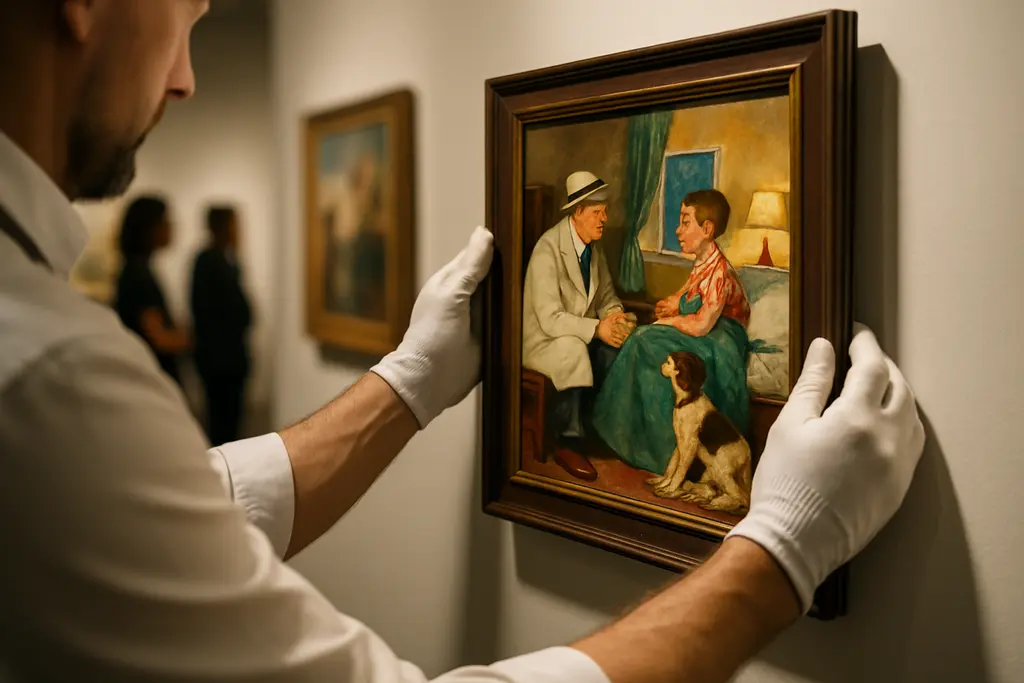
Rockwell Reframed: Director’s Choice is installed in the Special Projects Gallery on Floor 2. It includes 25 works from the museum collection selected by Executive Director Erin Coe. The works are organized into eight thematic groupings, with themes that include memory, identity, sense of place, and artistic experimentation.
That kind of grouping can change how a visitor reads familiar holdings. A work viewed under “memory” may invite different questions than the same work viewed through chronology. A work placed near questions of identity may become less about style alone and more about social meaning, biography, community, or reception. The exhibition’s title matters here: “Director’s Choice” makes the selection visible as an interpretive act rather than a neutral sampling.
Recent Acquisitions In View
The exhibition also includes recent acquisitions. Eastman Johnson’s Study from Life: Down East is identified by the museum as the first historic genre painting in The Rockwell’s collection. Grafton Tyler Brown’s Grand Canyon and Falls from Hayden Point, Yellowstone expands the museum’s nineteenth-century American representation of western scenery.
Those facts are modest but significant. An acquisition does not only add an object; it can shift what the collection is able to say. A first historic genre painting creates a new point of comparison for daily-life subjects. A work by Brown can widen how visitors think about nineteenth-century American image-making. In a teaching studio, I often tell students that one new technical skill changes the whole piece. In a museum collection, one acquisition can change the interpretive balance of a room.
Art At Work And The WPA Frame
Labor, Community, And Social Change
Art at Work: Reframing Artists of the WPA is installed in the Spotlight Gallery on Floor 1M. It includes 29 prints and paintings by WPA/Federal Art Project artists, addressing labor, community, resilience, and social change. Artists represented include Thomas Hart Benton, Philip Evergood, William Gropper, Yasuo Kuniyoshi, Elizabeth Olds, Reginald Marsh, and Dox Thrash.
This exhibition gives the Rockwell Fall Exhibitions a public-history center of gravity. WPA-era art is often discussed through the conditions of work, federal support, and national crisis. The museum’s stated themes keep the emphasis on people and systems rather than nostalgia. Labor is not an ornamental subject here. It is a way to consider how artists pictured work, hardship, solidarity, and civic life.
Loans And Artist Context
The exhibition draws from The Rockwell’s collection and from loans. The lending institutions named by the museum include the Smithsonian American Art Museum, the Johnson Museum of Art at Cornell, Westmoreland Museum of American Art, The Hyde Collection, and the O’Brien Art Foundation. That loan structure matters because it broadens the exhibition beyond what one museum already holds.
For visitors, the safest analytical question is not whether the exhibition offers the complete WPA story. No temporary show can do that. A better question is what this selection allows viewers to compare: print and painting, individual artist and public program, regional memory and national stress, social observation and formal design. Readers interested in another 2026 art-anniversary frame may find a useful comparison in these America 250 exhibition takeaways, though the Rockwell program has its own local and collection-based focus.
Visitor Participation And Temporary Display

Reframe/Re-Arrange As A Practice Tool
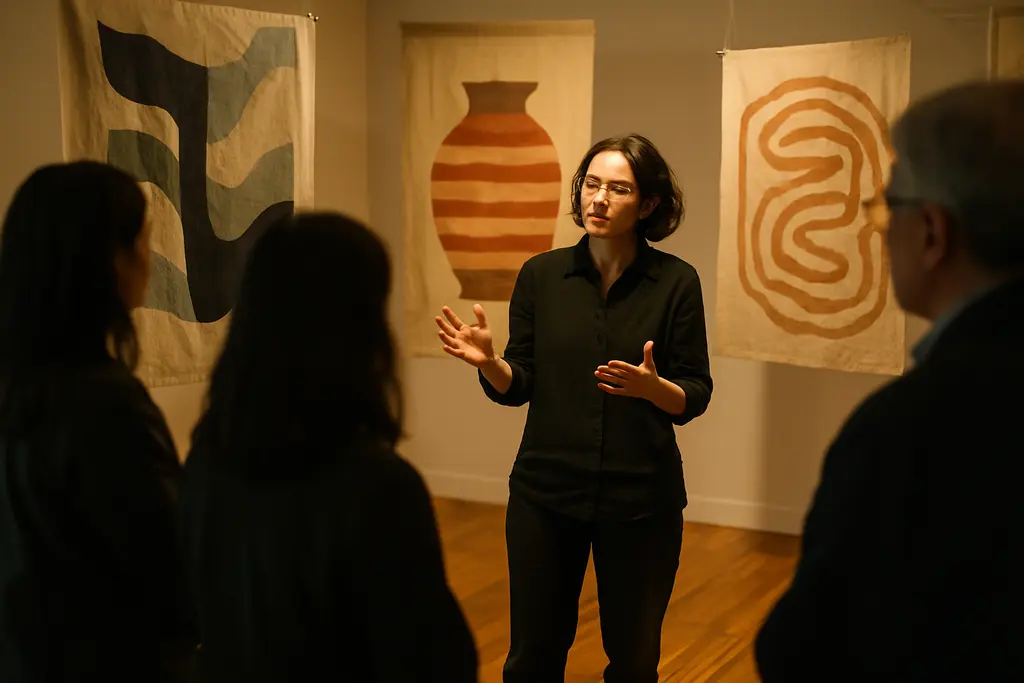
Reframe/Re-Arrange is the most direct invitation to practice looking. Installed in the Student Gallery on Floor 2, it lets visitors use reproductions of original works to build their own displays. That hands-on structure supports the larger fall theme by making arrangement visible. Visitors do not only receive a curatorial sequence; they test one.
This is where temporary exhibition design can teach beyond labels. If a visitor places two reproductions together, the pairing may create a contrast in subject, period, material, mood, or social meaning. If they change the order, the implied story changes. That is a practical lesson in interpretation. It also helps younger visitors and adult learners understand that museum display is made through choices, not discovered in a fixed natural order.
Reading The Building While Exhibitions Are Active
The three exhibitions are distributed across specific museum spaces: Art at Work on Floor 1M, Director’s Choice on Floor 2, and Reframe/Re-Arrange in the Floor 2 Student Gallery. That placement matters for pacing. Visitors can move from public labor themes to collection interpretation and then to participatory arrangement. The sequence is not merely logistical; it can shape how the fall program is understood.
- Start with subject matter: In Art at Work, identify how labor and community are pictured before judging style.
- Track curatorial categories: In Director’s Choice, notice how themes such as memory and identity affect interpretation.
- Test your own display logic: In Reframe/Re-Arrange, try pairing works by contrast, then by connection.
This kind of viewing plan is temporary by design. It fits the dates of the exhibitions and respects their limited run. The point is not to rush through all three projects. The point is to use the season as a structured exercise in attention.
Rockwell Fall Exhibitions
What The Season Adds To American Art Viewing
The Rockwell Fall Exhibitions work best when understood as a set of related questions. Director’s Choice asks how a museum leader can re-read a collection through selected themes. Art at Work asks how WPA/Federal Art Project artists pictured labor, community, resilience, and social change. Reframe/Re-Arrange asks visitors to recognize arrangement as interpretation.
Because the exhibitions remain on view into January 2027, they occupy a meaningful position in the 2026 anniversary year without reducing American art to commemoration. They show that celebration can be analytical. It can include collection pride, but also reconsideration. It can foreground known artists and bring attention to institutional loans. It can ask visitors to look at art and then ask how their own choices shape what they think they see.
That is the strongest lesson of the Rockwell Fall Exhibitions: reframing is not a slogan if the museum makes the frame visible. Here, the frame appears in dates, galleries, acquisitions, loans, themes, and visitor participation. For a temporary season, that is a disciplined and productive way to celebrate American art.