


The 2026 Gina Bachauer Junior pianists offer a clear lesson for young students: serious piano growth before age 15 is not built on pressure alone. It is built on structure, musical curiosity, repertoire planning, listening skills, stage readiness, and steady support from teachers and families. The Junior division of the 2026 Gina Bachauer International Junior & Young Artists Piano Competitions in Salt Lake City brought together players ages 11 to 14, giving younger pianists a visible example of what disciplined preparation can look like before high school is even complete.
The official 2026 Bachauer competition results named 14-year-old Jueon Lee of South Korea as Junior Gold Medalist, 11-year-old Menhe Liu of China as Silver Medalist, and 14-year-old Junye Huang of China as Bronze Medalist. Wilson Liu of the United States and Shengkai Wang of China were listed as finalists, while Ruohan Wang of China received the Sascha Gorodnitzki Foundation Judges Discretionary Prize.
For kaygranger.com readers, the story is not only about who won. It is about what younger pianists, parents, and teachers can learn from the level of preparation required for an international junior competition. A medal result is public. The practice system behind it is the useful part.
Why Young Pianists Need Structure Before Intensity
Many families hear about young competition winners and assume the answer is more hours. That is only partly true. High-level junior pianists practice with intensity, but the better lesson is structure. A young player preparing for a competition like Bachauer needs a clear weekly plan: technical maintenance, repertoire review, memorization, slow work, performance runs, listening, score study, and rest.
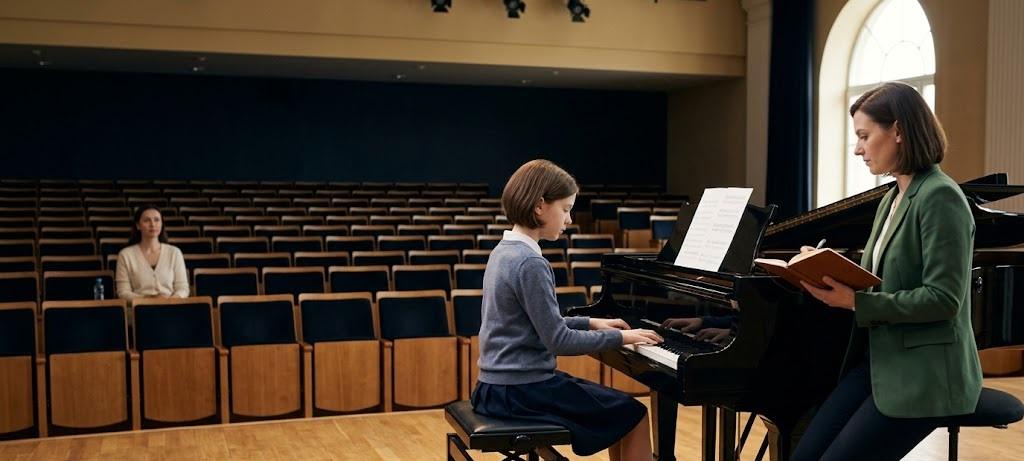
That structure matters because children and early teenagers can burn out when practice becomes only a race. The Gina Bachauer Junior division is designed for ages 11 to 14, according to the official competition page, which means the players are still developing physically, emotionally, and musically. Their practice routines must build control without turning the piano into a punishment.
The 2026 Junior winners show what is possible when preparation starts early but remains focused. Jueon Lee’s Gold Medal came with a $10,000 prize and commemorative gold medal, according to The Violin Channel’s Junior competition report. Menhe Liu received Silver with $5,000, while Junye Huang received Bronze with $3,000. The prizes make the event visible, but the deeper lesson is the consistency needed to reach that stage.
Young students can apply this without copying a finalist’s workload. A 12-year-old preparing a local recital may need shorter, sharper sessions rather than marathon practice. A teacher might divide practice into 20-minute blocks: one for technique, one for a hard passage, one for musical shaping, and one for performance review. The goal is to train focus before asking for endurance.
What Competition Results Reveal About Listening
Piano competitions are often described as tests of fingers, but junior competitions are also tests of ears. Before age 15, students are still learning how to hear tone quality, balance between hands, phrase direction, pedal clarity, and rhythmic stability. A technically advanced child can play fast and still sound unshaped if listening has not caught up with motion.
That is why competition preparation should include more than repetition. Students should record themselves and listen for one issue at a time. Is the melody clear? Are repeated notes even? Does the left hand cover the right hand? Does the pedal blur the harmony? Does the tempo push forward when the difficult passage arrives?
This is where parents can help without becoming substitute teachers. A parent does not need to critique interpretation. They can help create a simple recording habit. One clean run-through on a phone, followed by one specific observation from the student, can train self-awareness. Over time, the student learns to hear practice like a musician, not just survive it like homework.
The Utah Review’s ongoing coverage of the 2026 Bachauer events noted that the Junior Artists portion ran from June 14 to June 20, before the Young Artists portion continued through June 27. That kind of multi-day event requires more than one good performance. It rewards players who can reset, listen, and return to the instrument with composure during a demanding week through local Bachauer competition coverage.
Why Repertoire Choice Matters Before Age 15
A young pianist’s repertoire should stretch the player without hiding the player. That balance is hard. Choose music that is too easy, and the student may not show enough range. Choose music that is too advanced, and the student may spend months fighting the score instead of making music.
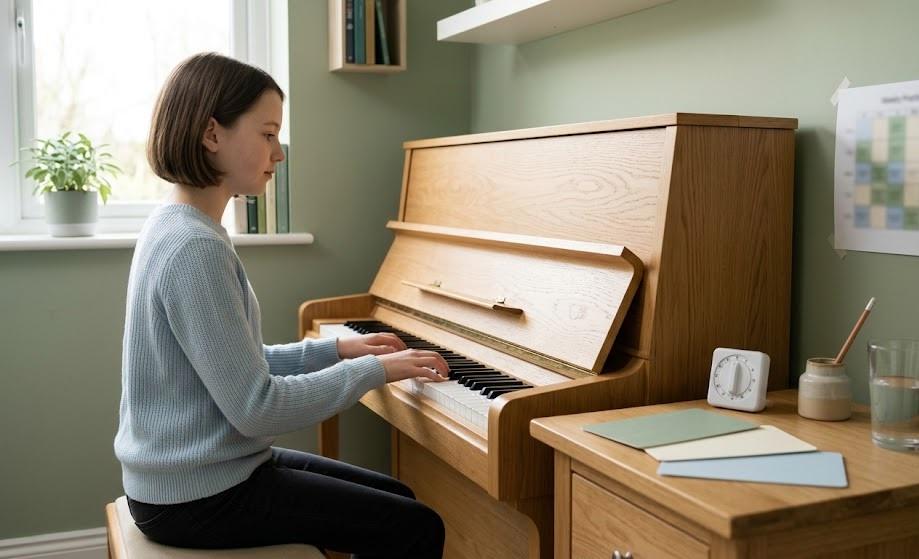
The 2026 Bachauer Junior results give teachers a reason to discuss repertoire honestly with students. The question is not, “What is the hardest piece I can play?” The stronger question is, “Which piece lets me show my sound, control, imagination, and readiness?”
This connects naturally with kaygranger.com’s earlier piano competition preparation guidance, where modern competitions were framed as complete musical presentations rather than simple technical tests. That is especially true for young players. A child or early teenager who only practices difficulty may become impressive for a few minutes, then lose musical direction. A student who practices character, sound, and structure can make a smaller piece feel more mature.
Teachers should help students understand what each work demands. A Bach invention may train clarity, independence, and line. A Haydn or Mozart movement may test balance and articulation. A Chopin nocturne or waltz may reveal rubato control and singing tone. A Prokofiev or Bartók piece may test rhythm and character. The right program should feel like a portrait of the student’s current strengths, with enough challenge to encourage growth.
How Families Can Support Practice Without Creating Fear
Junior competition culture can be inspiring, but it can also create unhealthy comparison. A young student may hear that an 11-year-old won an international prize and feel either motivated or defeated. Families and teachers need to frame the story carefully. The point is not that every child should compete internationally. The point is that young musicians can develop serious habits when they are guided well.
Support at home should focus on conditions, not constant correction. Children need a reliable practice time, a quiet space, a tuned or stable instrument, and adults who understand that progress is uneven. Some days will sound polished. Some days will sound worse because the student is repairing a technical problem. That is normal.
Parents can ask better questions after practice: What improved today? Which measure still needs work? What did your teacher ask you to listen for? What do you want to play again tomorrow? Those questions teach ownership. They avoid the trap of reducing practice to “Was it perfect?”
A junior competitor also needs rest. Hands, attention, and confidence all have limits. A 13-year-old who practices with fear may win a round and still lose joy. The strongest young pianists usually have a circle of support that treats music as serious work and meaningful expression. That balance is hard, but it matters.
What Teachers Can Borrow From The Bachauer Model
Teachers do not need to train every student for an international competition to learn from Bachauer. The model offers several useful teaching principles. A clear age division helps set realistic expectations. Multiple rounds encourage preparation beyond one polished take. Public performance builds communication. Prizes and finalist recognition show that musical growth has many levels, not only first place.
The official Bachauer site describes the foundation as a presenter of competitions, public concerts, and piano outreach in Utah schools. That broader mission matters because it places competition inside a larger education culture through the Gina Bachauer Foundation. A strong piano culture does not only celebrate winners. It creates more chances for students to hear, learn, perform, and imagine what disciplined piano study can become.
Teachers can borrow that wider view. A studio might create mini-rounds before a recital: one week for memory, one week for musical character, one week for performance stamina, and one week for mock performance. Students can learn to prepare in layers instead of trying to “get ready” the night before.
This approach also helps students who are not competition-focused. A beginner can still learn how to set a goal. An intermediate student can still practice performing for one listener. An advanced teenager can still build a repertoire plan with contrast and purpose. The competition model becomes useful when it teaches process, not only ranking.
Why Practice Before 15 Should Build Identity, Not Just Results
Before age 15, a pianist is still forming a musical identity. That identity includes sound preferences, favorite repertoire, work habits, confidence, physical technique, listening skills, and the ability to respond to feedback. Competitions can strengthen that identity when they are handled well. They can weaken it when the student learns only to chase approval.
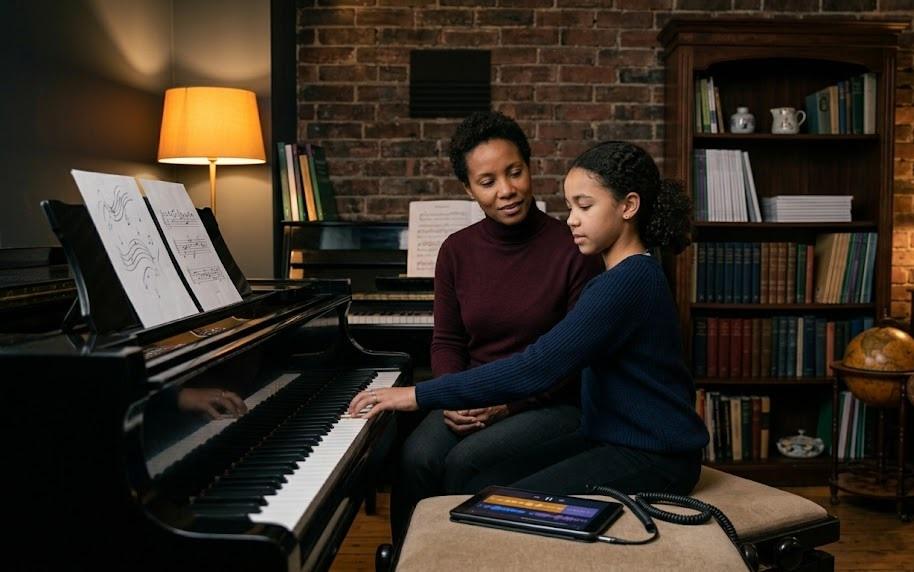
The 2026 Gina Bachauer Junior winners show that very young pianists can reach a high level. They do not prove that every student should follow the same path. Jueon Lee, Menhe Liu, Junye Huang, and the other finalists are useful examples because they show what young musicians can do when preparation is serious and public performance is treated with respect.
For the average young pianist, the practical lesson is smaller and more usable. Practice should have a purpose. Repertoire should fit the student. Listening should guide repetition. Families should support without turning every session into judgment. Teachers should help students build both discipline and voice.
The strongest practice before age 15 is not built around fear of falling behind. It is built around learning how to hear, how to focus, how to return to a difficult passage, and how to make music that feels personal. Bachauer gives the public result. The practice-room lesson is that young pianists grow best when structure and imagination develop together.
What Young Pianists Should Take From Bachauer 2026
The best takeaway from the 2026 Gina Bachauer Junior division is not “practice more than everyone else.” It is “practice with better direction.” A student under 15 needs habits that can survive beyond one competition: slow work, clear goals, listening, musical curiosity, performance experience, and patience.
International junior competitions show what disciplined young players can achieve, but they should not turn childhood music study into a constant comparison. A 14-year-old gold medalist and an 11-year-old silver medalist can inspire students without becoming impossible measuring sticks. Their success should point young pianists back to the bench with better questions.
What am I trying to hear? Which passage needs the most honest work? Does this piece show who I am becoming as a musician? Can I play it with more shape tomorrow than I did today?
Those questions are useful at every level. That is why the 2026 Gina Bachauer Junior pianists matter for kaygranger.com readers. They remind us that early excellence is not only about talent. It is about guided practice, careful listening, thoughtful repertoire, and a support system that helps young musicians grow before the spotlight arrives.


